My final stop in Hawaii was on the biggest island. I arrived on 21st April for a 4 day visit. It is actually called Hawaii Island but more commonly known as the Big Island. I stayed in a rather bland, but cheap, hostel in Kailua-Kona called Koa Wood Hale.
The first thing you notice about this island is that it is very volcanic. Like the other islands, it was about 30’C and humid.

While looking around Kailua-Kona, I came across the Old Kona Airport State Park. It is mainly the old runway.
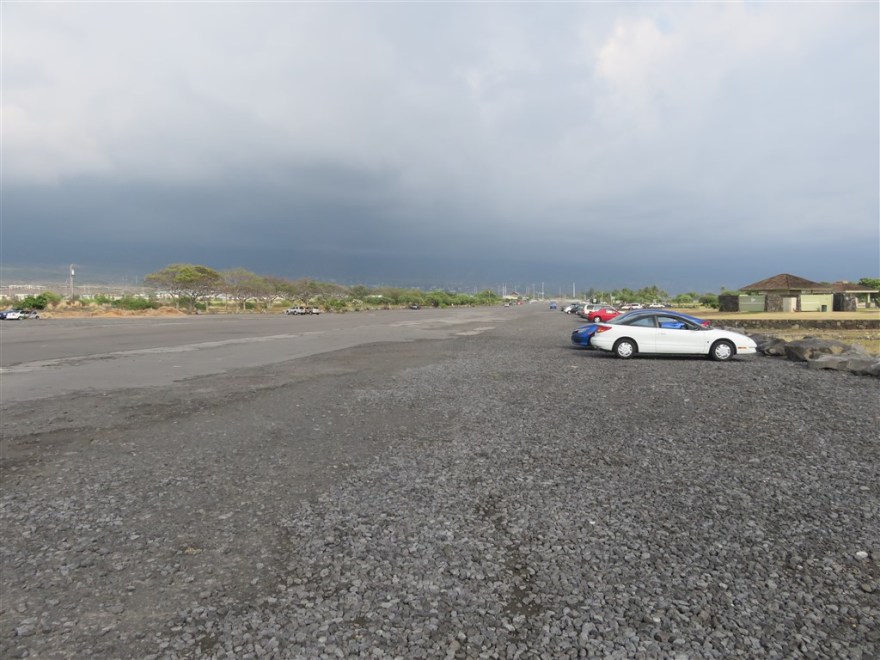
With the beach on one side.
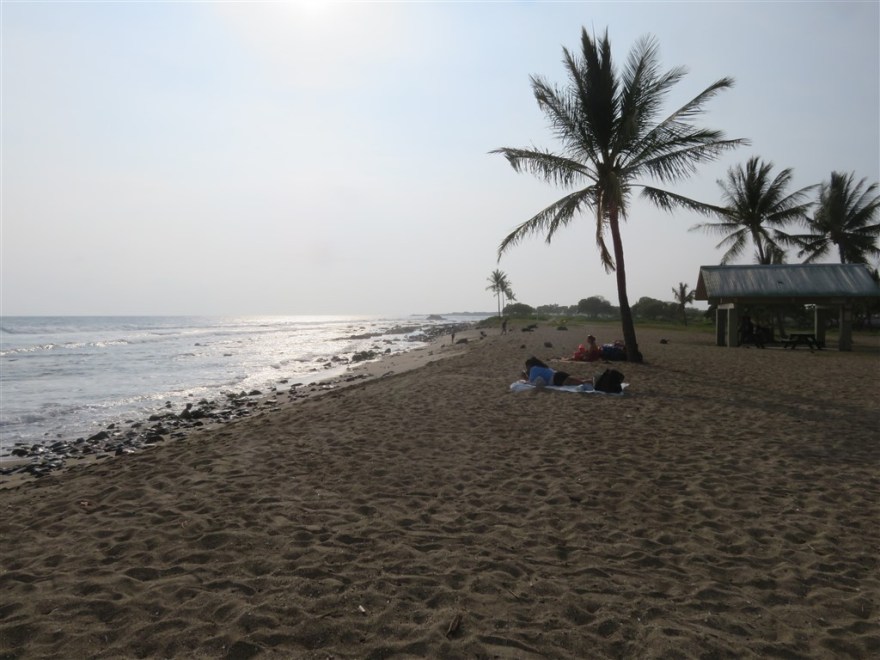
And an interesting park on the other side.


One of the most popular parks on the Island is the Hawaii Volcanoes National Park (www.nps.gov/havo). It is the home of Kilauea – one of the world’s most active volcanoes. It has been erupting since 1983 and you can pretty well drive up to the top and see the smoke coming out of the crater (within a crater).
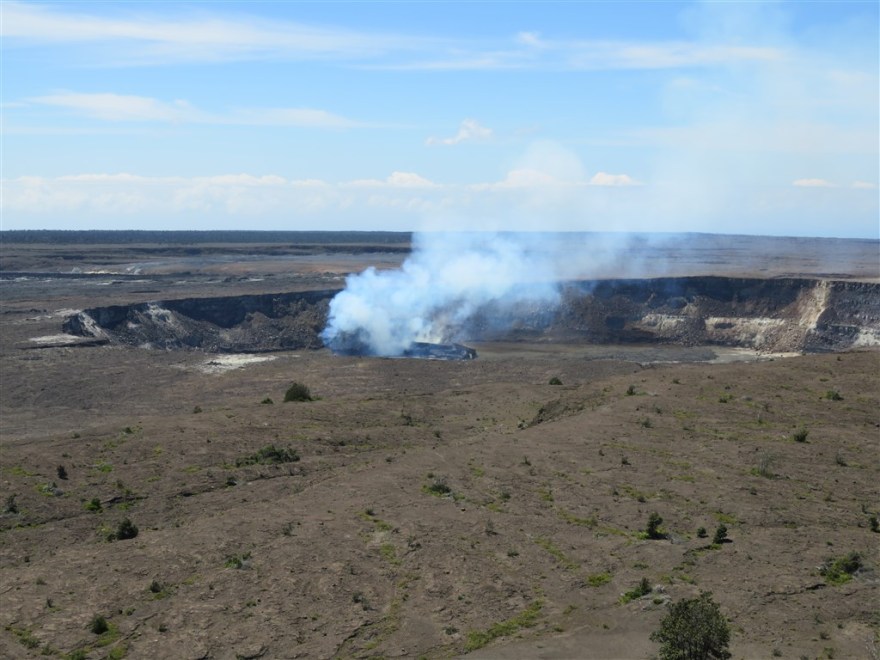
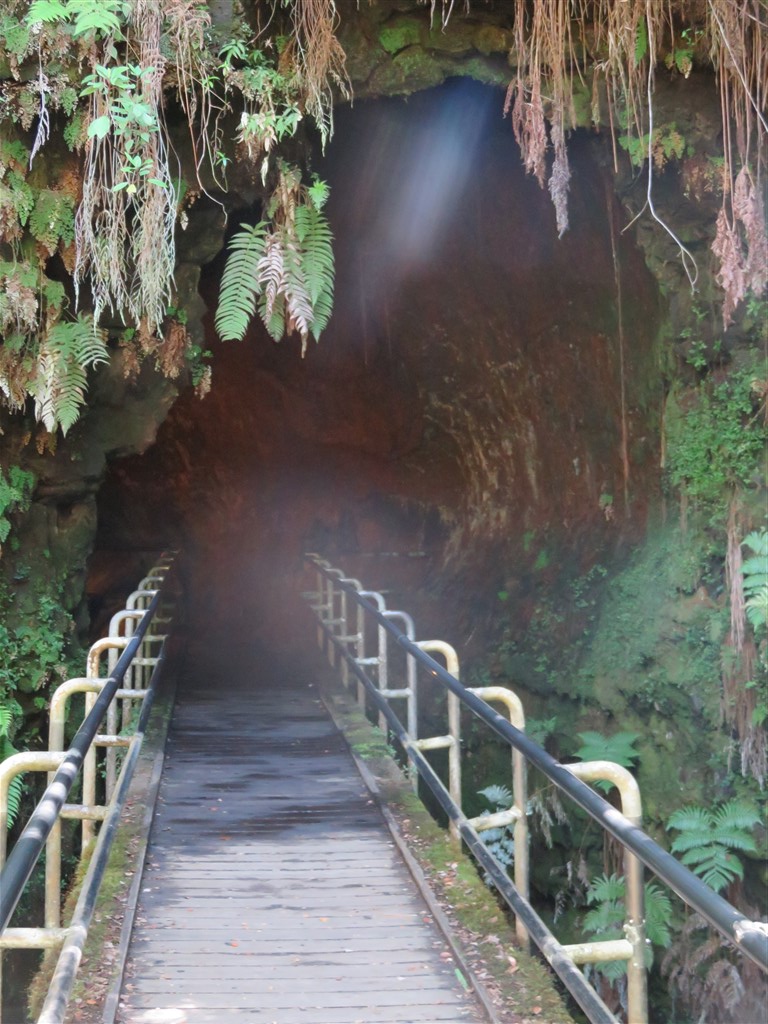
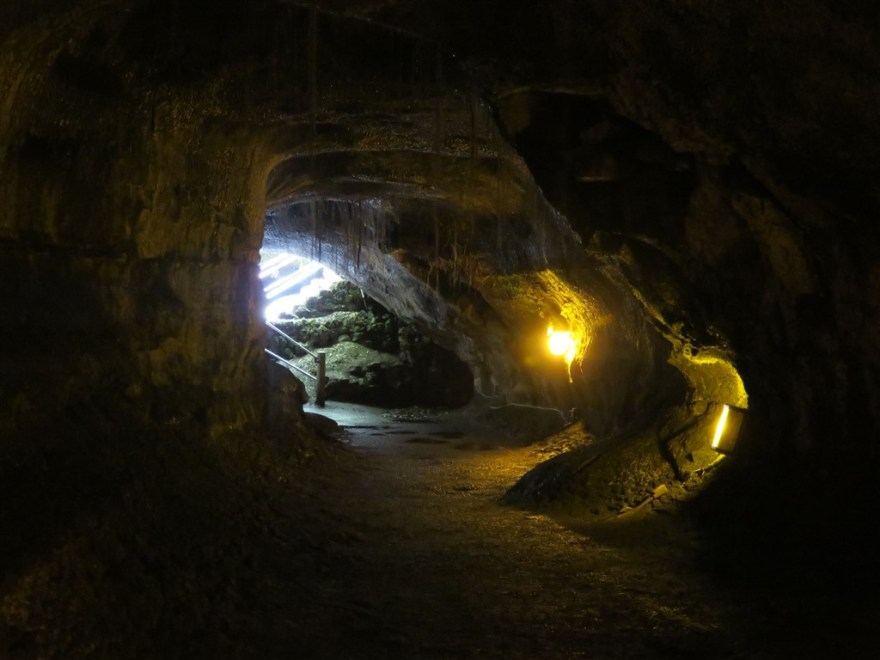
The lava no longer erupts out of the top of the volcano but seeps through lava tubes underground. You can walk through some of the old tubes.
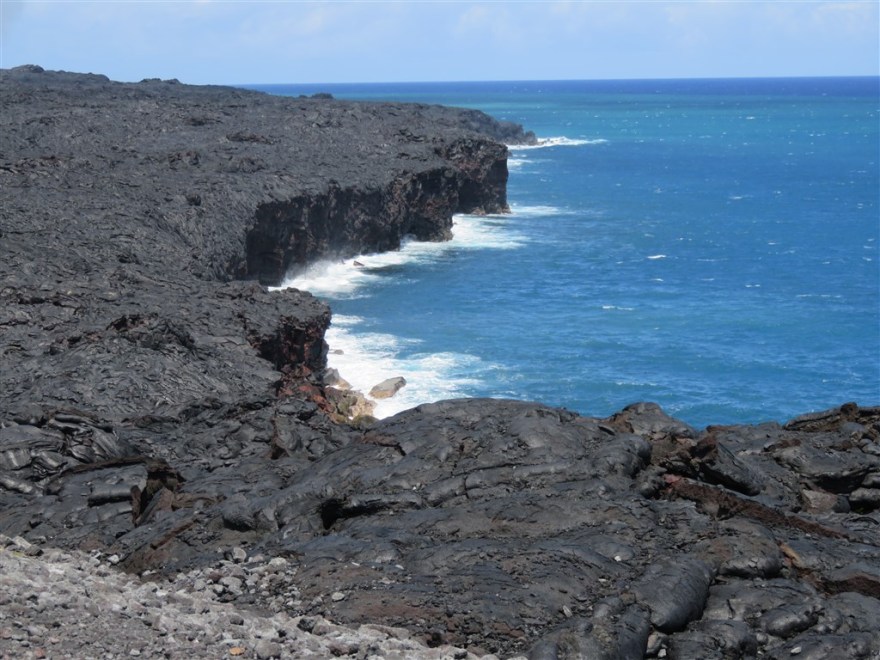
After visiting the top of the volcano, I drove out to the coast where the lava is currently emerging from the tubes and falling into the sea. You have to park 5 miles away and walk out to the drop off point.
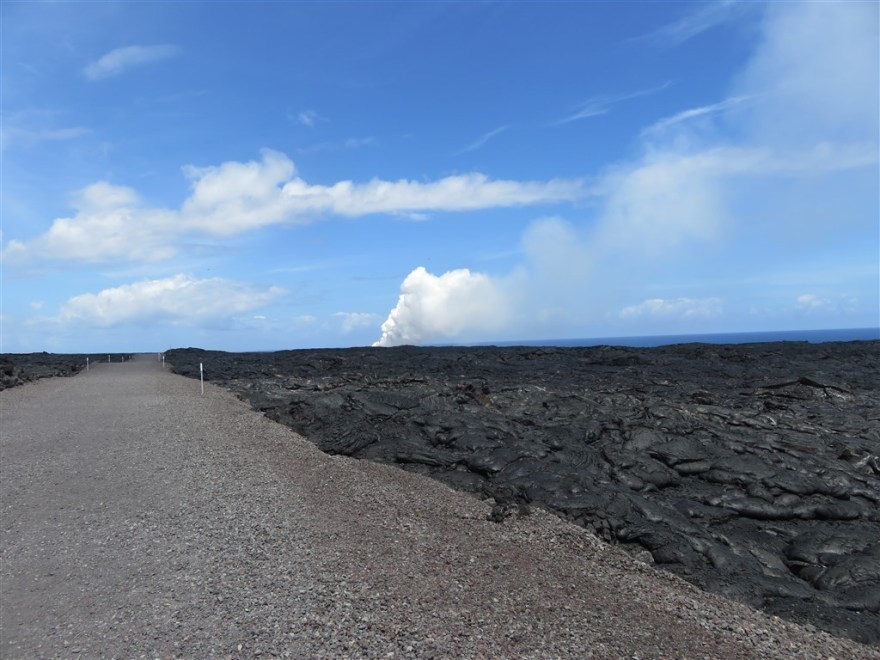
Along the way you can see where the lava has previously dropped into the ocean.
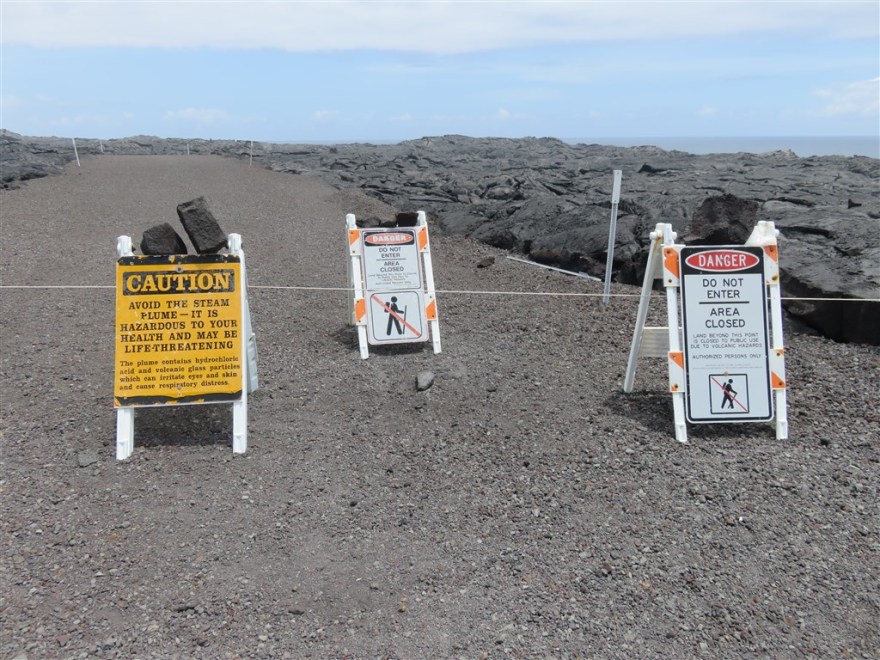
Unfortunately after walking just under 4 miles, the wind changed and the acidic steam started blowing towards the path. This prompted the wardens to close the path and so I wasn’t able to make it to the final viewing point.
I learnt later that it is best to visit after dark when you can see the orange glow of the lava (which is not visible during the day) – best seen on the pictures on the park’s website.
Although the whole area looks barren, you can plant life starting to return to the area.
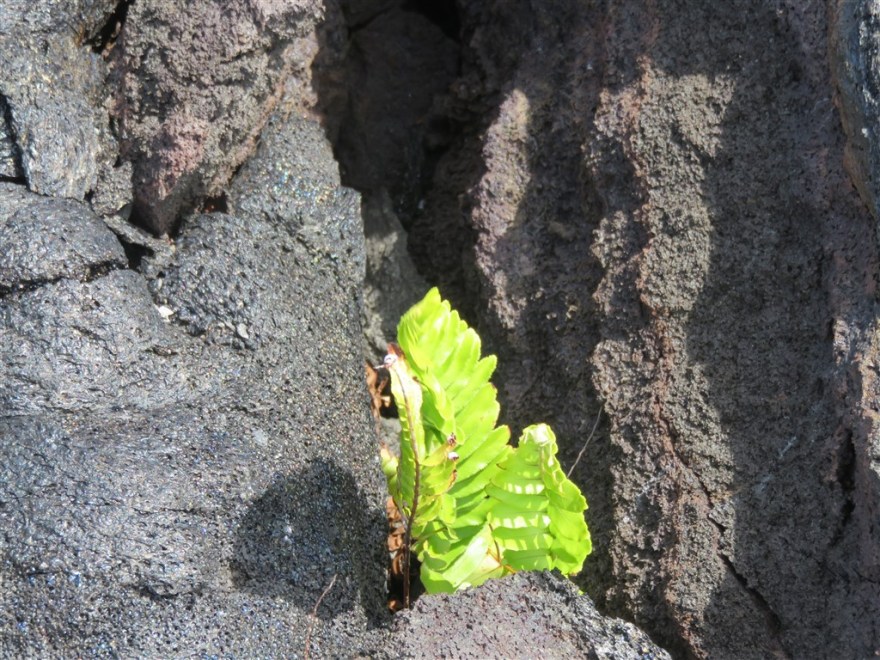
Immediately outside the area covered by lava for the current eruption, you can see how quickly plant life returns.
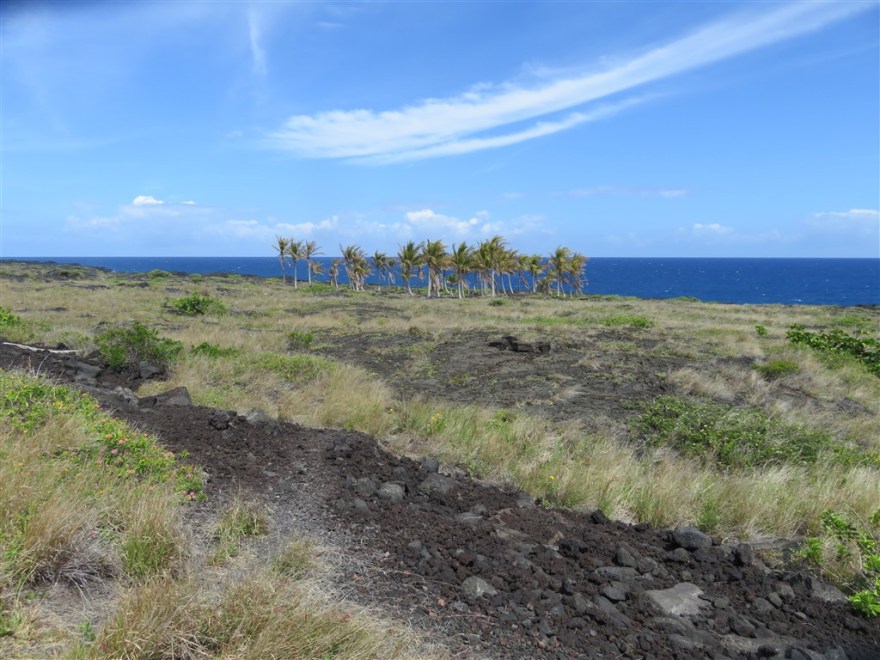
Mount Kilauea is 4,000 feet high and located on the south east side of the island. Just north of the centre of the island is Mount Mauna Kea (www.ifa.hawaii.edu/info/vis/)which is just under 14,000 feet (or 2.6 miles) high. It is a dormant volcano and the highest point in the state of Hawaii.

It is one of the best sites in the world for astrological observation and there are now 13 observatories located at the summit funded by 11 different countries. I tried to go up and visit some of them but found that you really did need a 4 wheel drive this time. Having not needed one on Maui, I had just opted for a standard rental car this time. I struggled to get up to the visitor centre at 9,000 feet and so I had to make do with the film they show rather than going up higher.
The Big Island is also well known for Kona Coffee. Only coffee grown in the specified area on the west side of the island around Kona can be called Kona coffee. It is one of the most expensive coffees in the world.
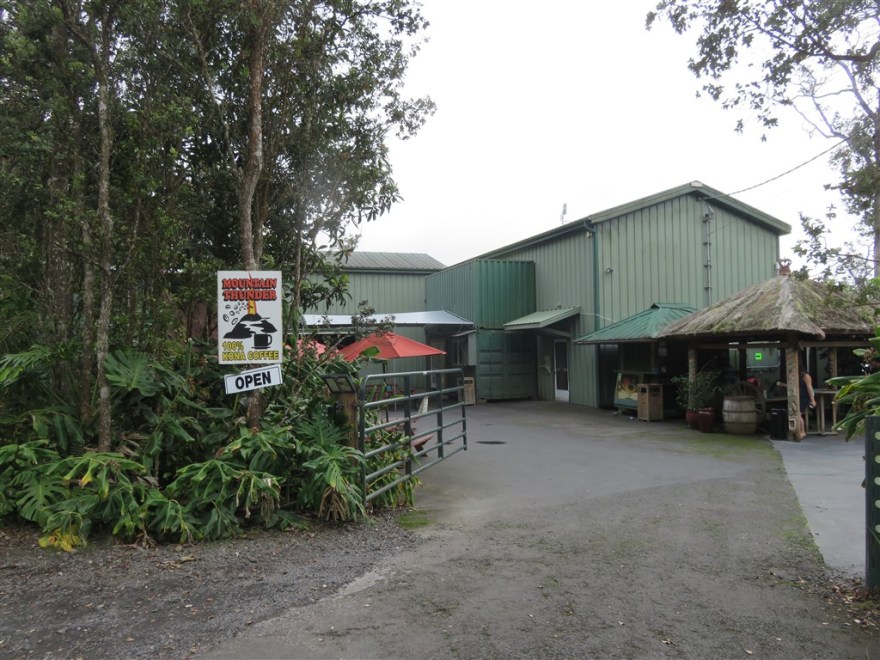
I visited a plantation called Mountain Thunder (www.mountainthunder.com). Although a well established brand, the previous owner have over extended himself and the man showing us around had just bought the business from the bankruptcy count 9 days previously. Despite this, he seemed to have learnt a lot in the last 9 days and gave us a very interesting tour.
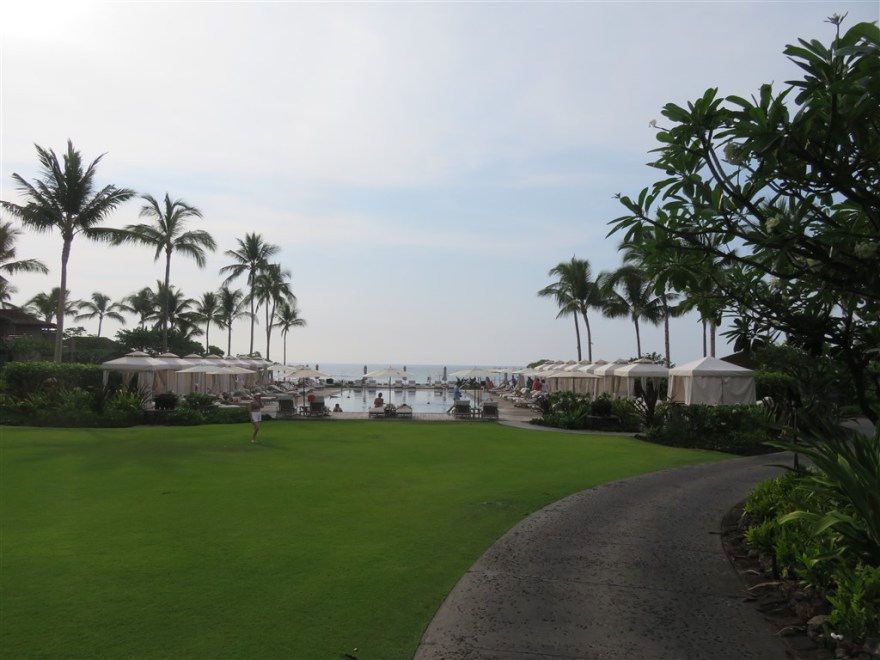
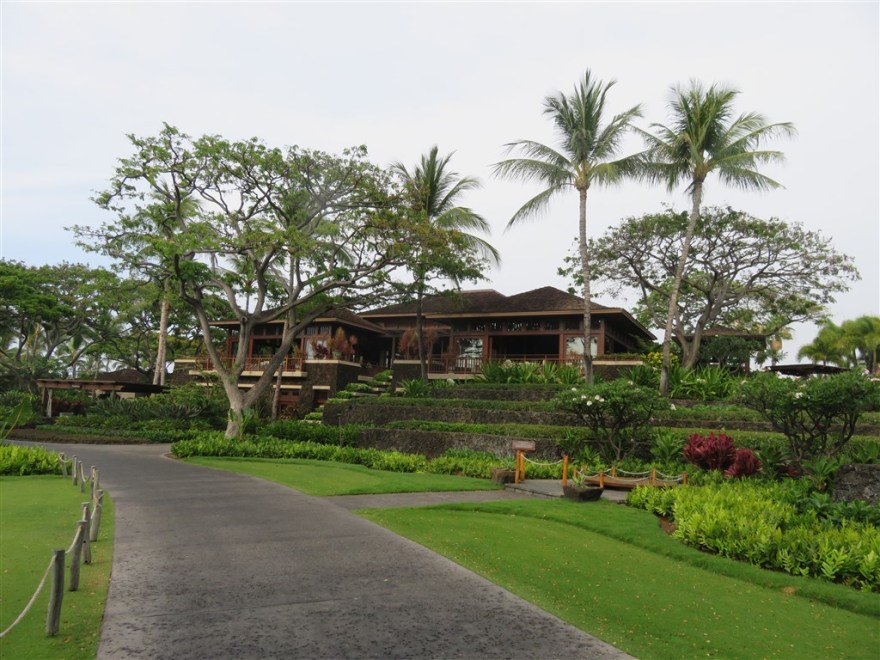
To make up for my rather uninviting hostel, I spent an afternoon at the Four Seasons Hualalai Resort (www.fourseasons.com/hualalai/).
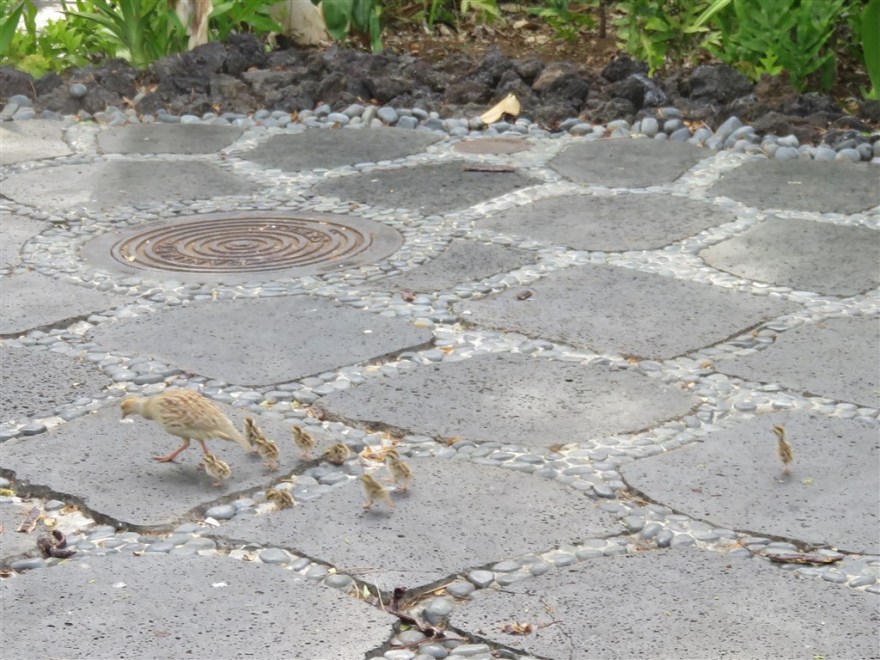
Like the rest of Hawaii, there were new born chicks wandering around.
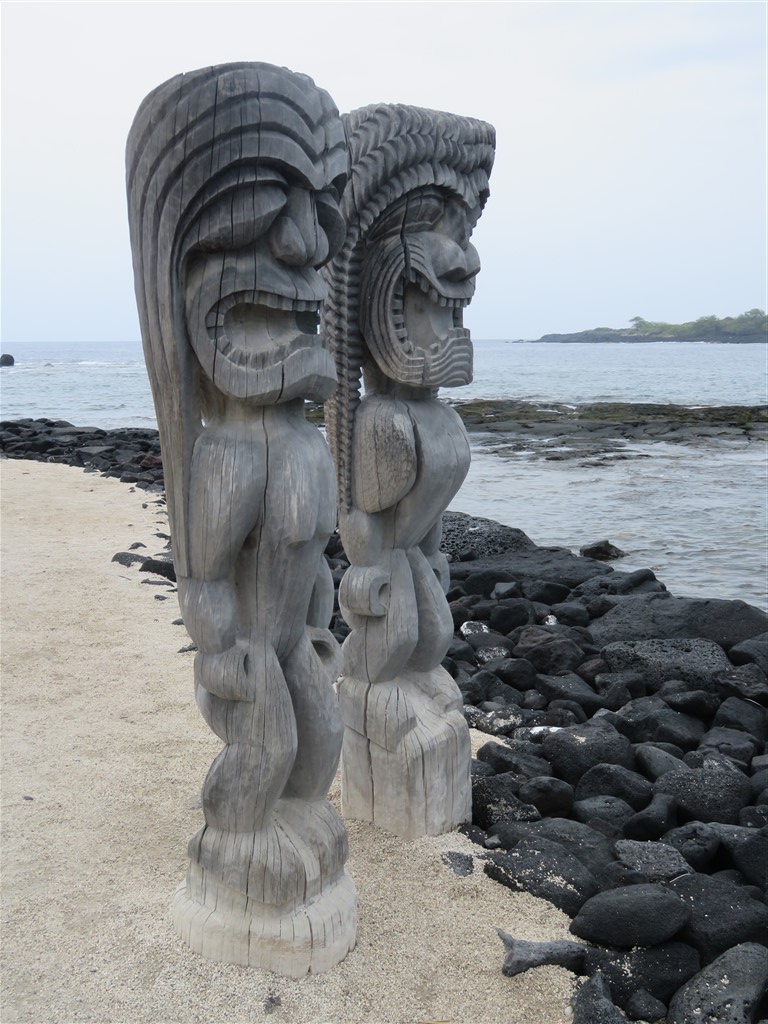
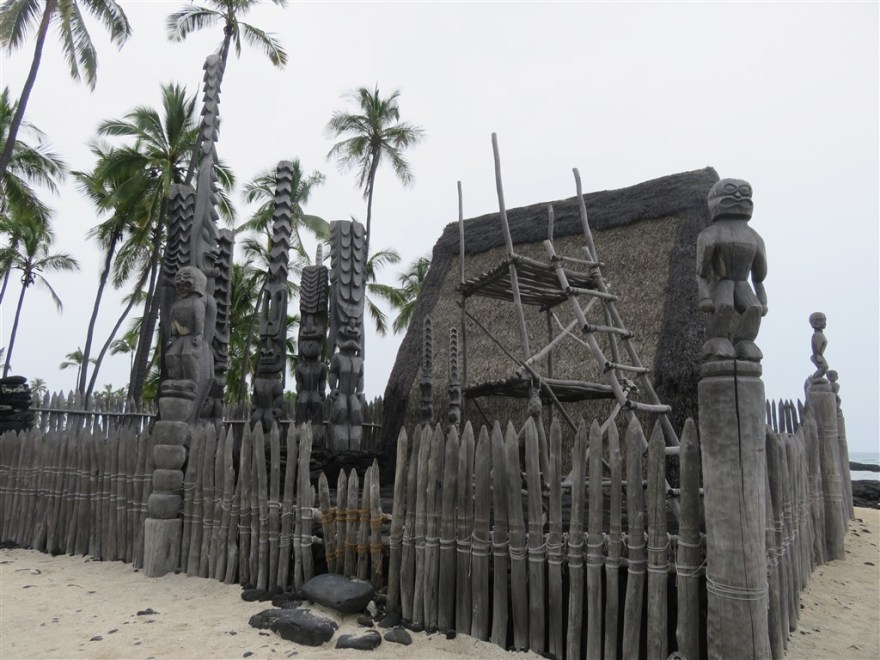
My final trip was to the Pu’uhonua O Honaunau Historic National Park (www.nps.gov/puho). It is a refuge that defeated warriors (or anyone who had broken one of the ancient laws) could flee to. Once the offender had been absolved by a priest they were free to leave.
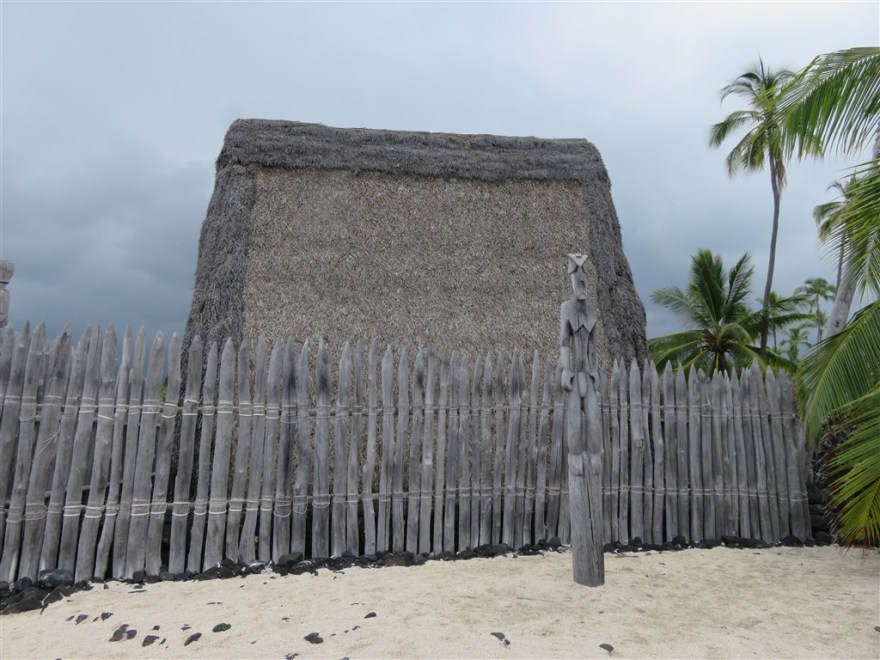
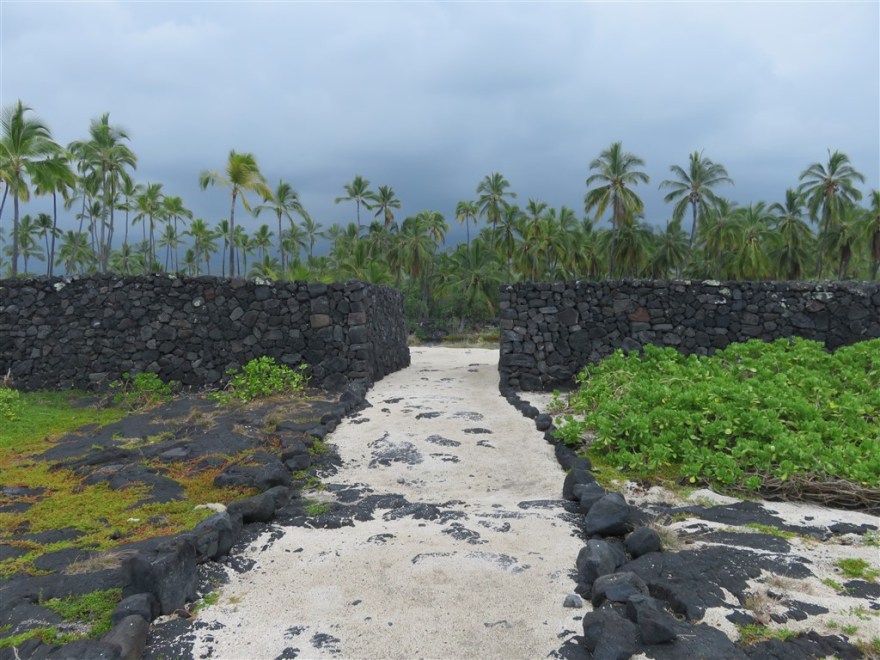
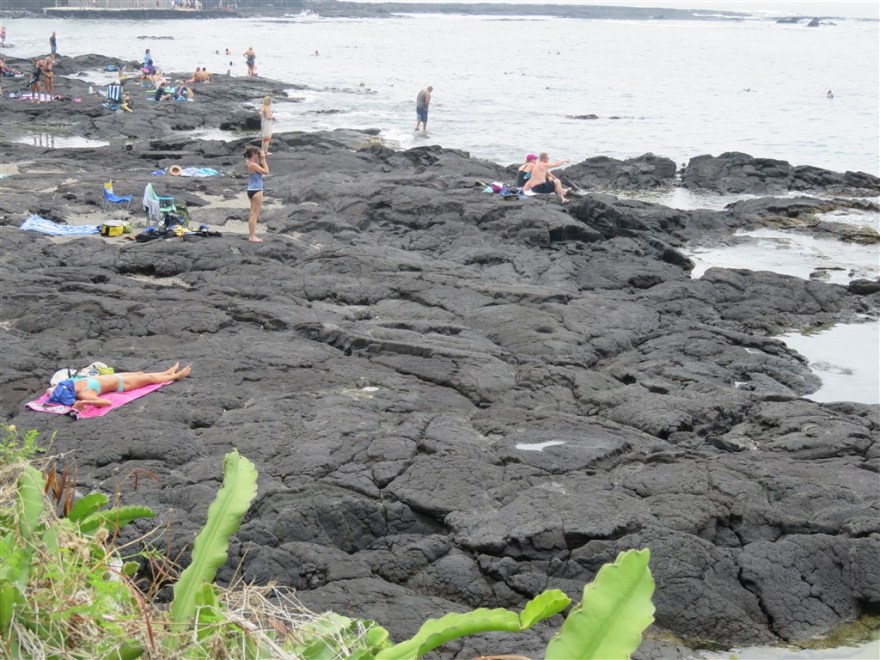
I also went snorkelling at Two Step. You can access the reef directly from the coast (once you have negotiated the rocks!)
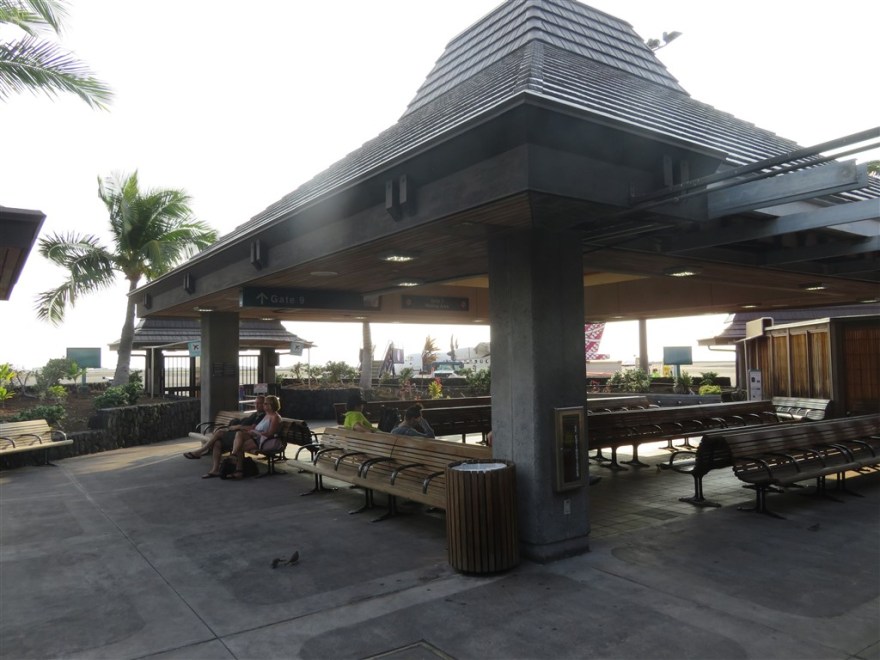
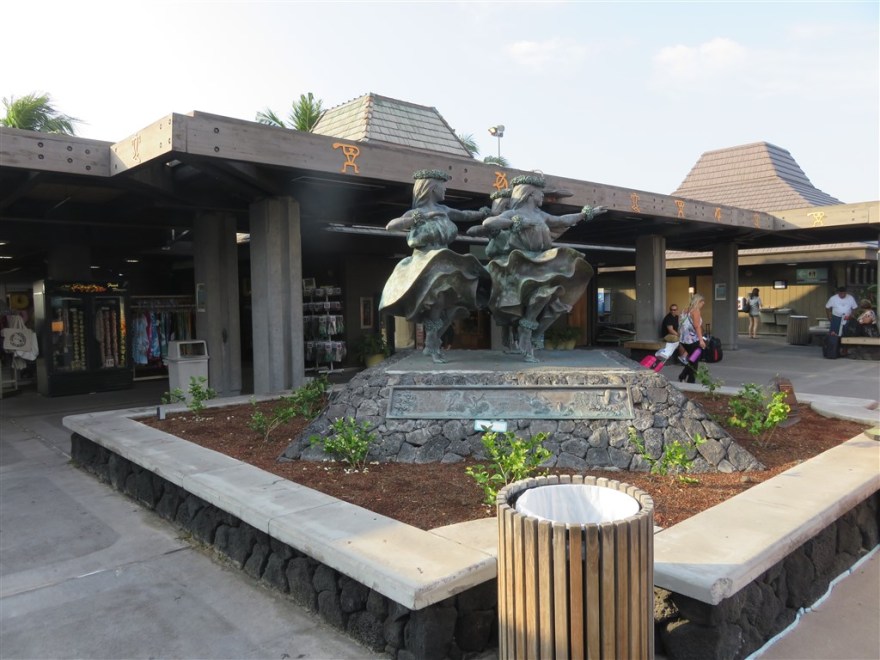
My final memory of the island was Kona Airport. I have visited many small airports where you have to walk out to the plane, but never one that was all outside – including the waiting areas!
 Escape from Ealing