Northern California

My first stop in the US mainland was actually Las Vegas (where I spent 2 nights). However I didn’t take any pictures there as there wasn’t much new to report since I was last there. I stayed at Bally’s (very cheap and pretty run down these days) and went to see “Vegas – The Show!” at the Saxe Theatre in Planet Hollywood. Its the only “old style” Vegas show running at the moment.

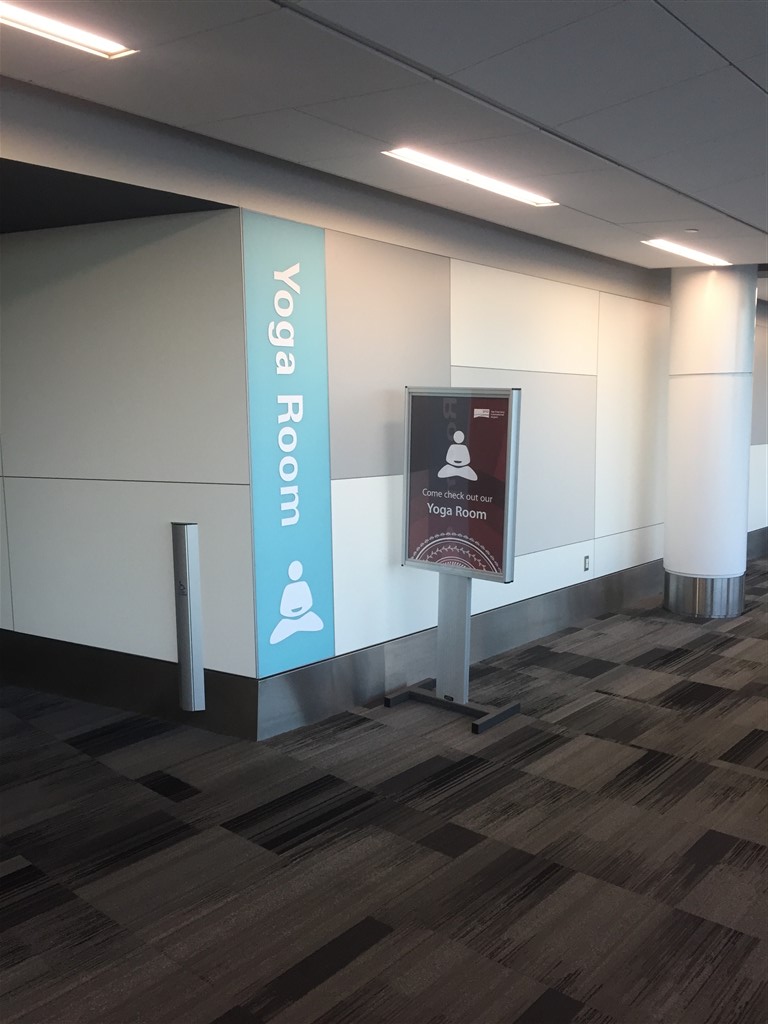
On 28th April I flew out to San Francisco. The first thing to note is that San Francisco airport has a Yoga room! What next?
IMG_1073

I flew in late on Friday night in order to make the Crissy Field Parkrun under the Golden Gate Bridge on the Saturday morning. There was a good turnout of British tourists – two more arrived after this photo was taken.

IMG_0397

It is a flat, out and back course with great views of the bridge. I hadn’t run since the Perth Parkrun 2 months ago but managed a reasonable time just a bit slower than last time.
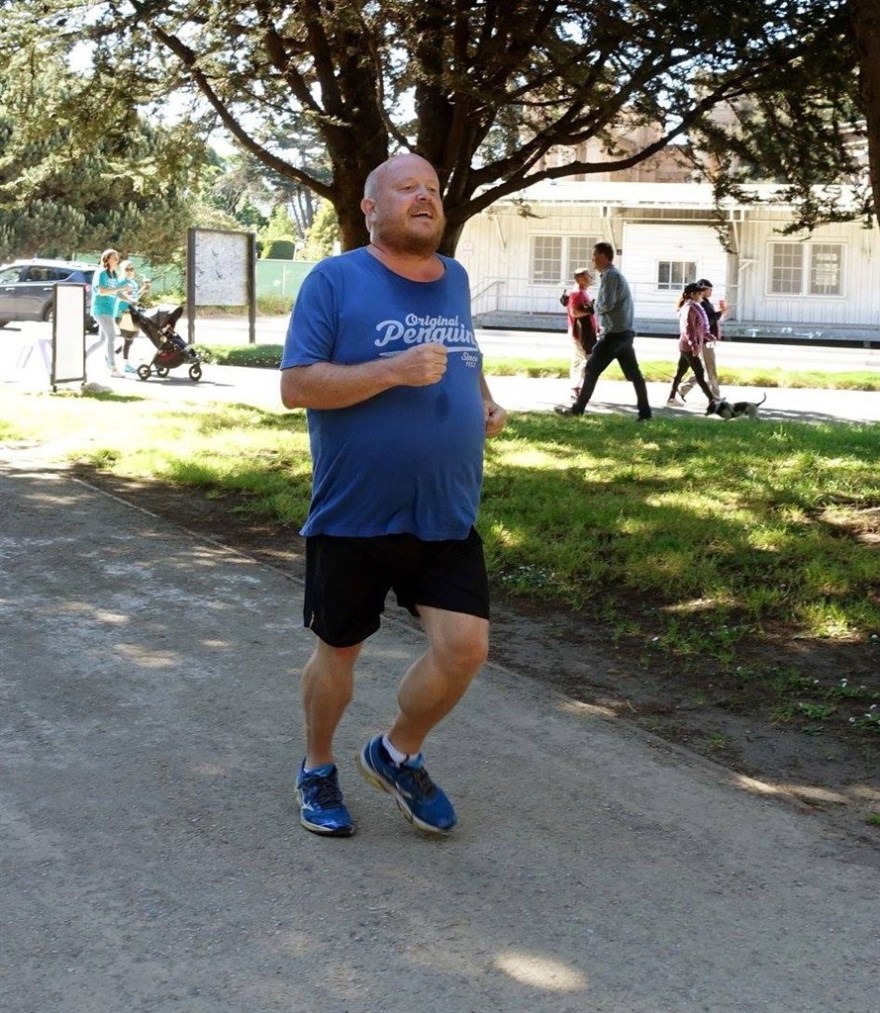
Crissy Field Parkrun 2

Thanks to Joel Rizzo (who has run all the Crissy Field Parkruns since it started and is now worried about going on holiday in case he misses one) for the encouragement and coffee afterwards.

After the run, I walked along the coast, past the Marina and through Fort Mason Park, to pick up the cable car at the end of Hyde Street. It was a lovely day and there were more great views of the Golden Gate Bridge.
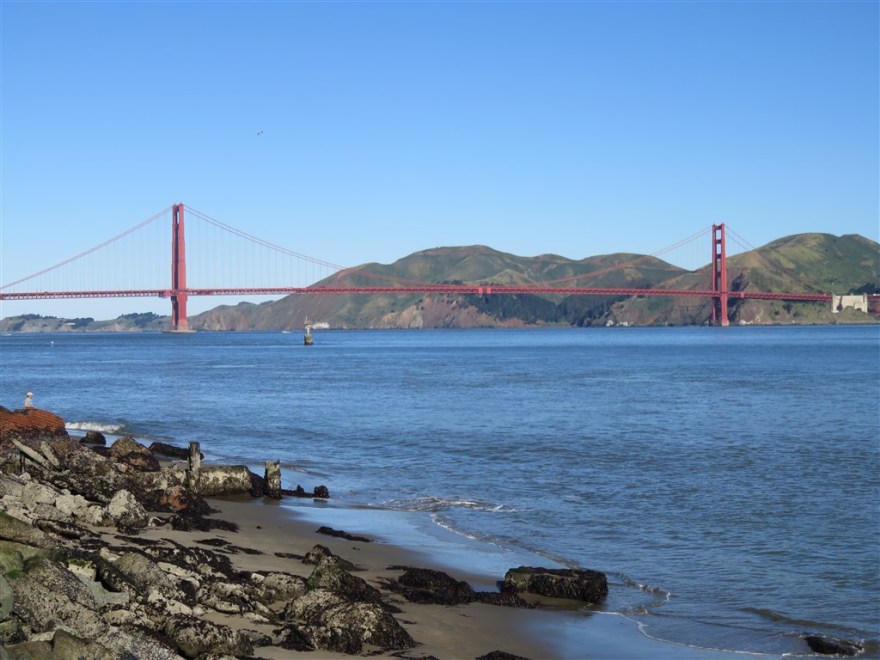
IMG_0400


Alcatraz looked almost close enough to swim over.
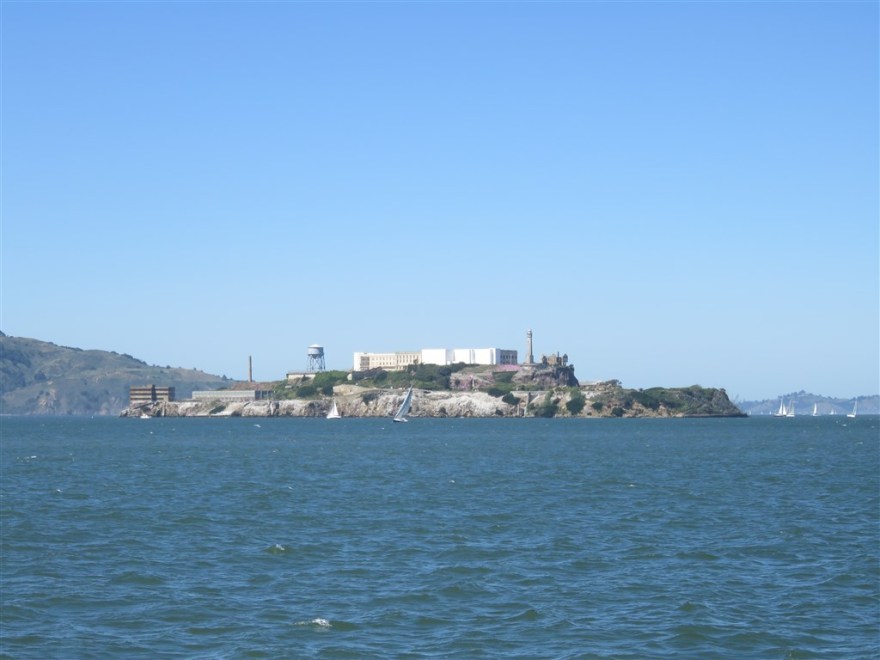
IMG_0428

You also get good views of the city from the quay at the Maritime National History Park.
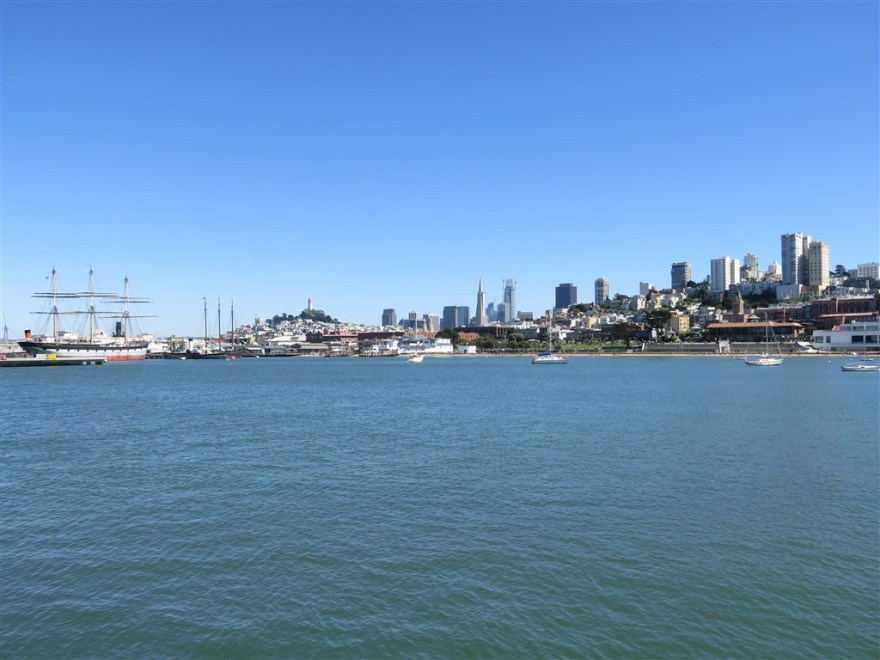
IMG_0426

IMG_0418

It is now $7 for a one way ticket on the cable car (I am sure it was about $2 last time I used it)
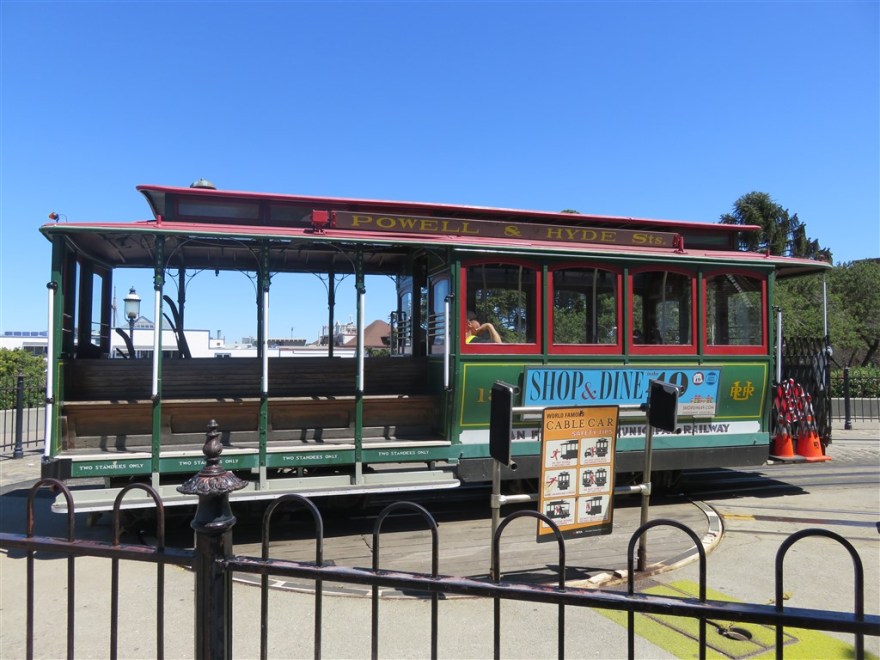
IMG_0406

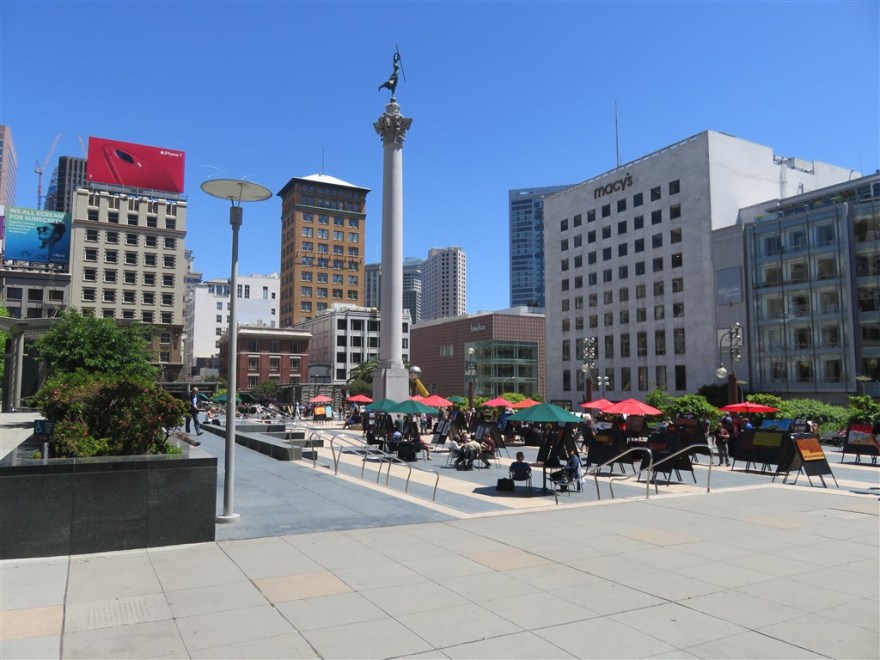
I took it into Union Square.

IMG_0407

And attempted to take pictures while standing on the side.
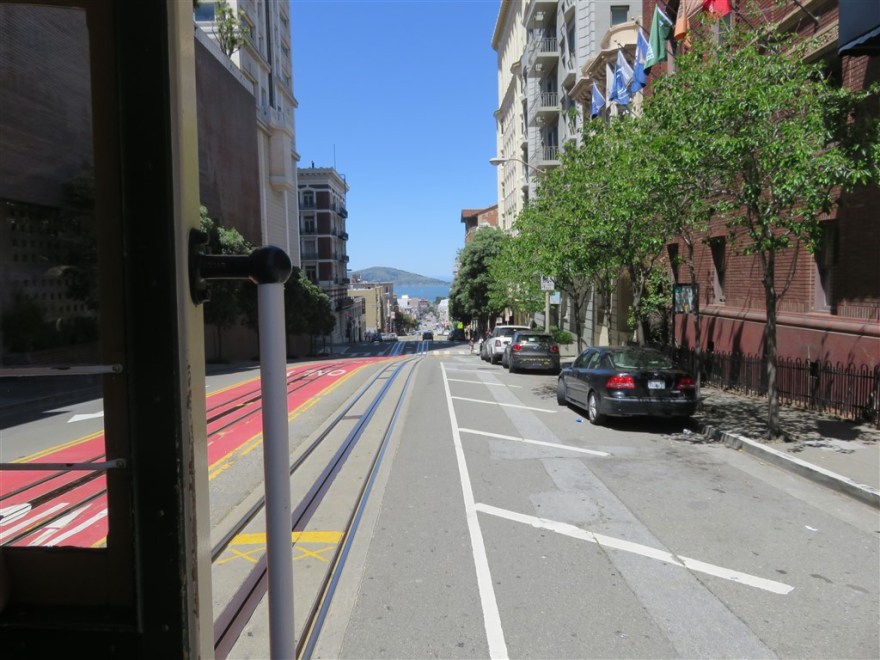
IMG_0410

I didn’t remember this from my last visit but there are also old electric trams running in the city as well.

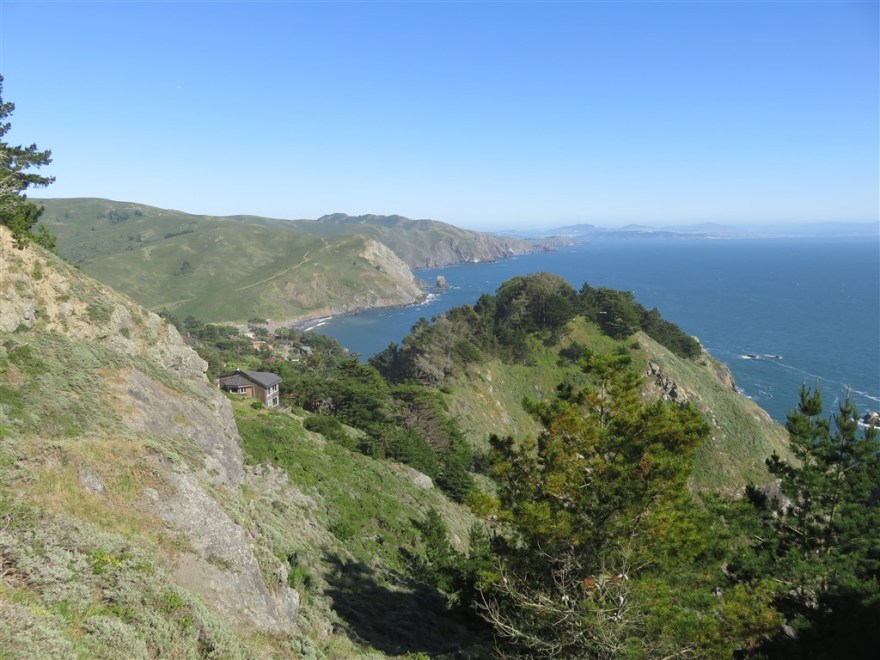
The following day I set off north taking the scenic route and following Route 1 along the coast.
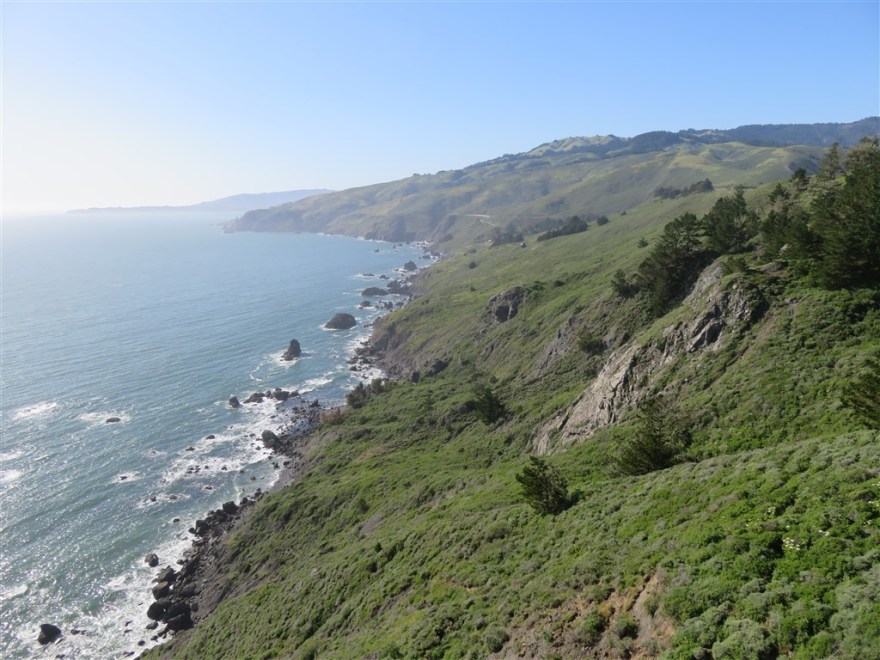
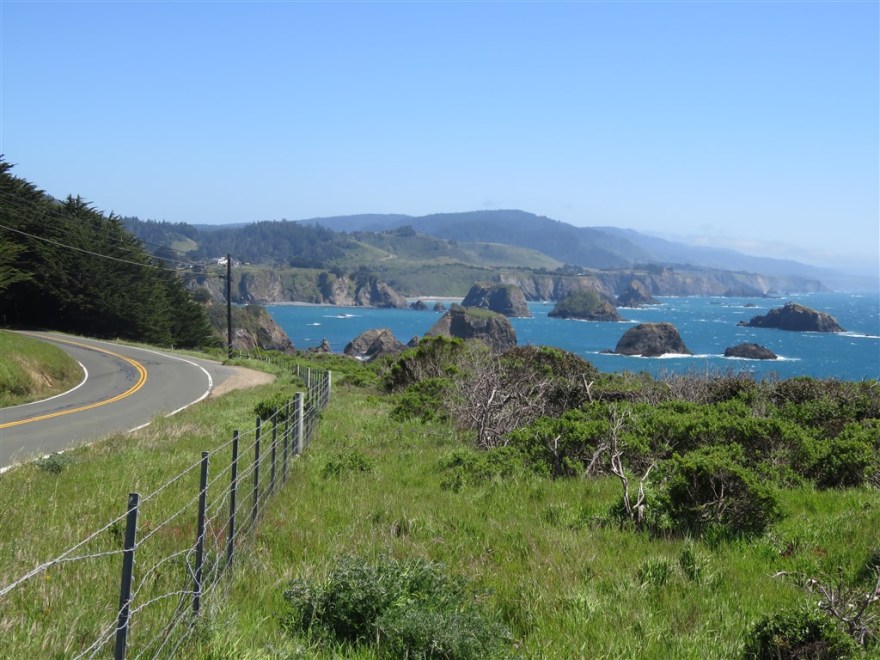
IMG_0430

IMG_0434

IMG_0433

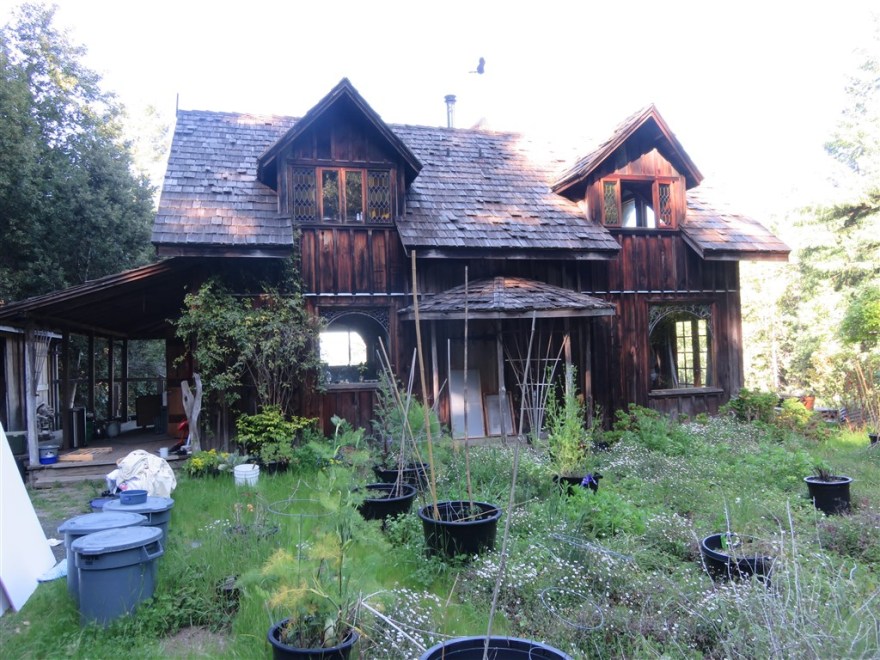
I was heading to Elk to meet up with Dionne, a friend from New York. She had suggested I come out to see the house she was just moving out of. I eventually found it after following a rough track about a mile off the main road into the forrest. It was worth the drive out there.
IMG_0436

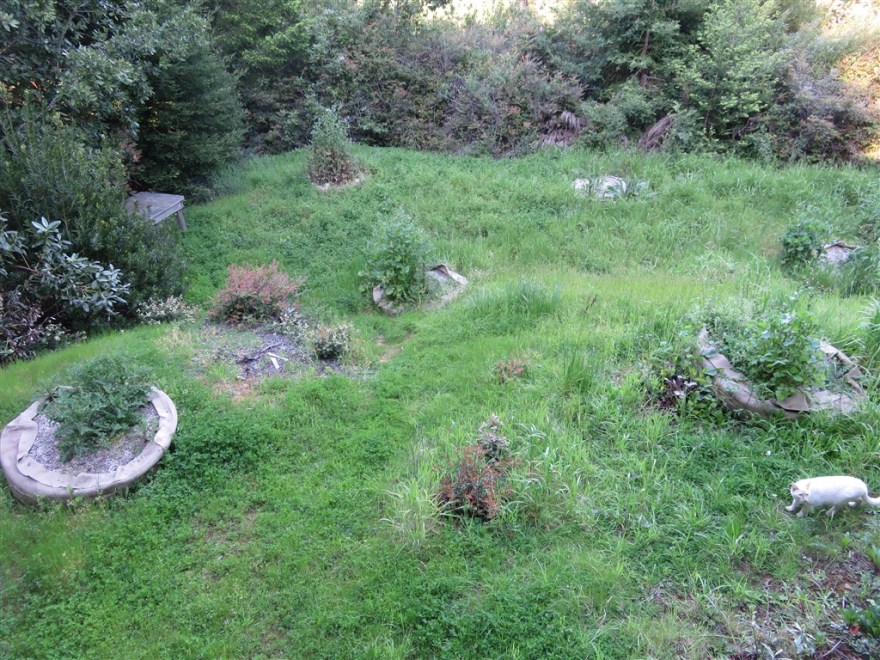
Dionne is also taking a sabbatical from work and has been staying out here with friends who run a pot farm (now fully legal in California).  The crop had been grown at the back of the house but they were moving out to a bigger location.
IMG_0440

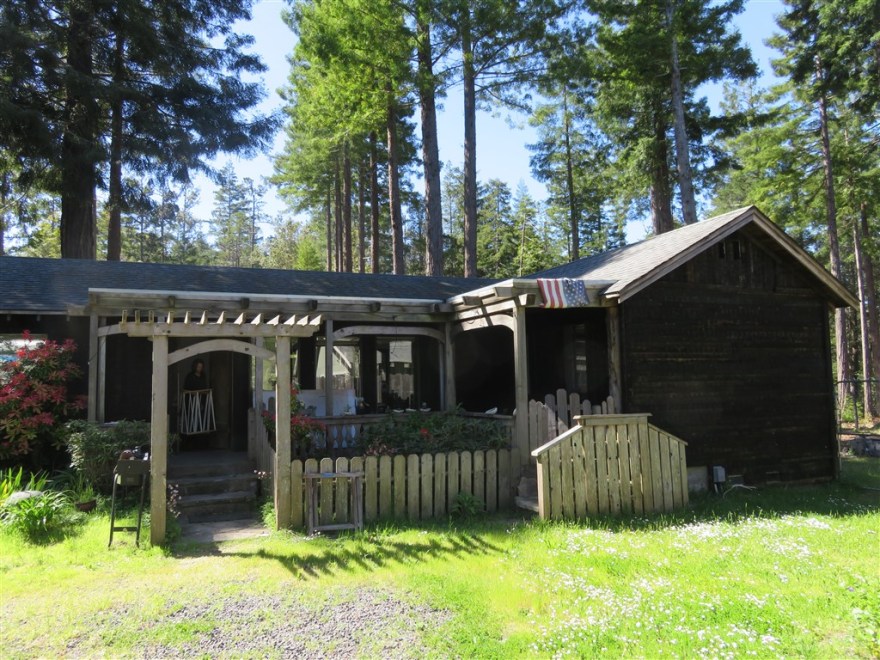
I helped her friend and her with the final part of their move up to Mendocino. Unfortunately, the new house wasn’t quite so picturesque.
IMG_0002

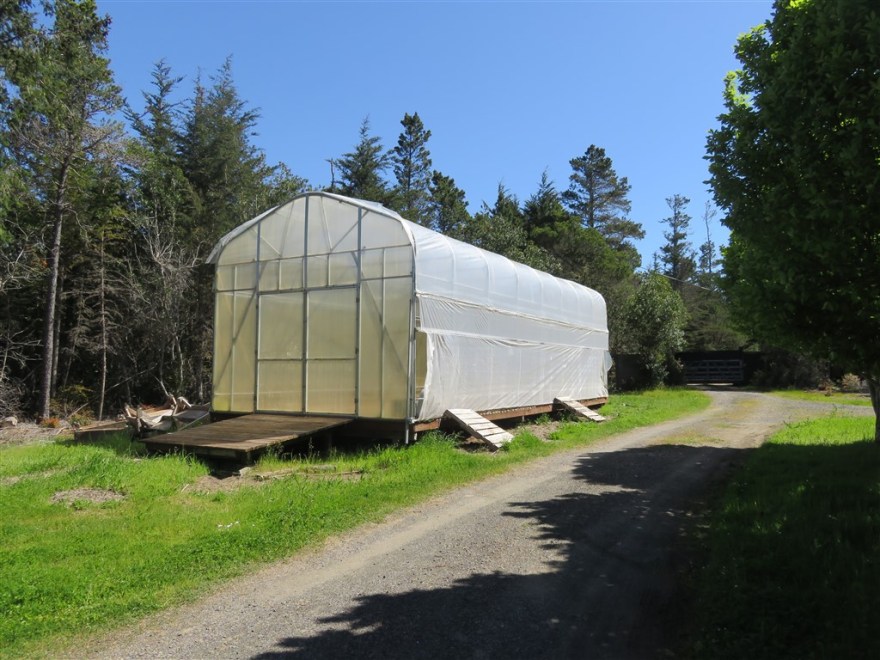
But is was geared up for much higher levels of production.
IMG_0001

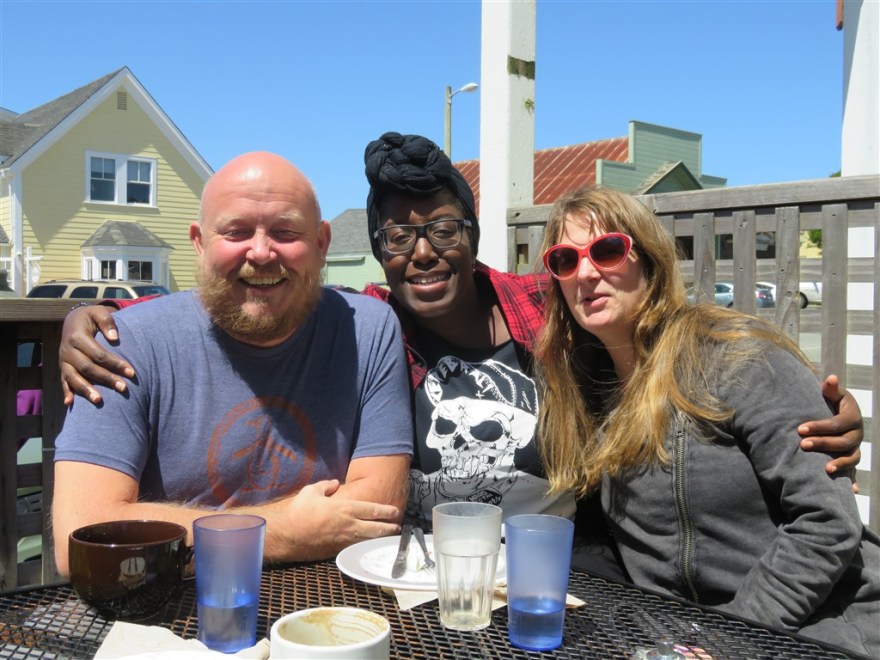
We had breakfast in Mendocino the following morning.
IMG_0007

Mendocino is a pretty little town on the coast about 150 miles north of San Francisco.

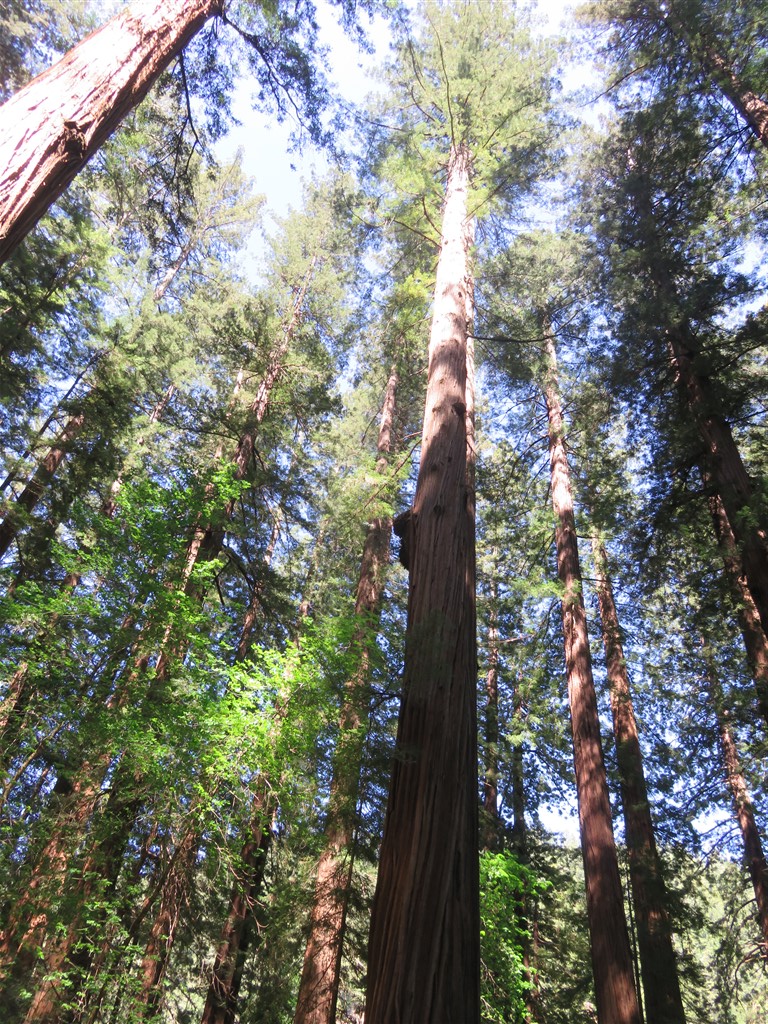
After breakfast I headed north to “The Avenue of the Giants” to see the giant redwood trees.

IMG_0014

IMG_0016

IMG_0015

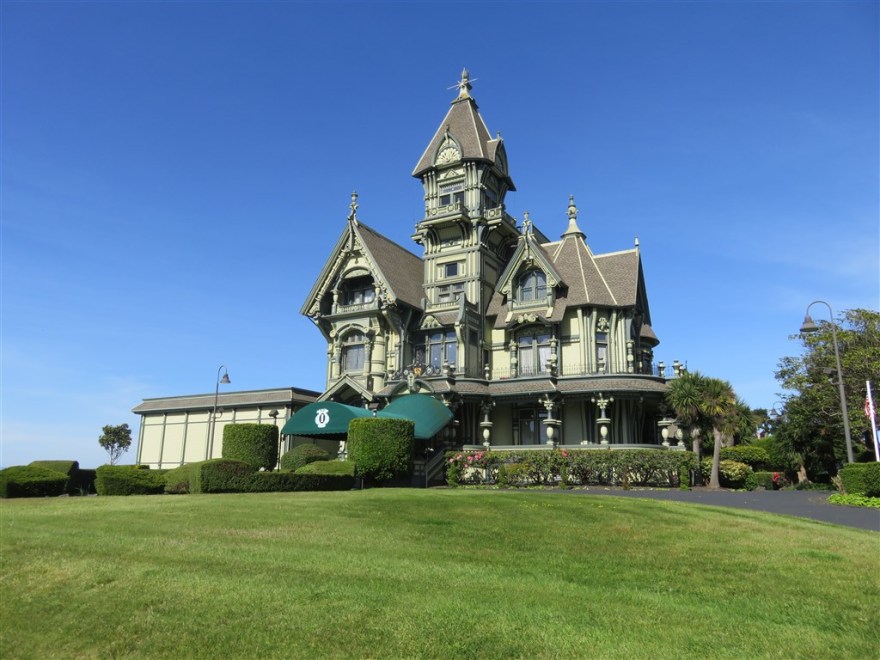
Next I stopped in Eureka to see the Carson Mansion.
IMG_0018

The house was built by William Carson who made his money in the logging trade. He moved into the house in 1883. It is considered one of the grandest Victorian homes in the USA. Unfortunately, it has been a private club since 1950 and is not open to the public.

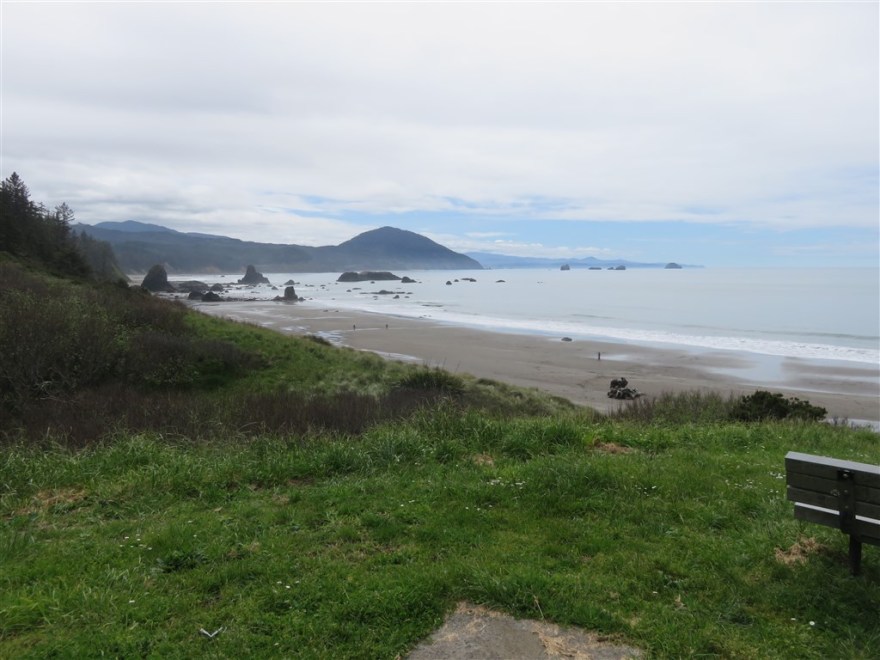
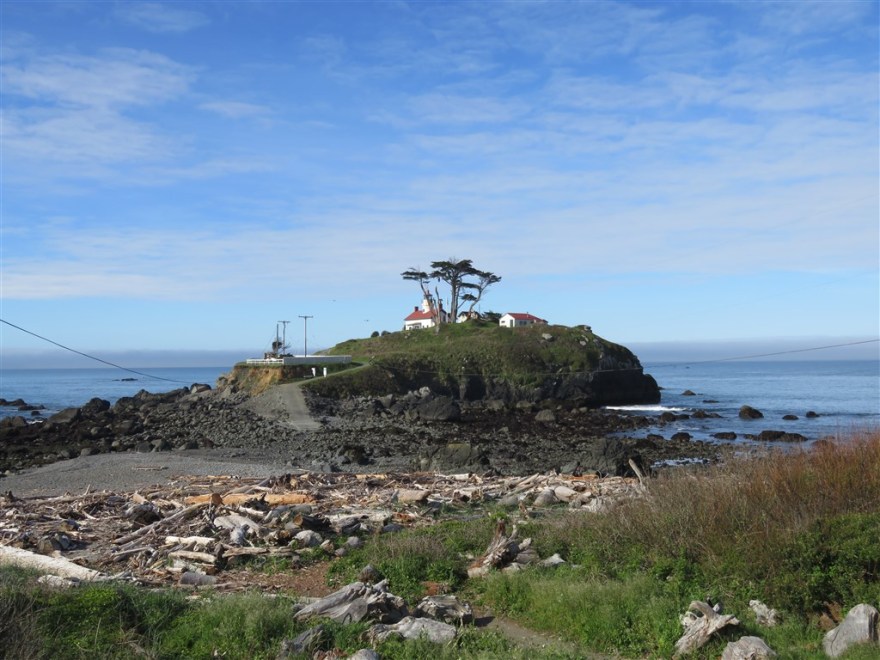
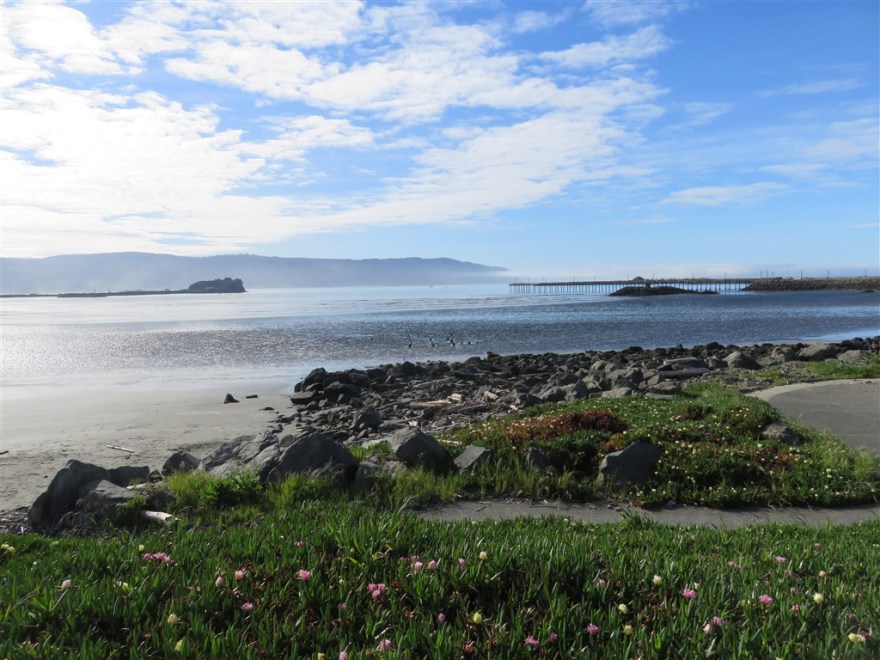
I made it to Crescent City – the most northerly City on the Coast of California – by the end of the day. The next day was another beautiful day and I got some more good views before crossing the state line into Oregon.
IMG_0020

IMG_0021

IMG_0024

IMG_0023


The Big Island

My final stop in Hawaii was on the biggest island. I arrived on 21st April for a 4 day visit. It is actually called Hawaii Island but more commonly known as the Big Island. I stayed in a rather bland, but cheap, hostel in Kailua-Kona called Koa Wood Hale.

The first thing you notice about this island is that it is very volcanic. Like the other islands, it was about 30’C and humid.

IMG_0286

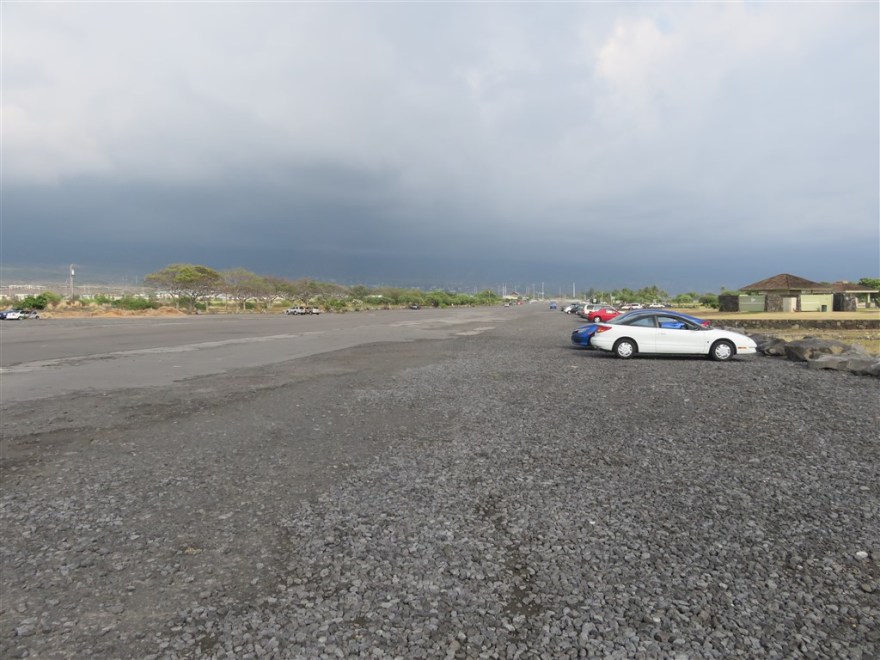
While looking around Kailua-Kona, I came across the Old Kona Airport State Park. It is mainly the old runway.

IMG_0289

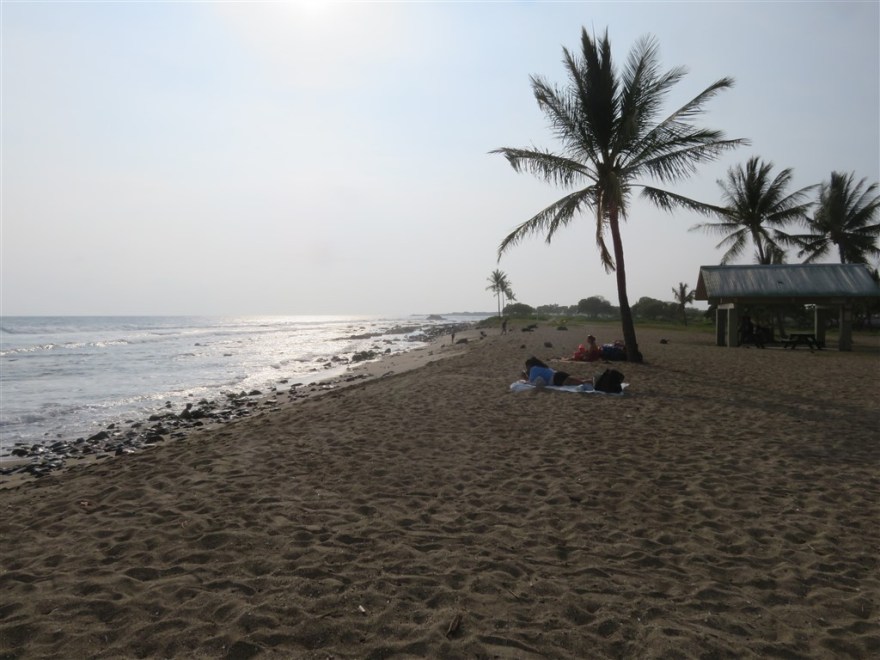
With the beach on one side.

IMG_0298

And an interesting park on the other side.


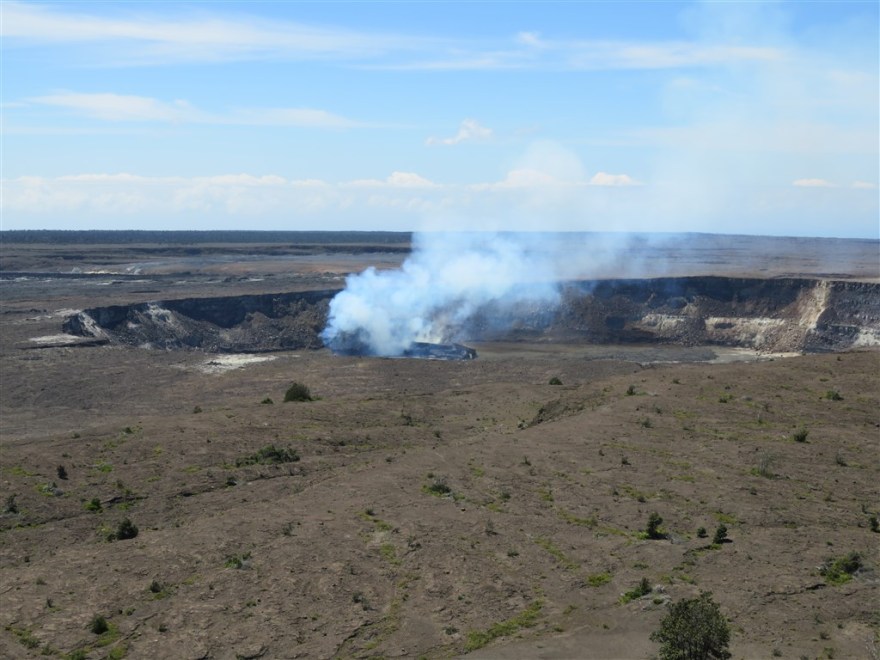
One of the most popular parks on the Island is the Hawaii Volcanoes National Park (www.nps.gov/havo). It is the home of Kilauea – one of the world’s most active volcanoes. It has been erupting since 1983 and you can pretty well drive up to the top and see the smoke coming out of the crater (within a crater).

IMG_0309

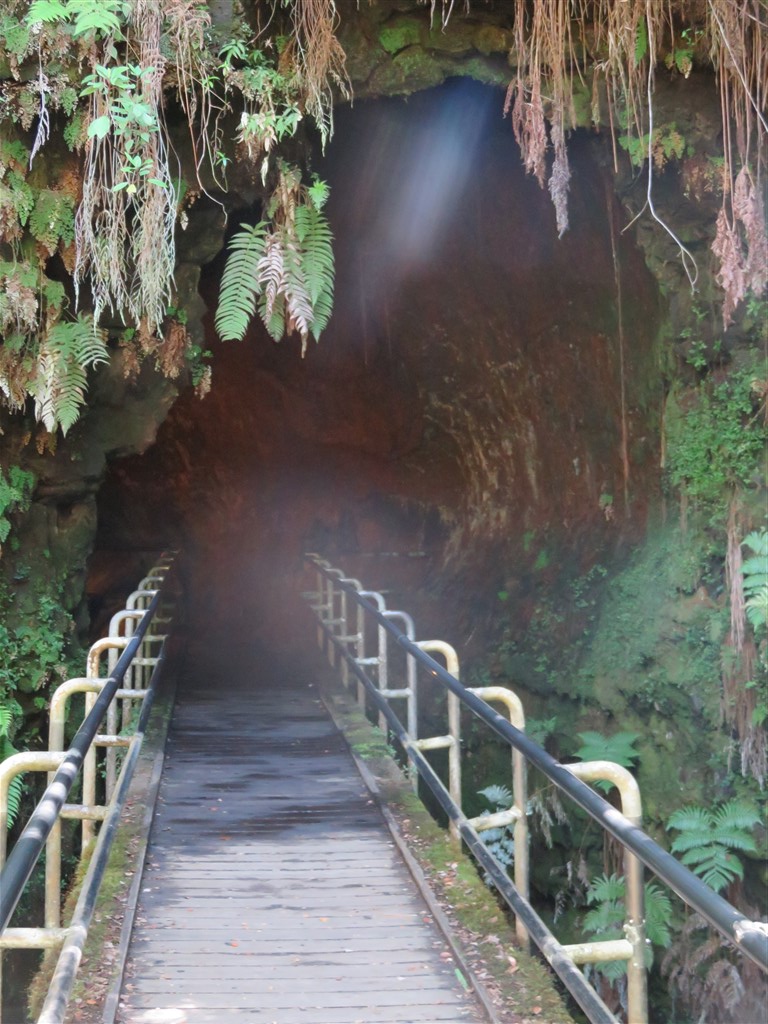
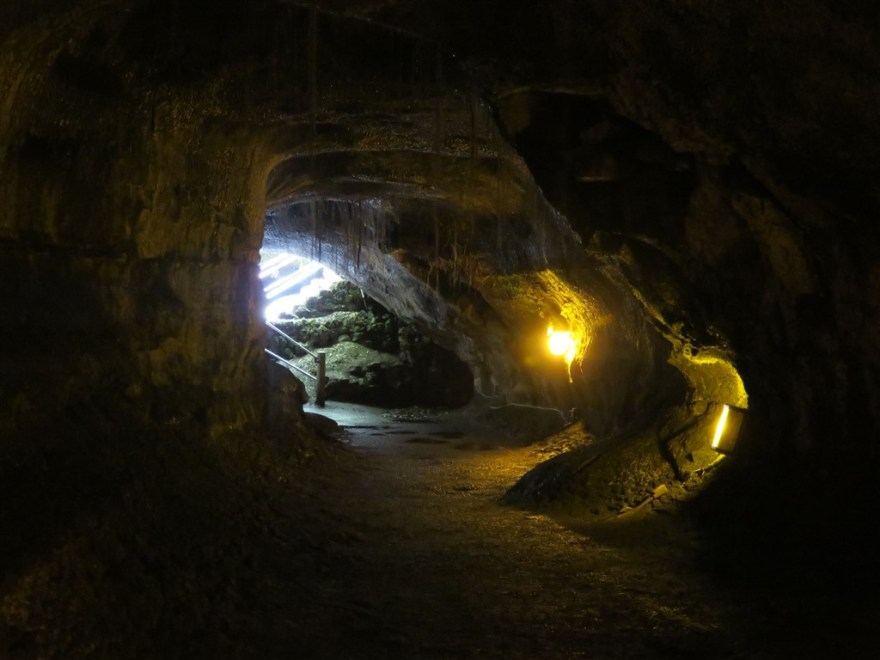
The lava no longer erupts out of the top of the volcano but seeps through lava tubes underground. You can walk through some of the old tubes.

IMG_0311

IMG_0313

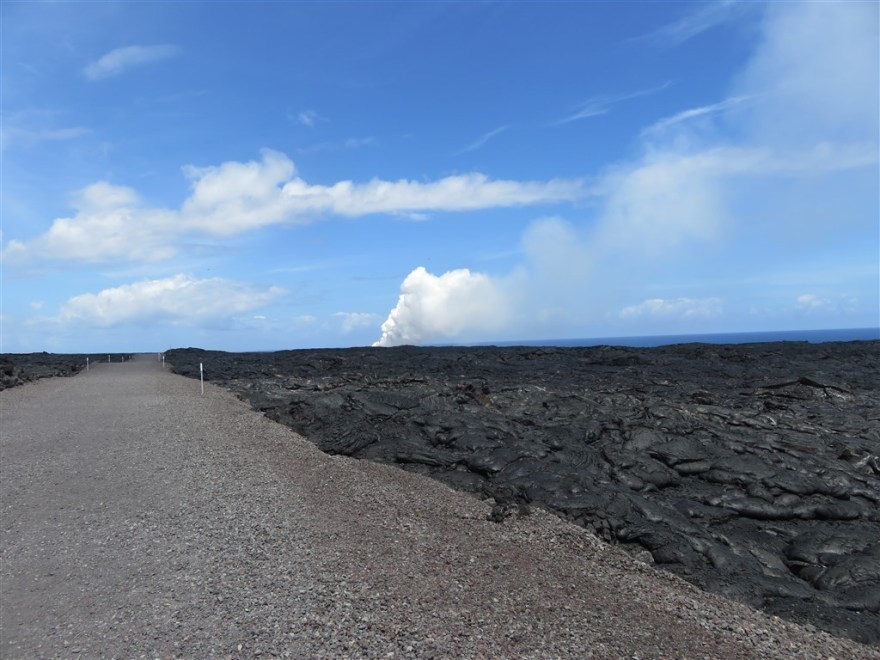
After visiting the top of the volcano, I drove out to the coast where the lava is currently emerging from the tubes and falling into the sea. You have to park 5 miles away and walk out to the drop off point.

IMG_0324

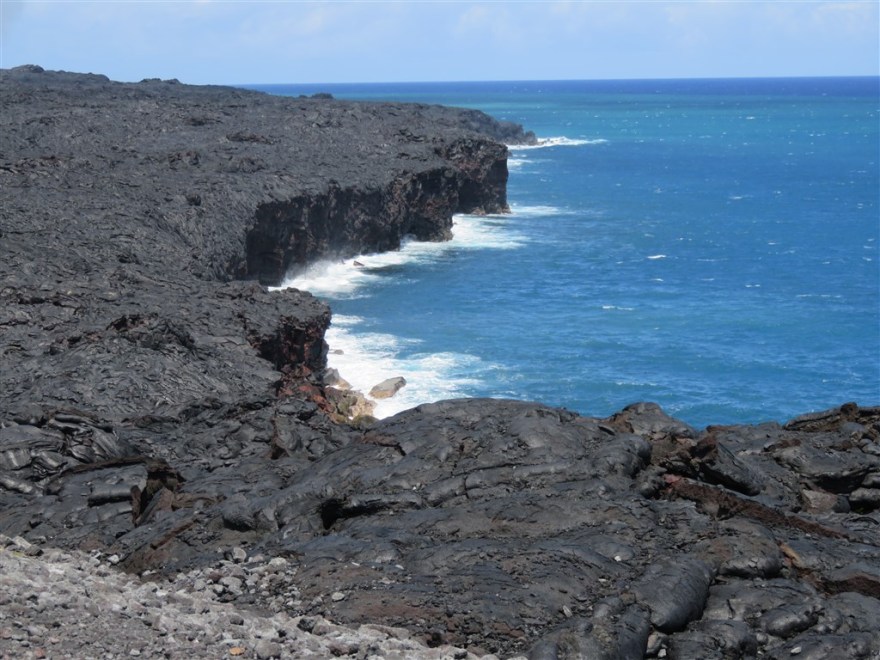
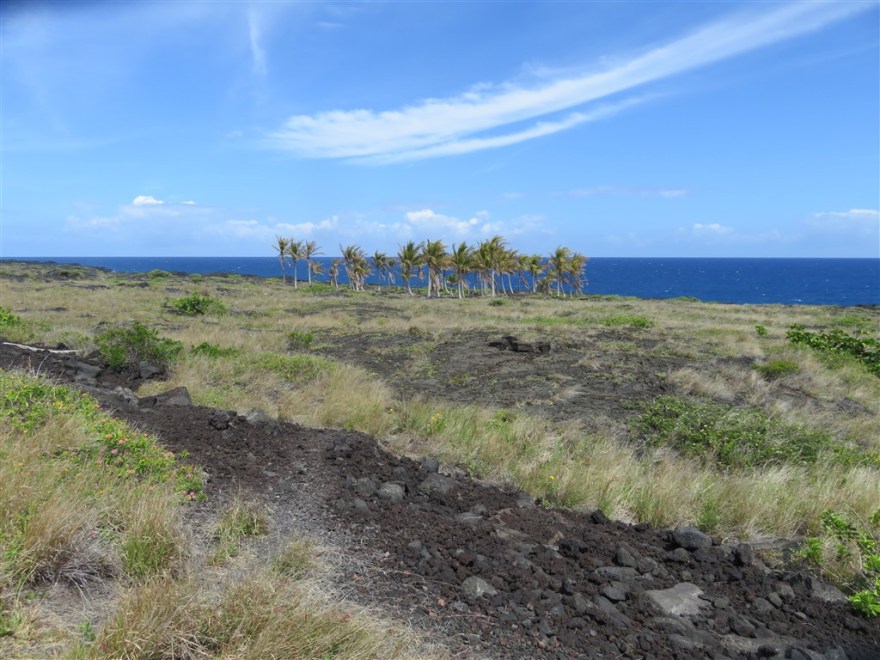
Along the way you can see where the lava has previously dropped into the ocean.

IMG_0333

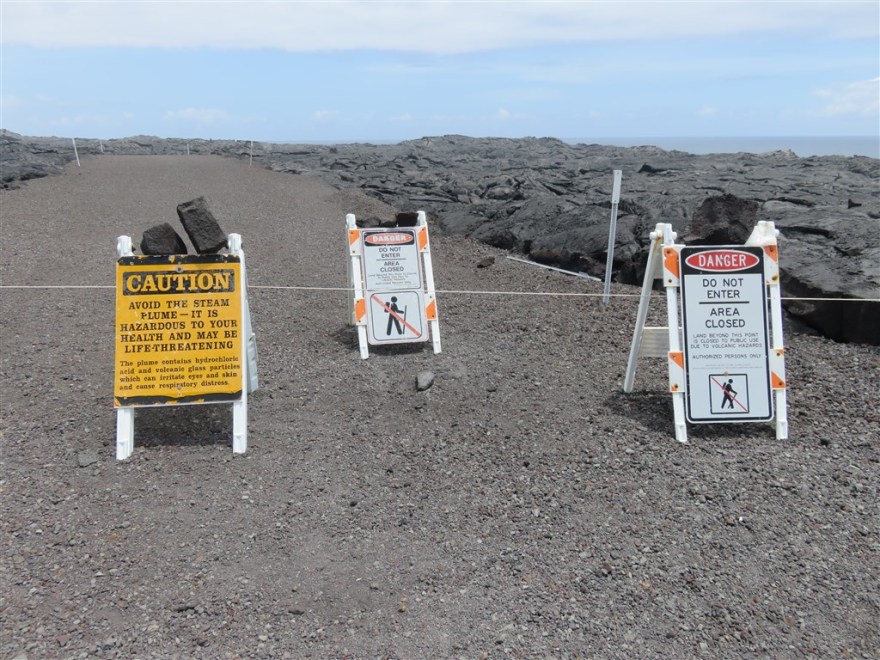
Unfortunately after walking just under 4 miles, the wind changed and the acidic steam started blowing towards the path. This prompted the wardens to close the path and so I wasn’t able to make it to the final viewing point.

IMG_0318

I learnt later that it is best to visit after dark when you can see the orange glow of the lava (which is not visible during the day) – best seen on the pictures on the park’s website.

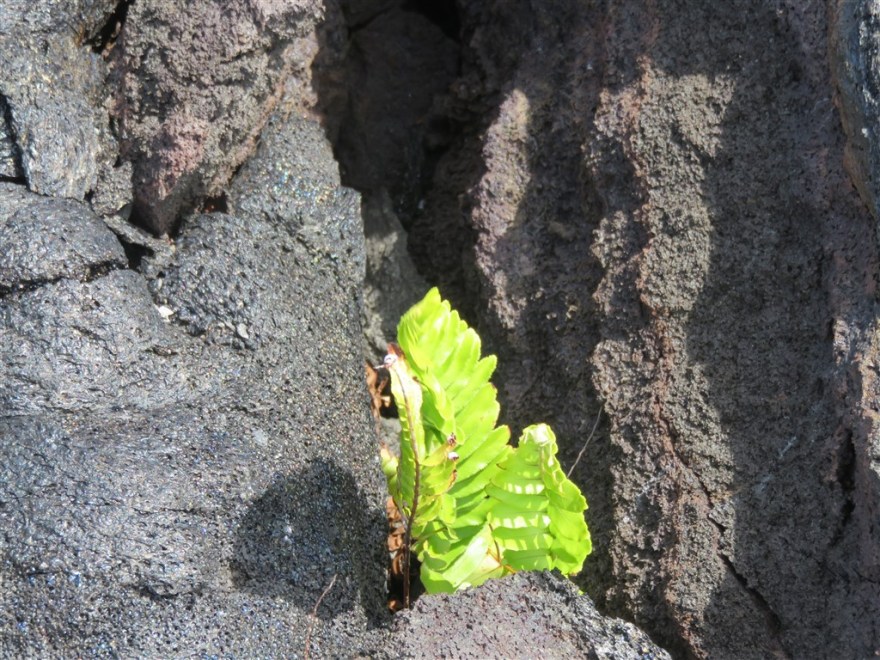
Although the whole area looks barren, you can plant life starting to return to the area.

IMG_0336

Immediately outside the area covered by lava for the current eruption, you can see how quickly plant life returns.

IMG_0338

Mount Kilauea is 4,000 feet high and located on the south east side of the island. Just north of the centre of the island is Mount Mauna Kea (www.ifa.hawaii.edu/info/vis/)which is just under 14,000 feet (or 2.6 miles) high. It is a dormant volcano and the highest point in the state of Hawaii.

IMG_0342

It is one of the best sites in the world for astrological observation and there are now 13 observatories located at the summit funded by 11 different countries. I tried to go up and visit some of them but found that you really did need a 4 wheel drive this time. Having not needed one on Maui, I had just opted for a standard rental car this time. I struggled to get up to the visitor centre at 9,000 feet and so I had to make do with the film they show rather than going up higher.

The Big Island is also well known for Kona Coffee. Only coffee grown in the specified area on the west side of the island around Kona can be called Kona coffee. It is one of the most expensive coffees in the world.

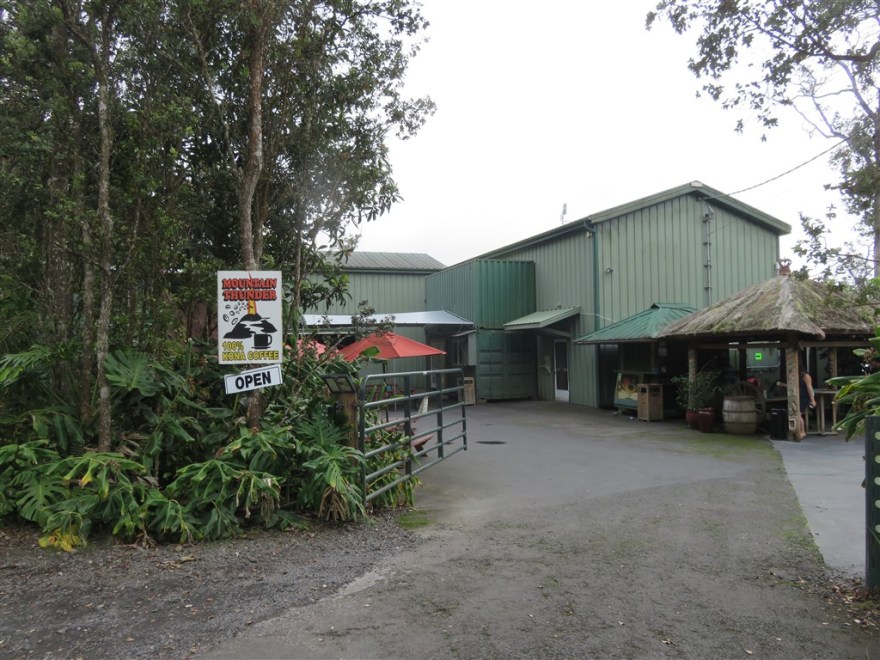
I visited a plantation called Mountain Thunder (www.mountainthunder.com). Although a well established brand, the previous owner have over extended himself and the man showing us around had just bought the business from the bankruptcy count 9 days previously. Despite this, he seemed to have learnt a lot in the last 9 days and gave us a very interesting tour.

IMG_0346

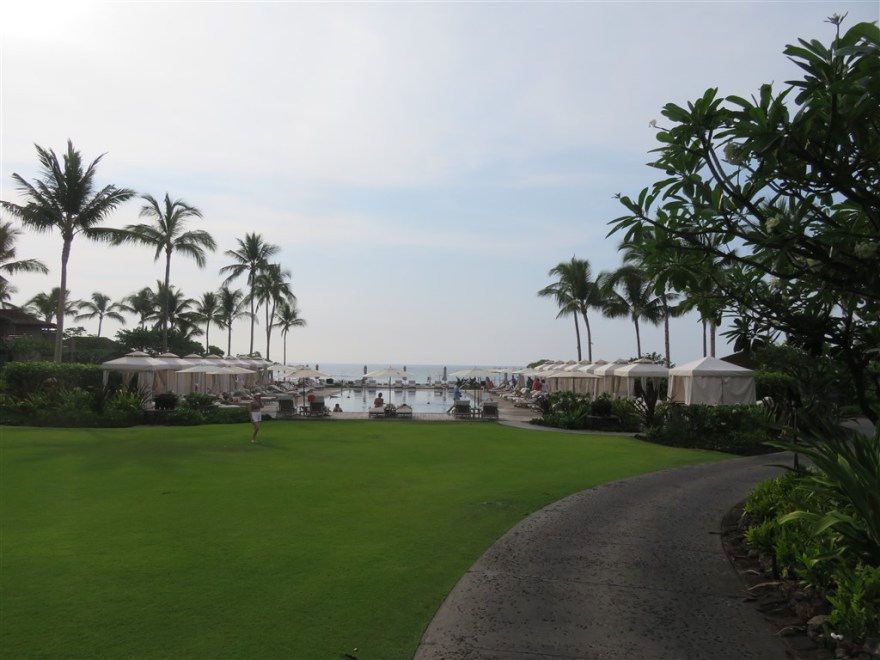
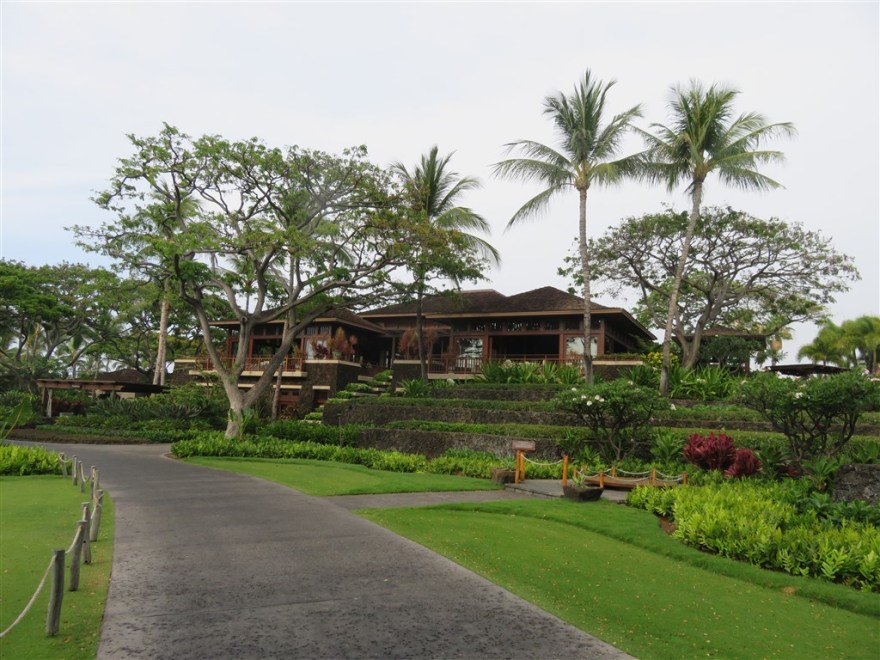
To make up for my rather uninviting hostel, I spent an afternoon at the Four Seasons Hualalai Resort (www.fourseasons.com/hualalai/).

IMG_0351

IMG_0356

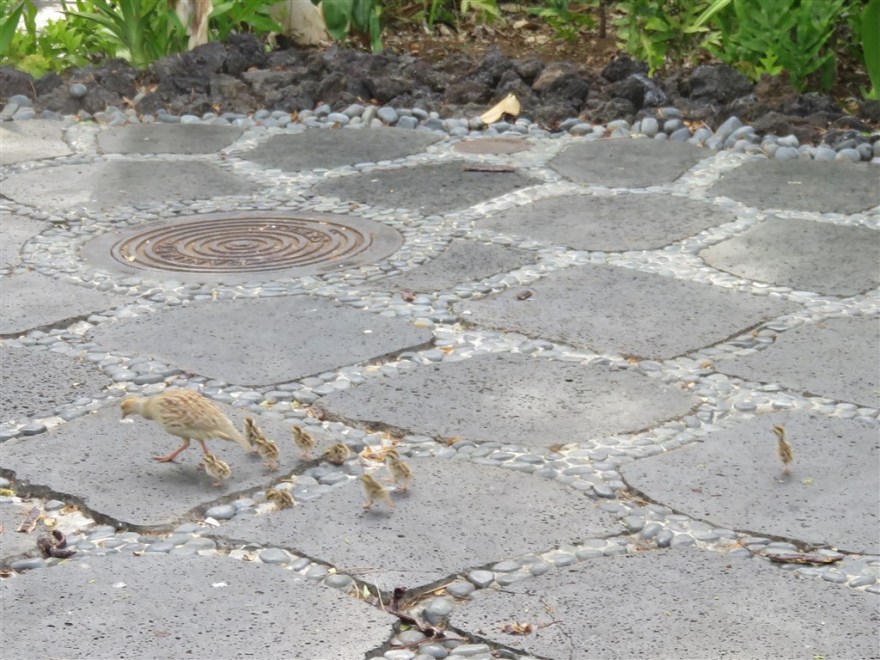
Like the rest of Hawaii, there were new born chicks wandering around.

IMG_0354

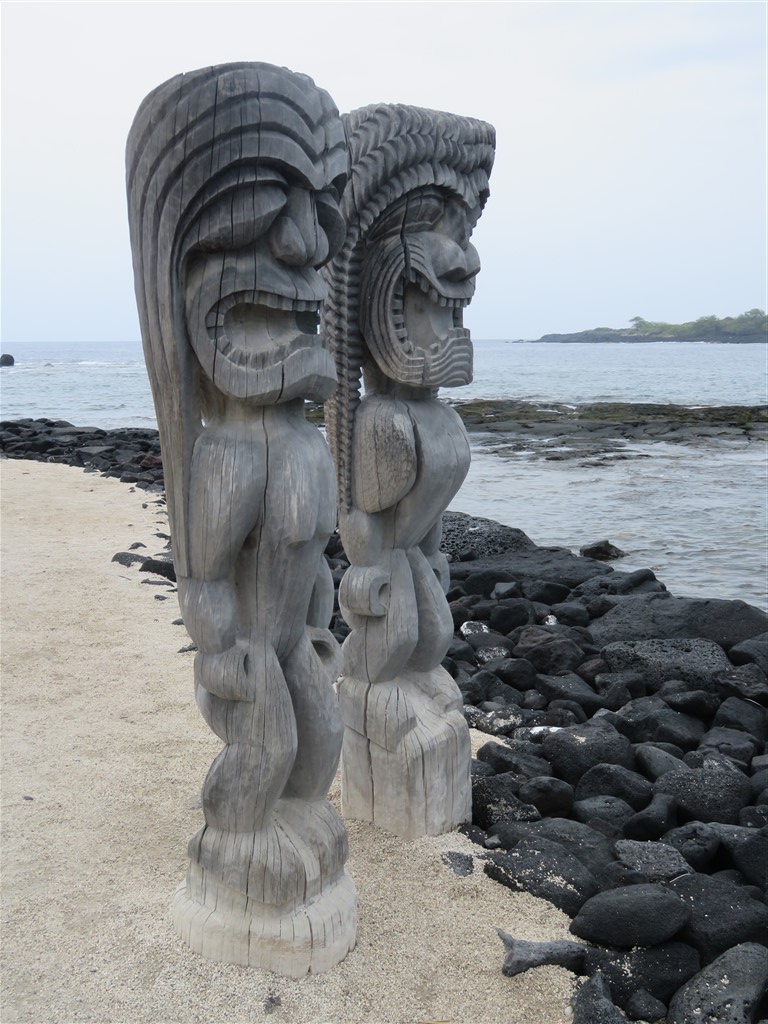
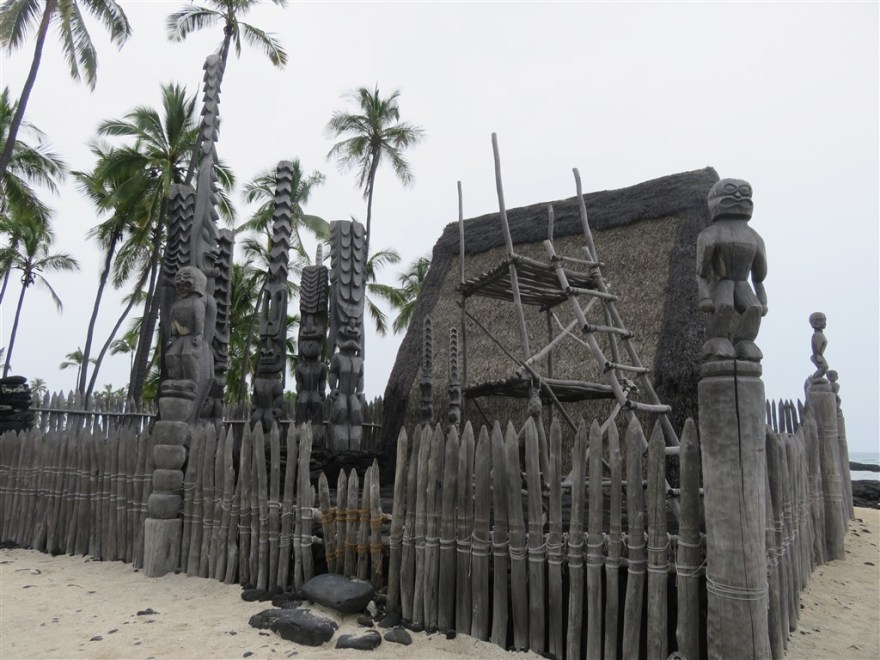
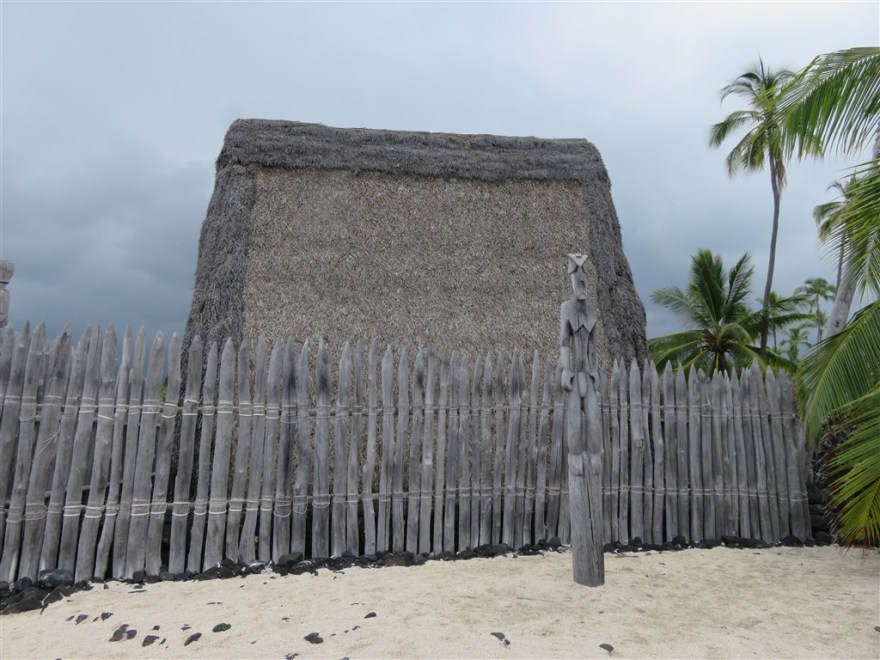
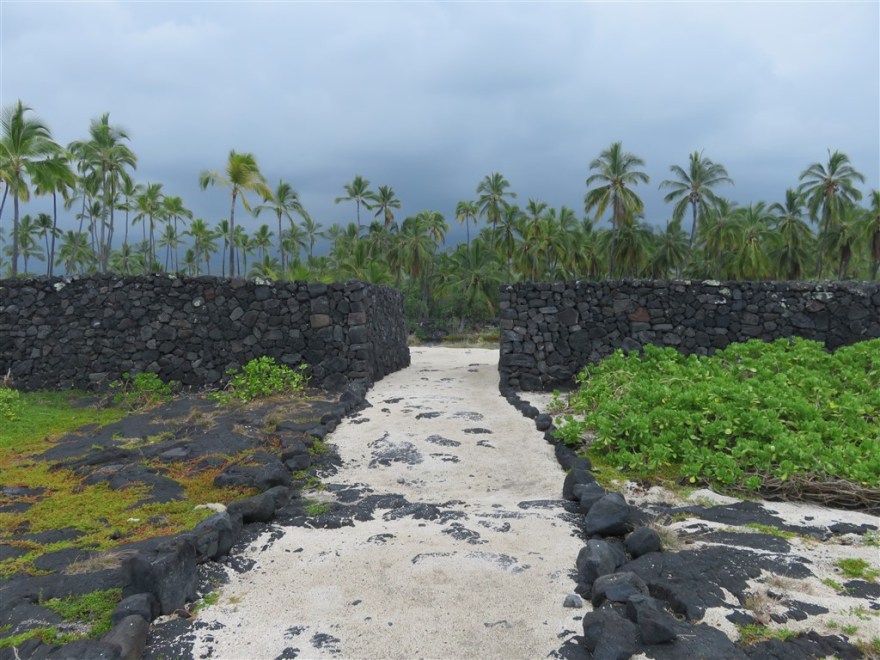
My final trip was to the Pu’uhonua O Honaunau Historic National Park (www.nps.gov/puho). It is a refuge that defeated warriors (or anyone who had broken one of the ancient laws) could flee to. Once the offender had been absolved by a priest they were free to leave.

IMG_0359

IMG_0360

IMG_0362

IMG_0367

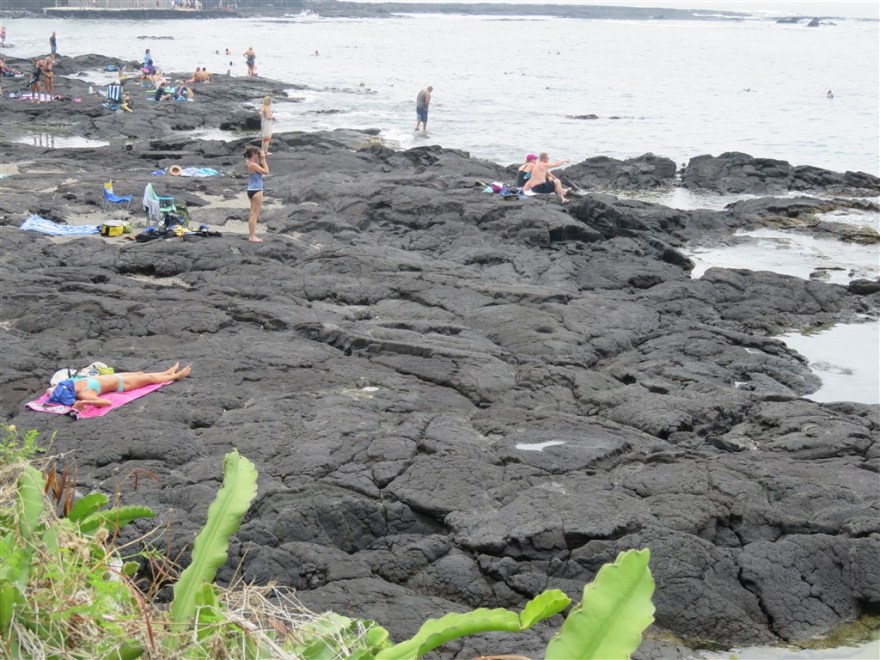
I also went snorkelling at Two Step. You can access the reef directly from the coast (once you have negotiated the rocks!)

IMG_0370

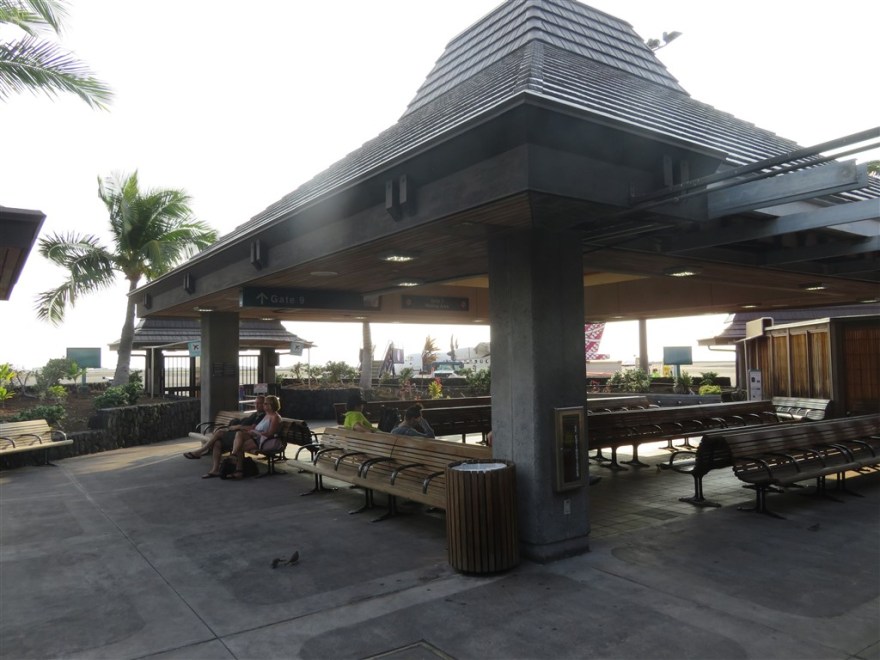
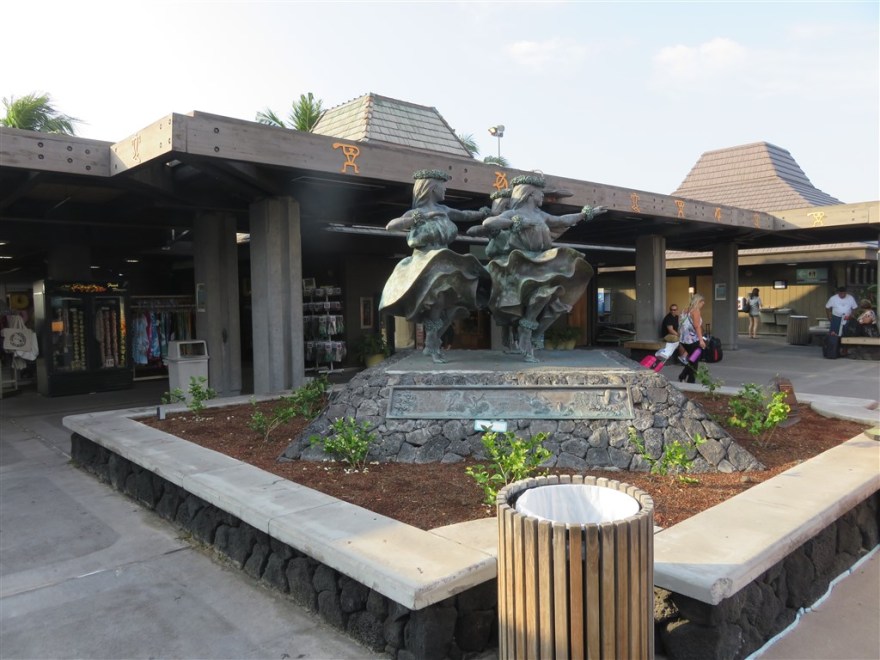
My final memory of the island was Kona Airport. I have visited many small airports where you have to walk out to the plane, but never one that was all outside – including the waiting areas!

IMG_0374

IMG_0375


Maui

I arrived on Maui on 18th April for a 3 day trip. I stayed at the Banana Bungalow (www.mauihostel.com), a hostel in Wailuku.

I hired a car to drive around the island. Note on car hire on Maui – The car hire companies will encourage you to hire a 4 wheel drive vehicle if you want to go around the south side of the island by the Halekala National Park (www.nps.gov/hale). This isn’t necessary as the roads are rough in places but accessible by a car. I didn’t go to the summit of Haleakala but I don’t think this requires a 4 wheel drive either.

The “road to Hana” is the most popular drive on the island. It twists around the coast for 52 miles with speed limits as low as 10 MPH in places.

IMG_0189

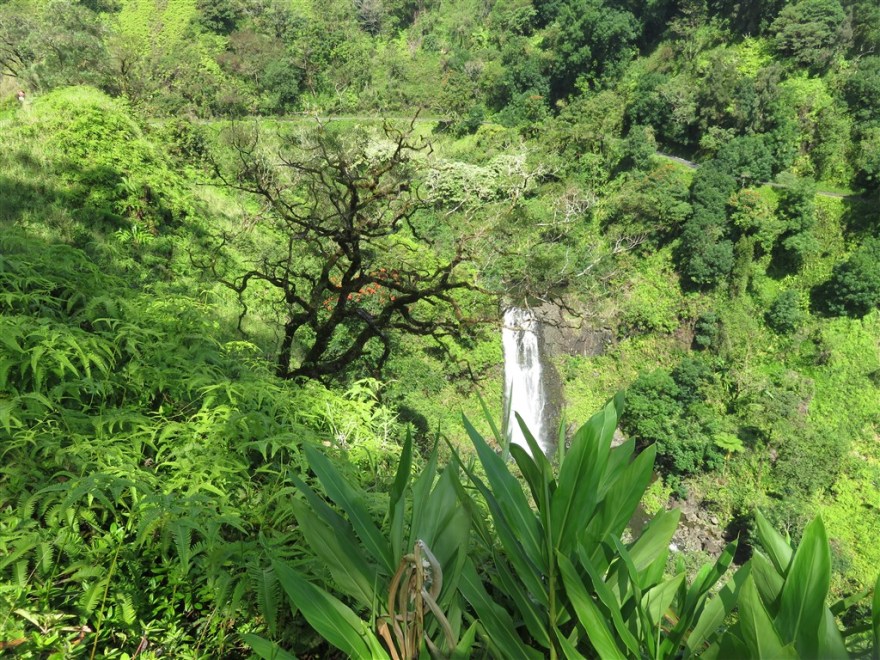
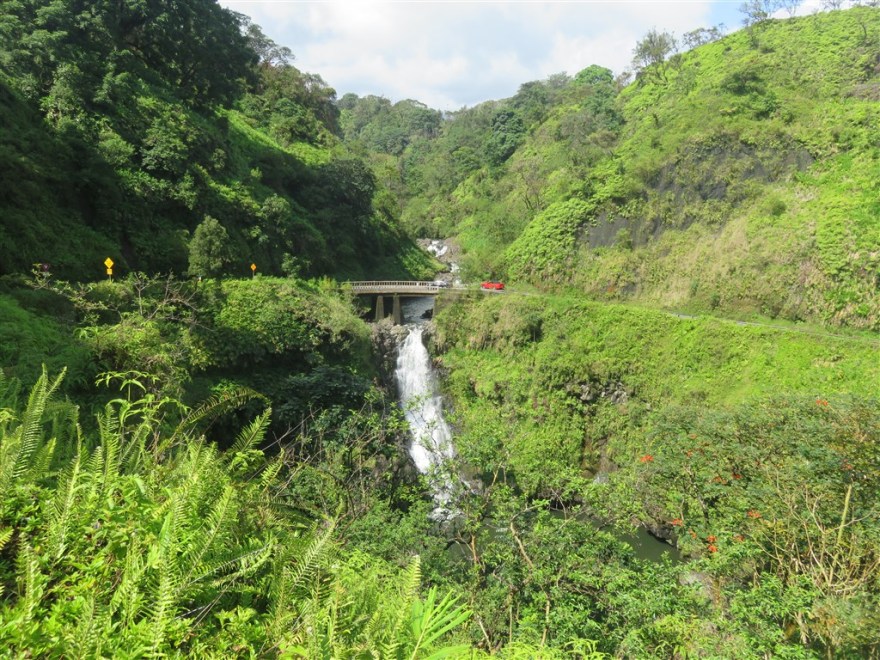
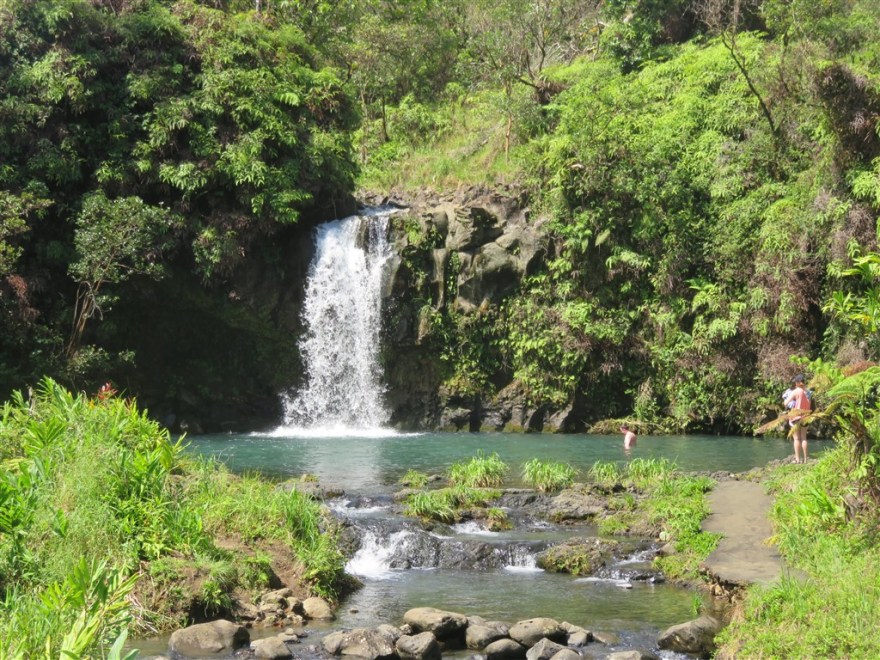
You crosses over 50 single lane bridges and passes lots of waterfalls.

IMG_0195

IMG_0196

You can swim under some of them.

IMG_0206

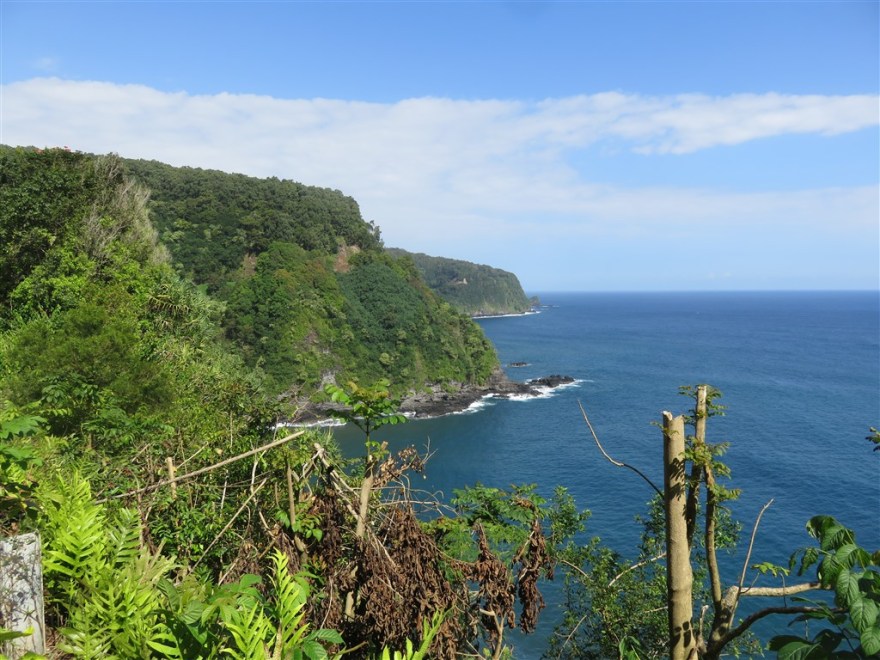
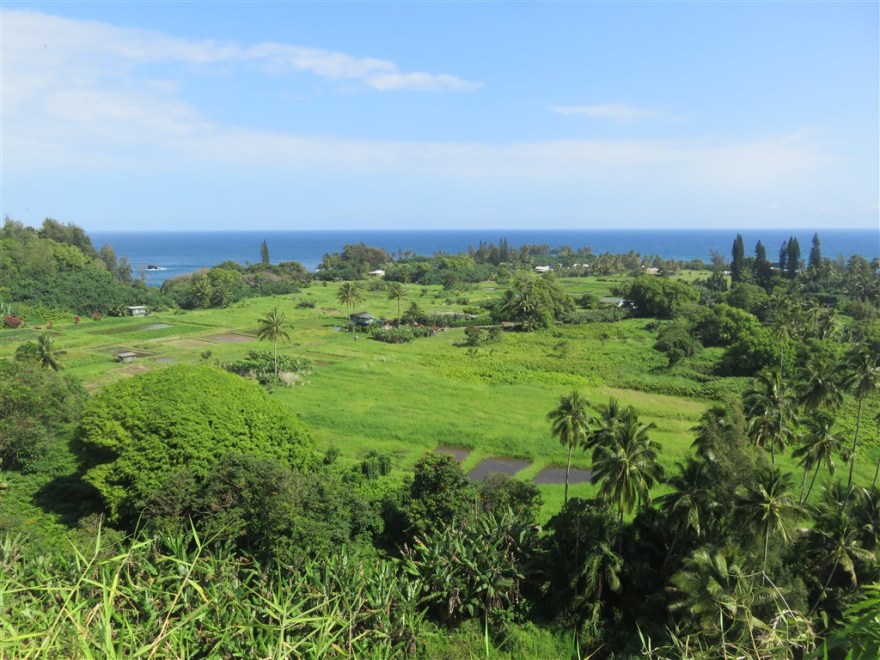
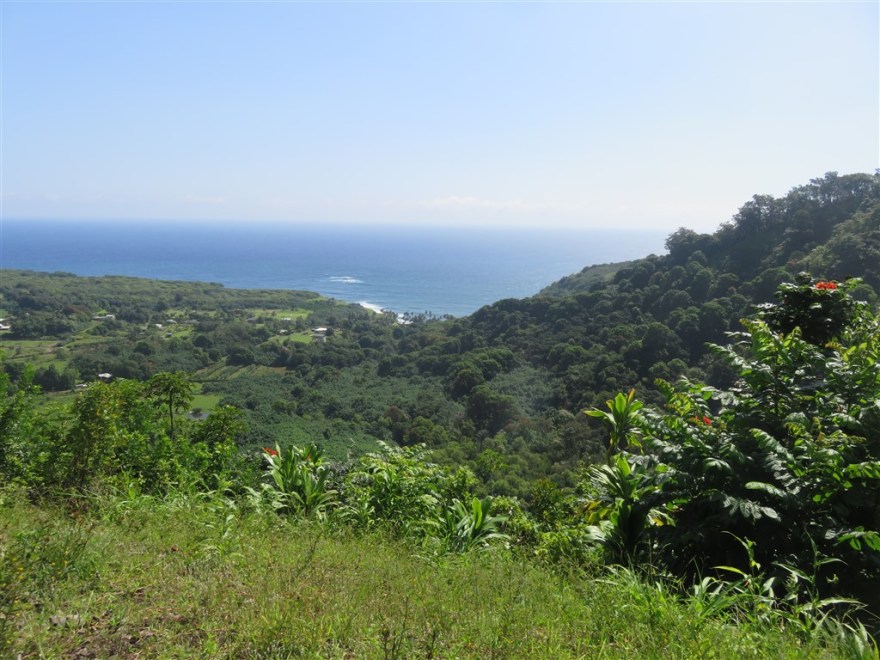
And have great views of the coast all the way round.

IMG_0191

IMG_0193

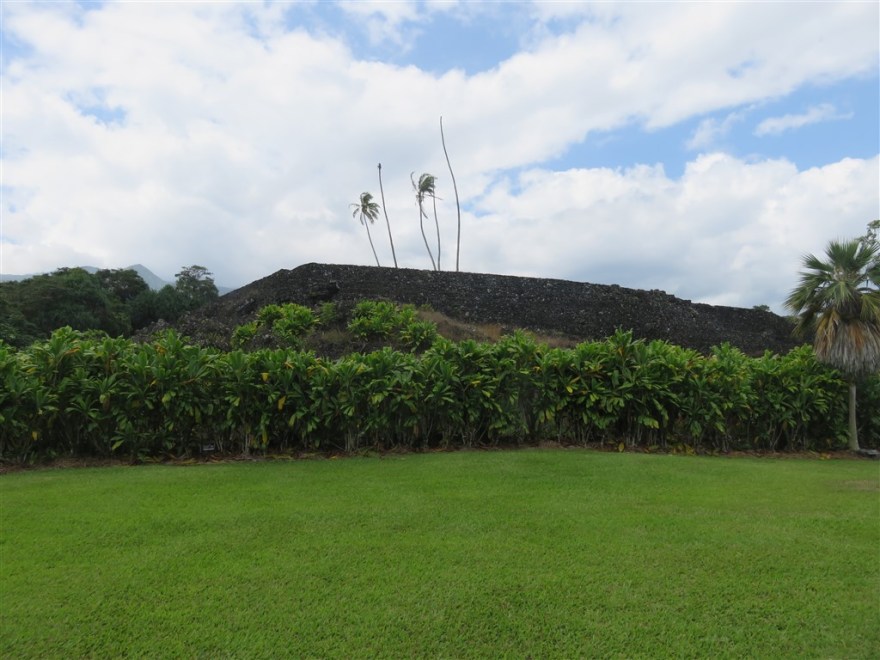
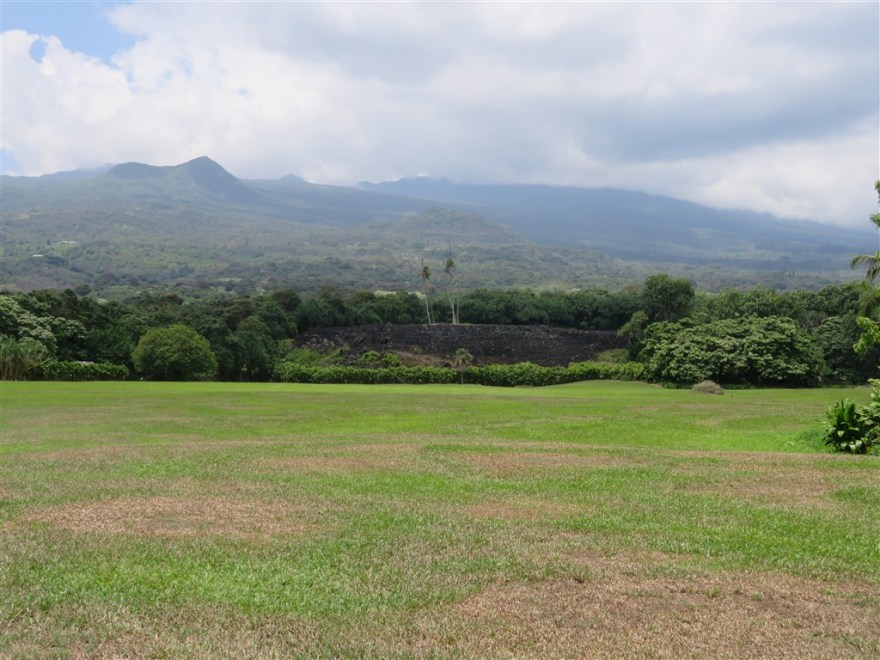
At Hana I visited the Kahanu Garden (ntbg.org/gardens/kahanu.php) which contains the 12,000 m2 Pi’ilanihale – the largest ancient temple in Hawaii dating back to the 14th century.

IMG_0209

IMG_0223

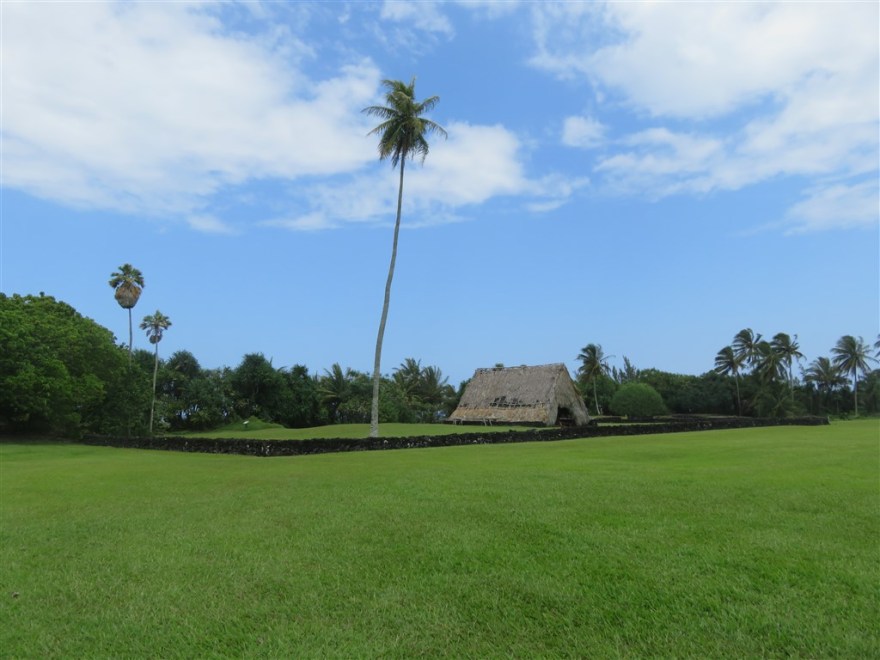
The garden was also the location for one of the largest traditional Hawaiian buildings. A replica has been built in its place.

IMG_0210

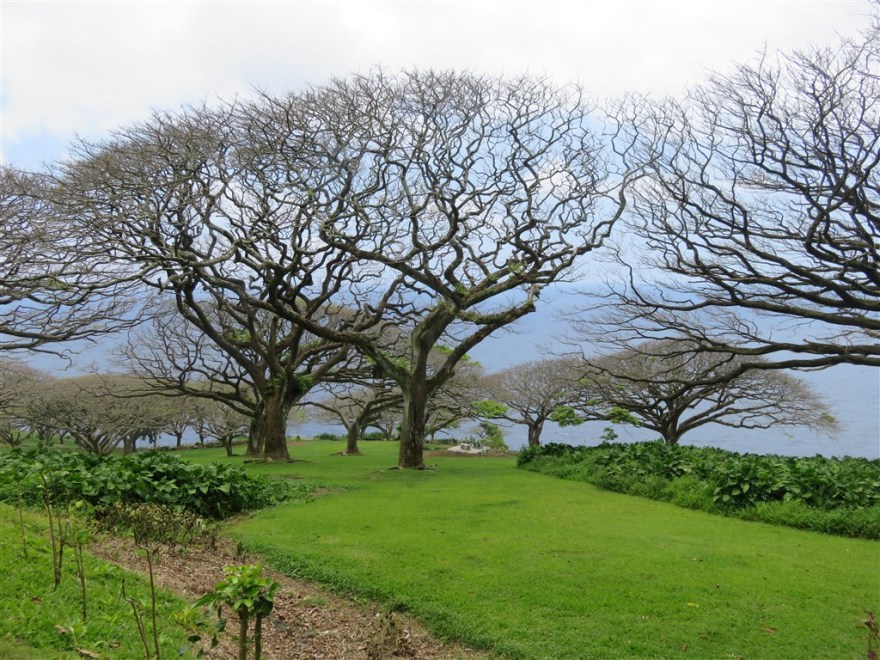
The gardens are located on the volcanic coast.

Hana itself is a small town best known as the retirement home of Charles Lindbergh.

IMG_0230

As you come around to the south side of the island, the geography changes dramatically.

IMG_0247

IMG_0249

This side of the island is sparsely populated with only a couple of local shops.

IMG_0245

The following day I drove around the shorter perimeter of the north east part of the island which surrounds Mount Pu’u Kukui – one of the wettest places on earth with over 380 inches of rain per year. The south side of the route is not very memorable as you have to drive inland of the many high end resorts on the beaches.

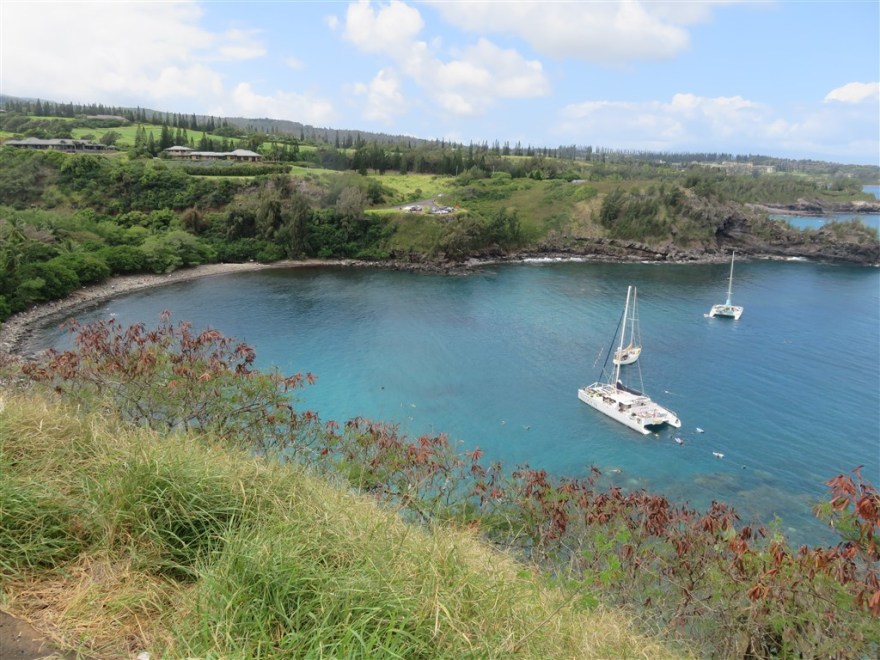
Honolua Bay is accessible to the public and popular for snorkelling.

IMG_0252

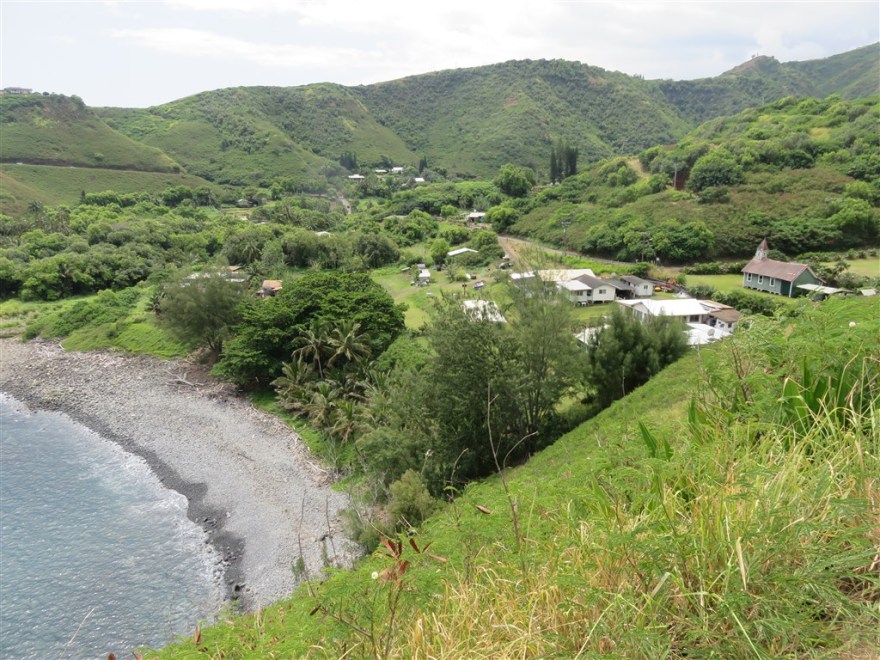
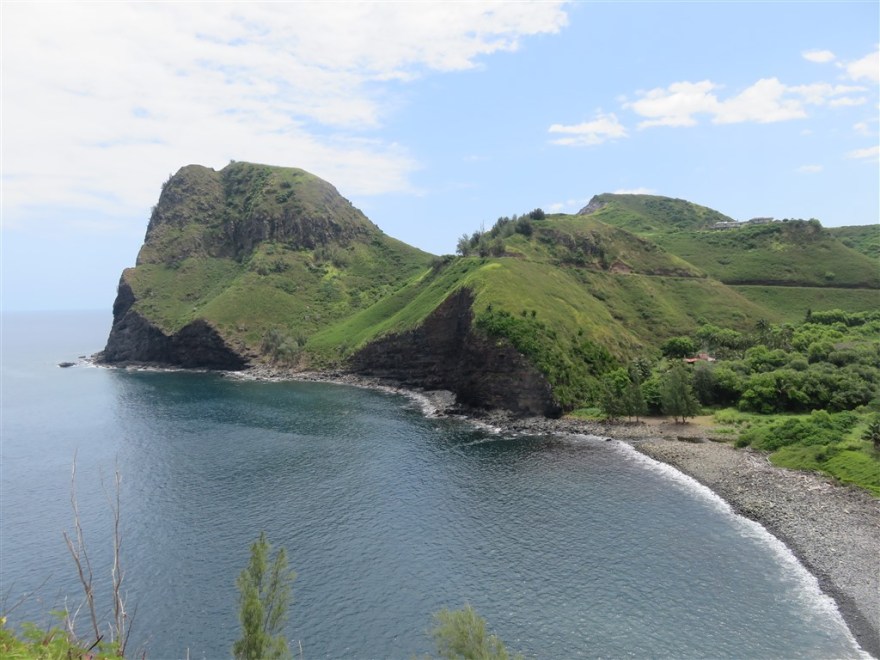
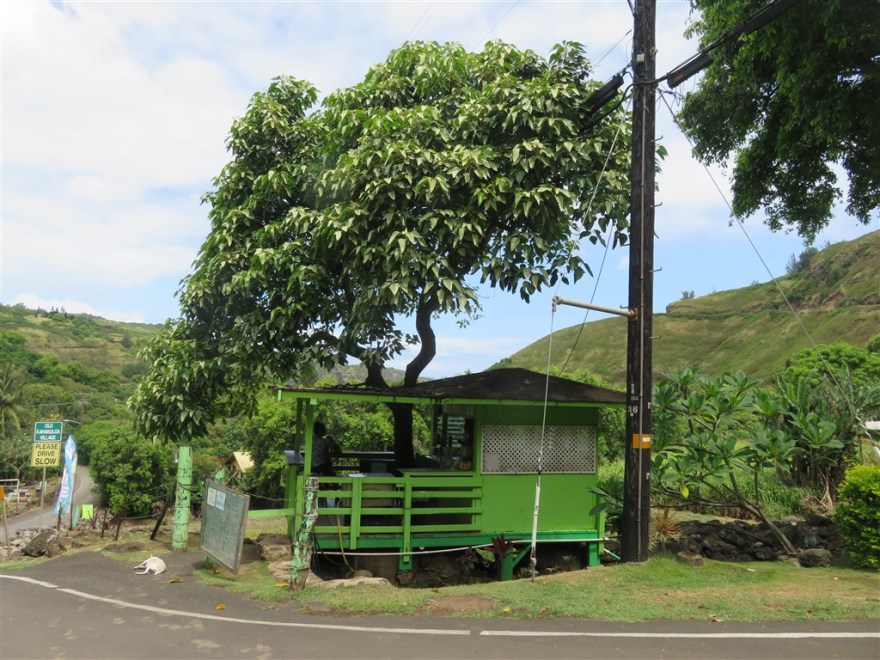
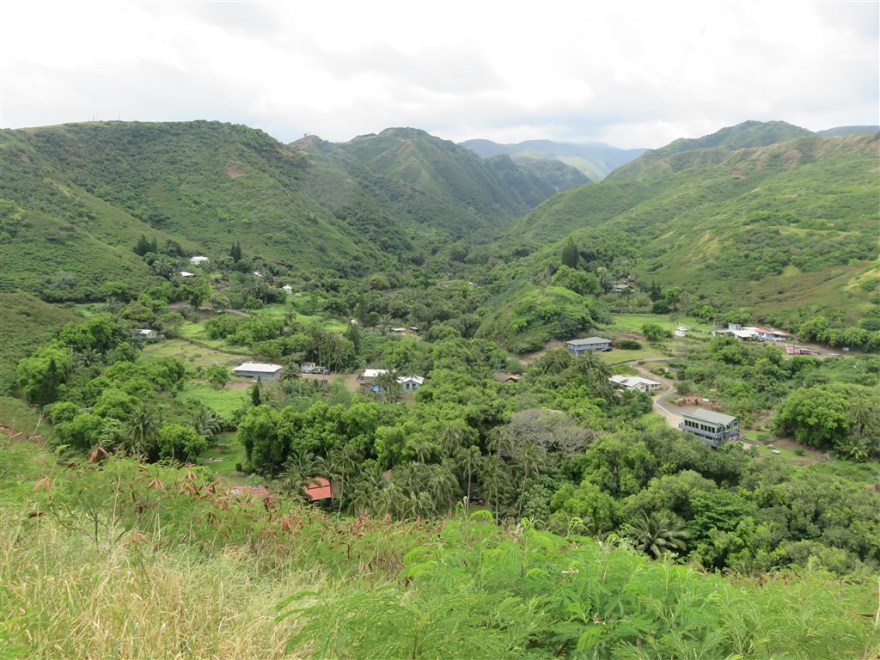
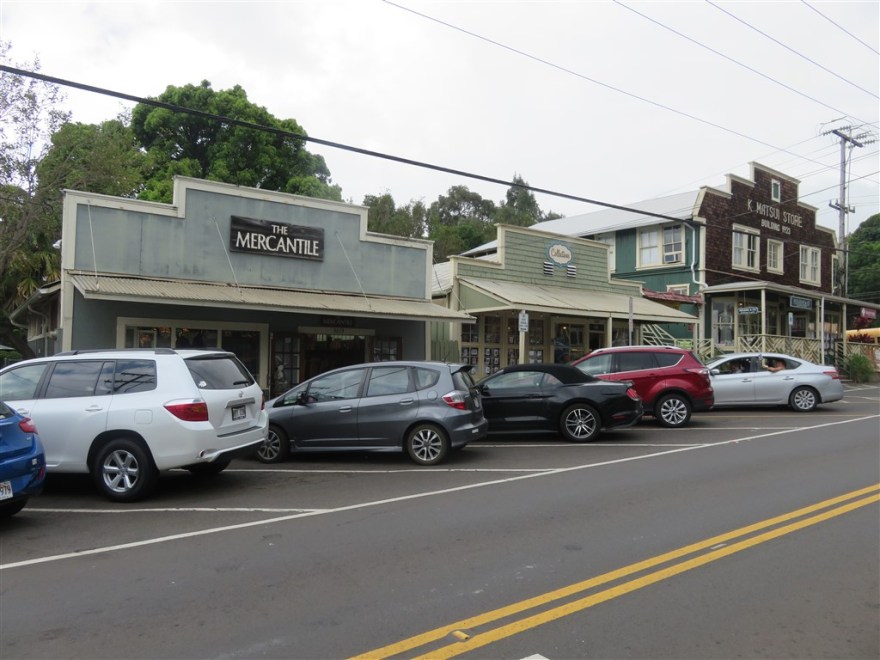
The most interesting part is around Kahakuloa on the north side.

IMG_0254

IMG_0255

IMG_0256

IMG_0258

The island of Maui is much quieter than Oahu and feels more like being in the country. It is also populated by lots of wild chickens who appear to like hanging out at coffee shops.

Other wildlife highlights on Maui, included visiting the Kanaha Pond State Wildlife Sanctuary which is home to 3 endangered Hawaiian bird species, the Hawaiian coot, the Hawaiian duck and the Hawaiian (or black-winged) stilt. I didn’t see any Stilts or ducks as much of the sanctuary was closed off as it is nesting season.
I visited the Surfing Goat Dairy (surfinggoatdairy.com) – an award winning goat farm. It got its name because the owner offers free goats cheese to anyone bringing in unused surf boards (the goats don’t surf). He had noticed the large number of abandoned ones left all over the island and wanted to do something about it. He uses them for fencing. It is also a great place to visit if you like goats cheese.

I also enjoyed visiting the village of Makawao which has become a thriving arts community.

IMG_0271

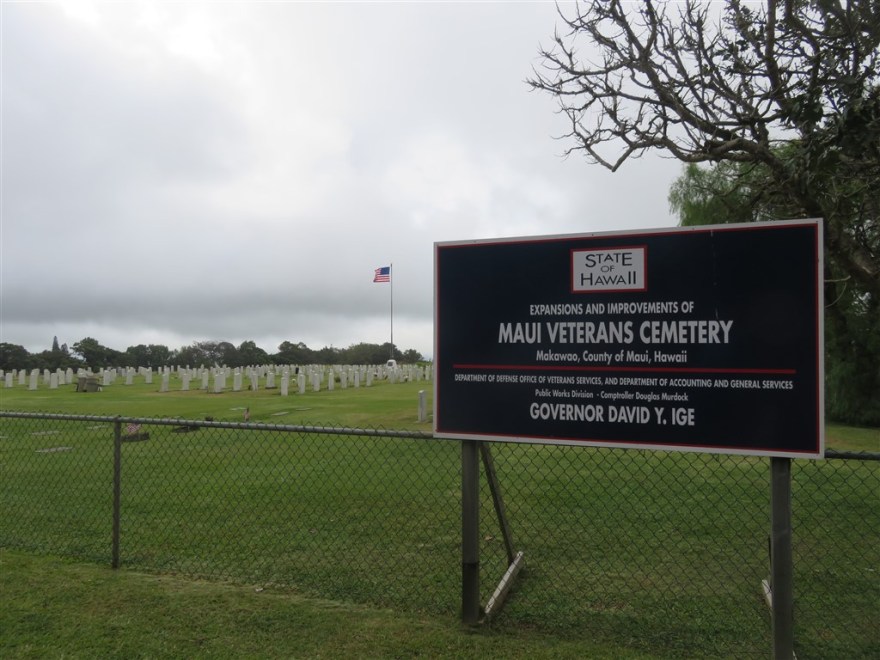
Unfortunately most of the other towns and villages were very modern and didn’t have much character. On my way out of the village, I passed the local veterans cemetery which is about to be expanded. Maybe they have had advance warning of Mr Trump’s military plans!

IMG_0273


Honolulu

I landed in Honolulu part way through a 42 hour day (having crossed the international dateline on 15th April and gained a day.) Honolulu is on the island of Oahu – the third largest of the 8 main islands that make up the state of Hawaii.

I checked into The Coconut Waikiki Hotel (coconutwaikikihotel.com) a couple of blocks away from Waikiki Beach. It was bright, clean and friendly hotel about 10 mins walk from the beach (but a quarter of the price of hotels on the beach).

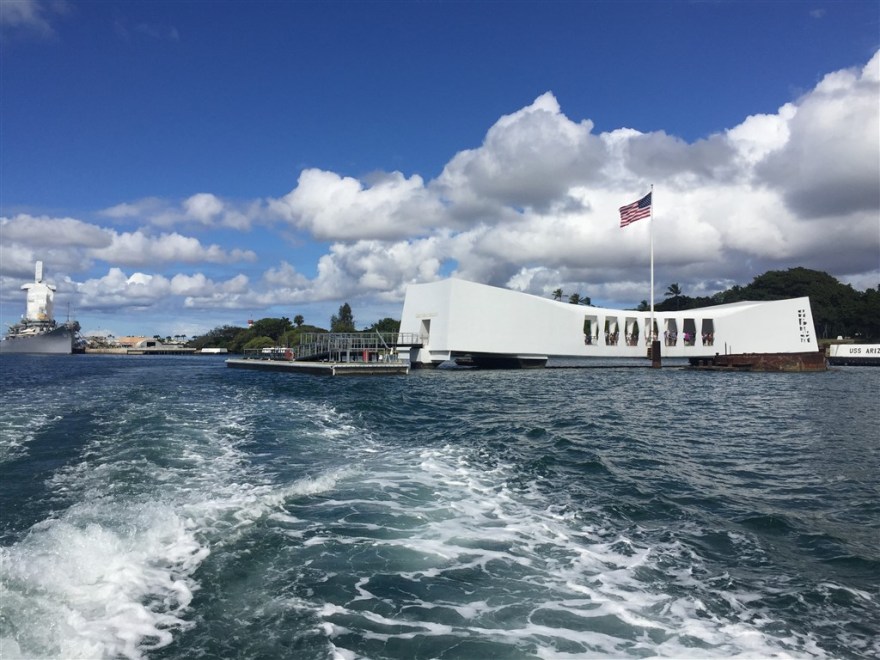
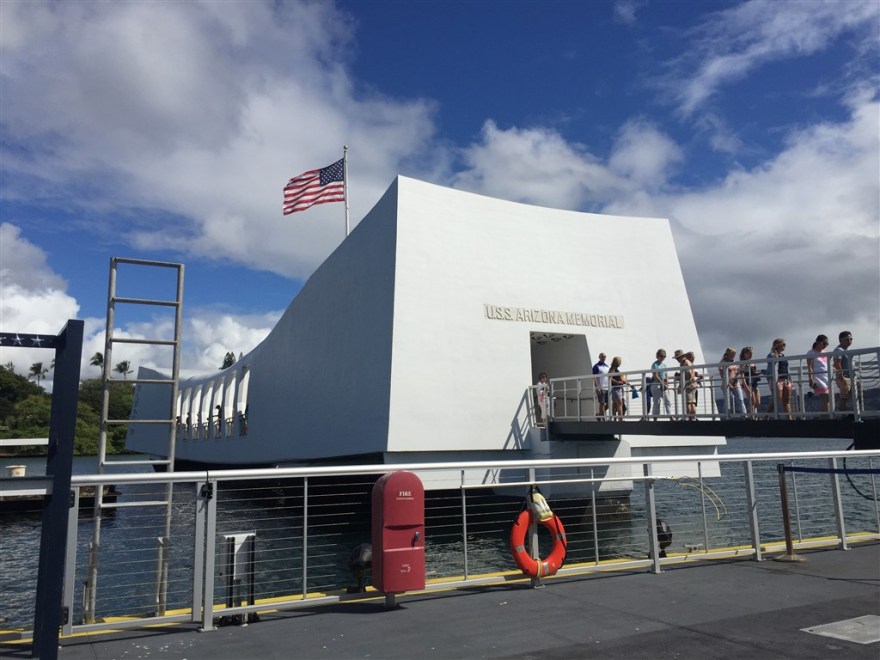
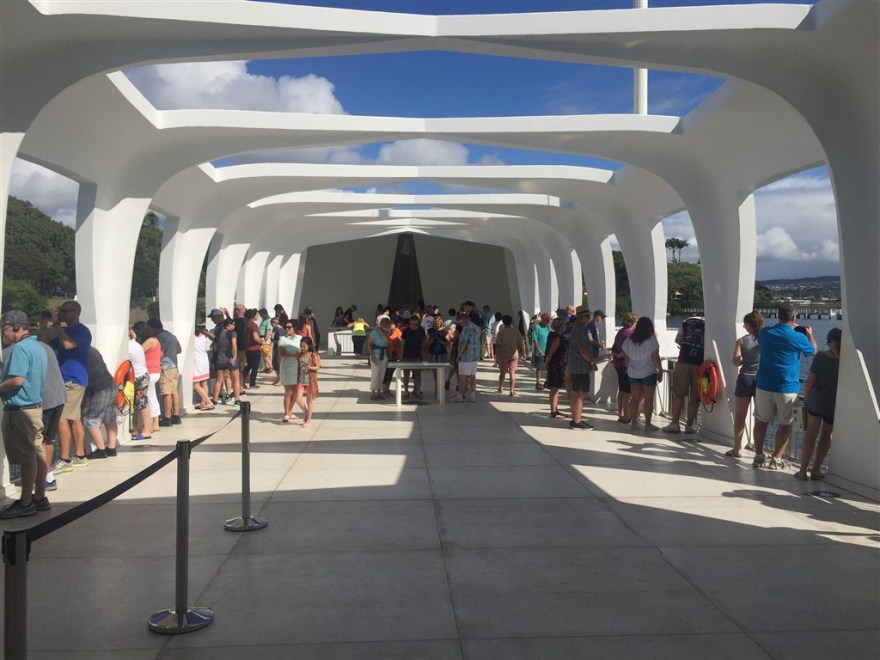
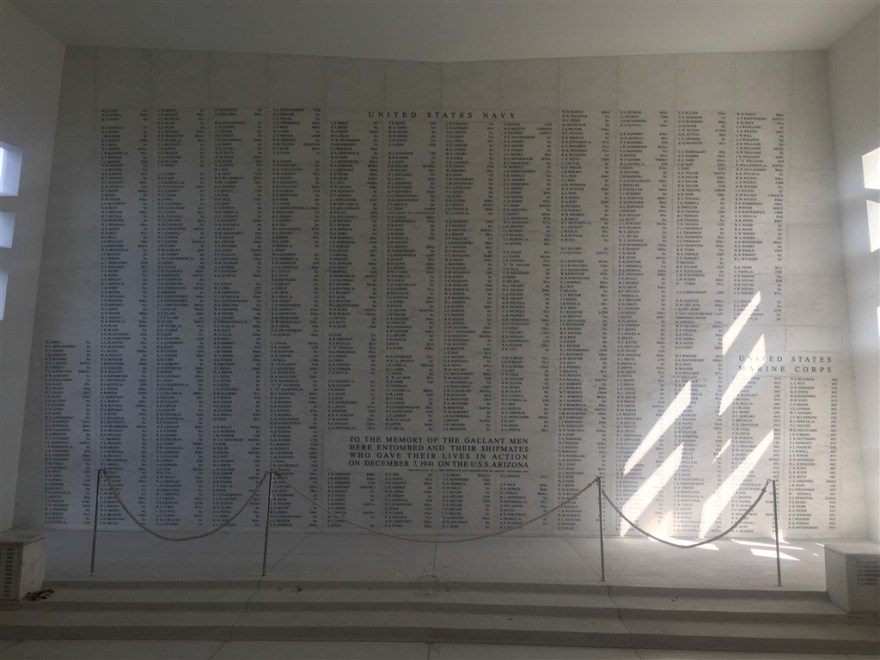
My first trip was to Pearl Harbor just west of Honolulu. I started by visiting the USS Arizona Memorial which is built over the remains of the ship.

IMG_1062

IMG_1059

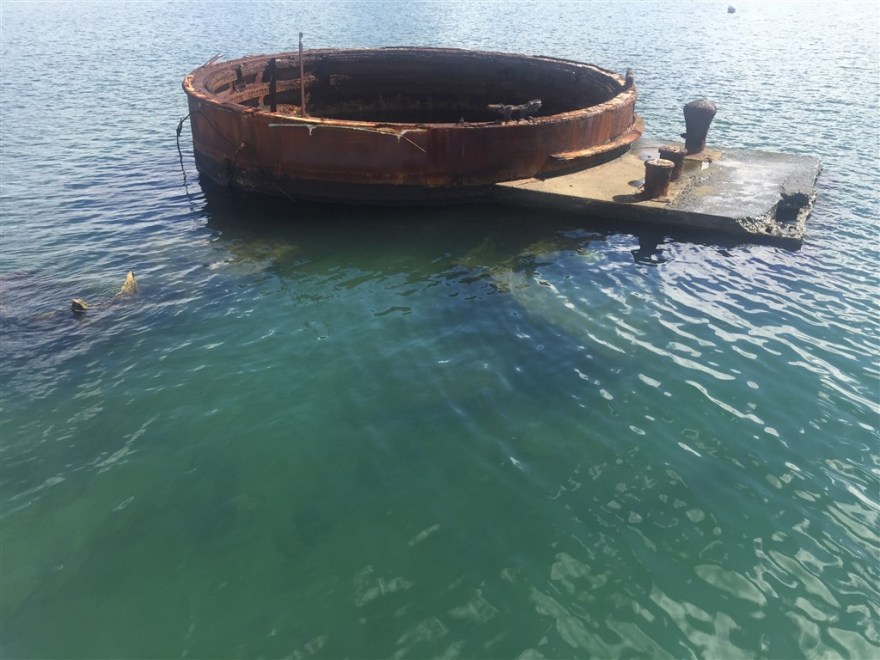
There is still oil visible on the surface of the water. About 2 pints a year still leaks out of the hull.

IMG_1045

The memorial can only be reached by boat and it is visited by about 2 million people annually.

IMG_1043

IMG_1053

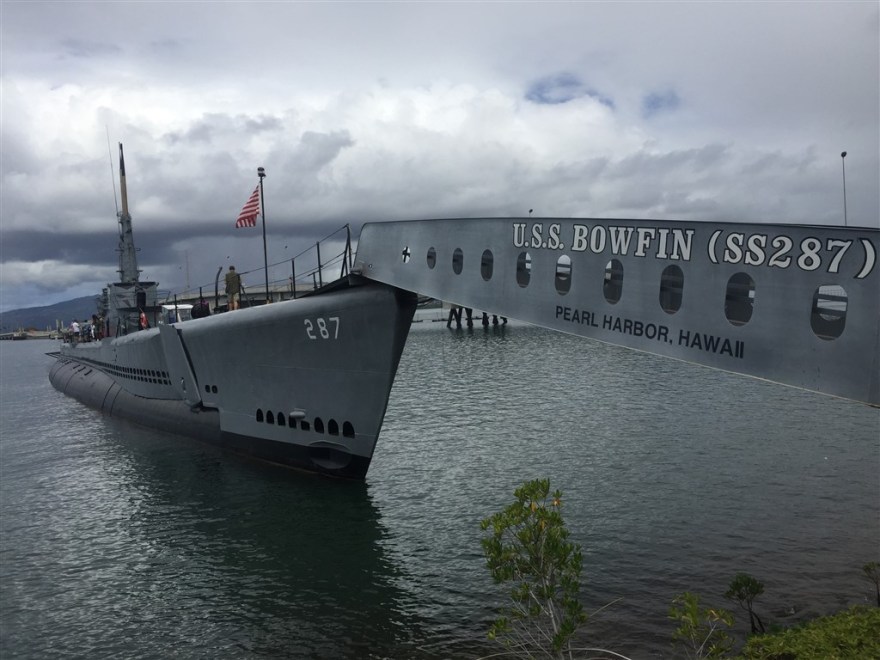
Next I went aboard the USS Bowfin which has been moored next to the USS Arizona Visitor Centre since 1981. She was in service from 1942 until 1971.

IMG_1065

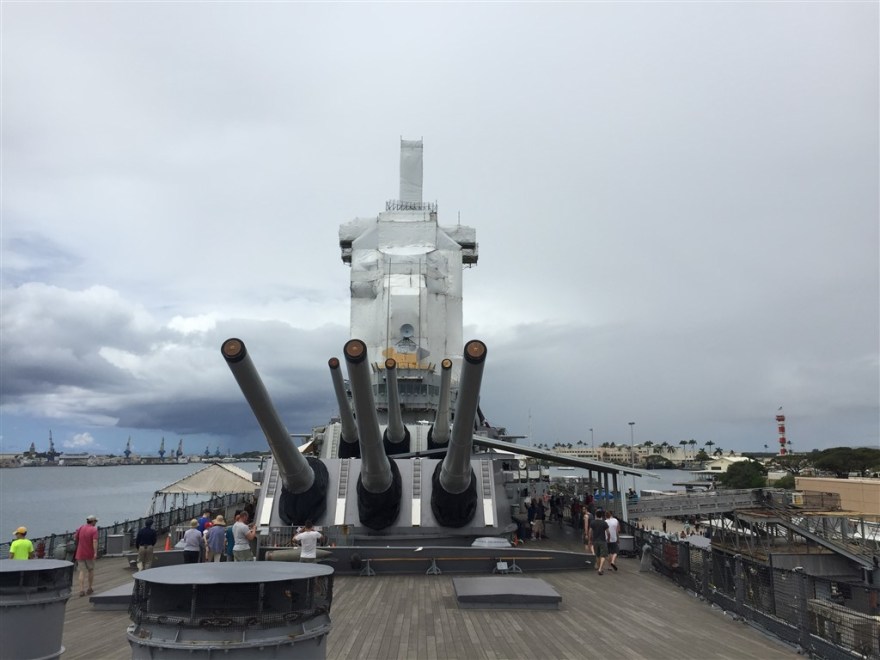
I also visited the USS Missouri which was the last battleship to be commissioned by the United States. She was in service from 1944 until 1995.

IMG_1067

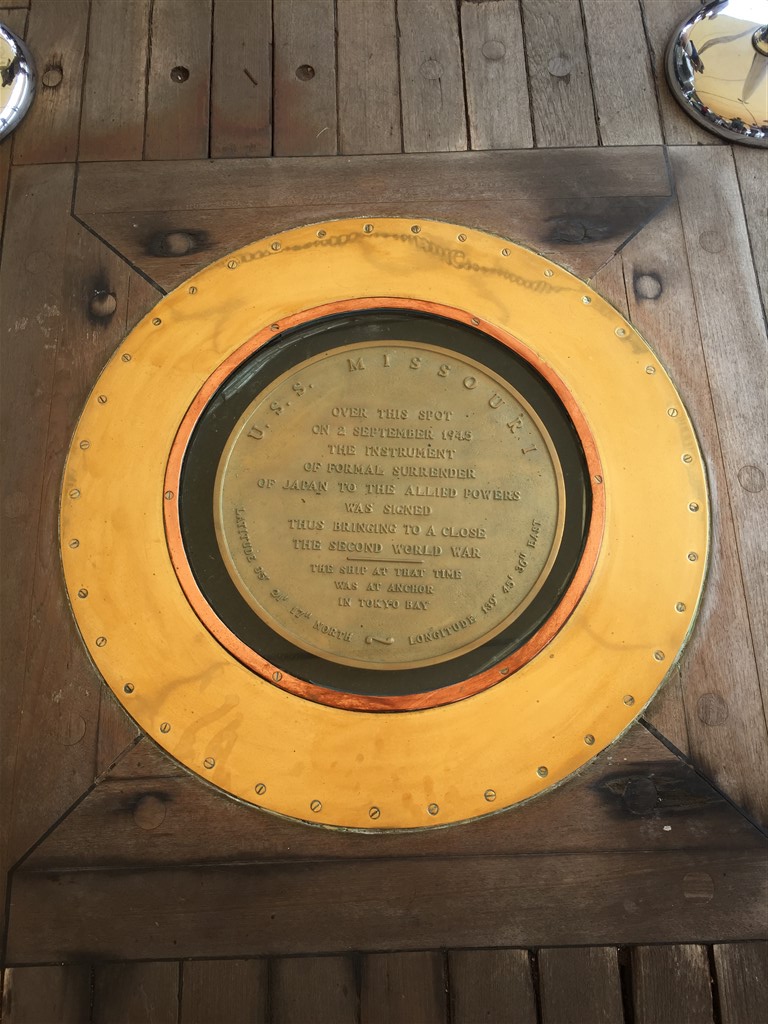
Having served in the second world war, the Korean War and the 1991 Gulf War, she is best known as the location for the signing of the Japanese surrender in World War II.

IMG_1070

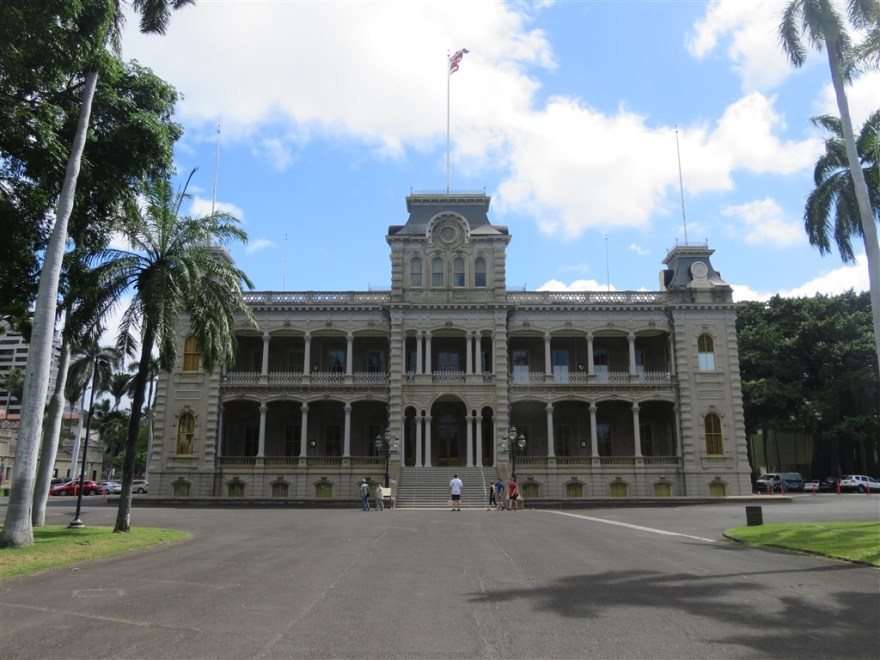
Next, I headed into the city to have a look around. My first stop was The Iolani Palace – the royal residence of the rulers of the kingdom of Hawaii.

IMG_0157

The palace is the only official state residence of royalty on US soil. It was built by King Kalakaua in 1845.

IMG_0152

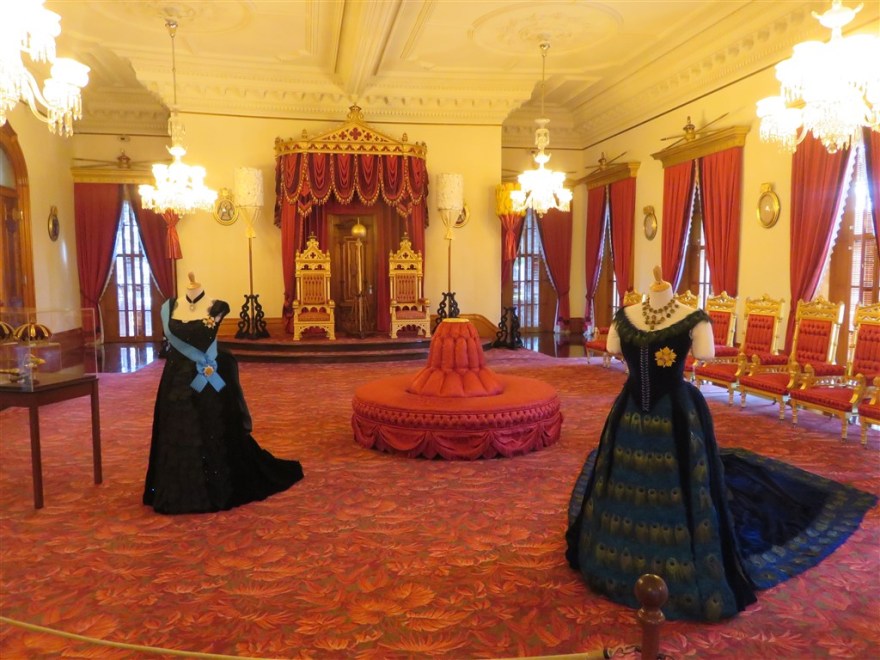
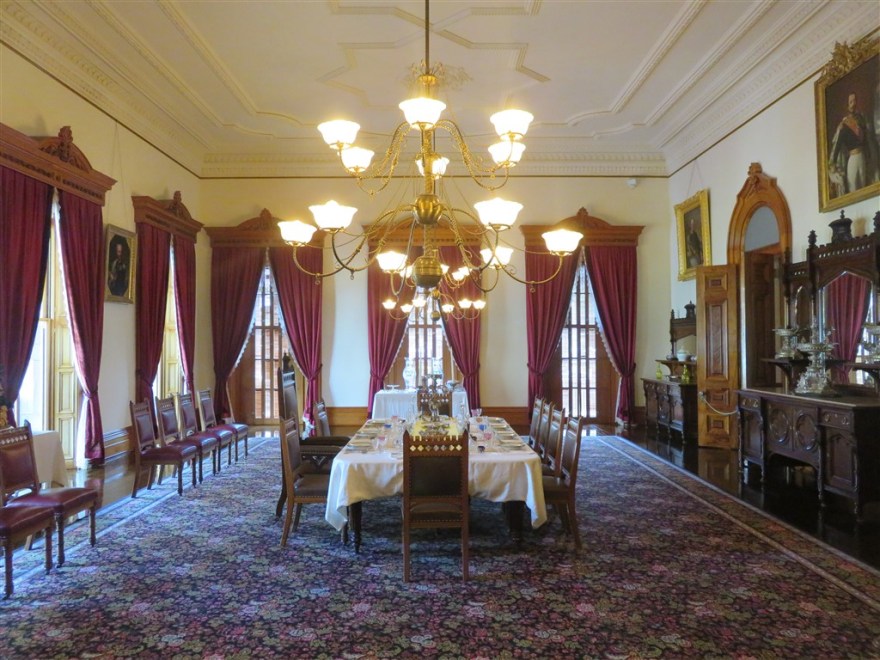
The King was very interested in technology and the new palace had electric lights and flushing toilets before the White House or Buckingham Palace. The Palace has no light switches. The King would write a memo to his engineer telling him what time wanted the lights on.
IMG_0153

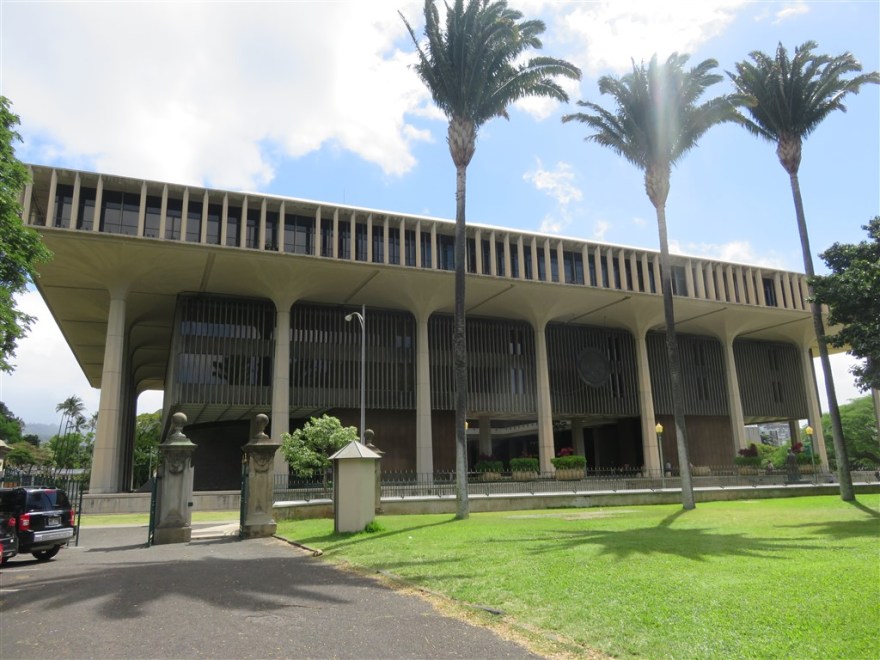
The monarchy was overthrown in 1893 by a group of local business men and politicians who wanted Hawaii to be annexed to the United States. The Palace was used as the offices for the new Government and an auction was held to sell off everything not required for the government offices. In 1969 the government offices moved to the newly constructed Hawaiian State Capitol Building which was constructed on the grounds of the Royal Barracks next to the palace.
IMG_0155

The Palace had been designated a National Historic Landmark and, as soon as it was vacated, the Friends of Iolani Palace began its restoration. It opened to the public in 1978. Some of the items auctioned off have been recovered and work continues to try and recover the remaining items.
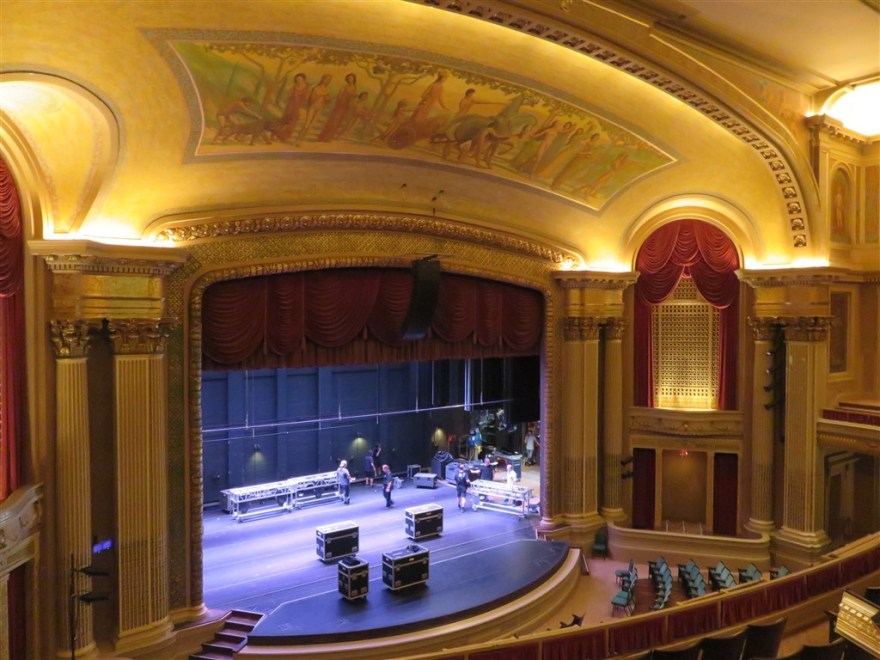
There were 3 other things of interest to me downtown. First of all, the art deco Hawaii Theatre. This opened in 1922 and stayed in business until the 1980s.
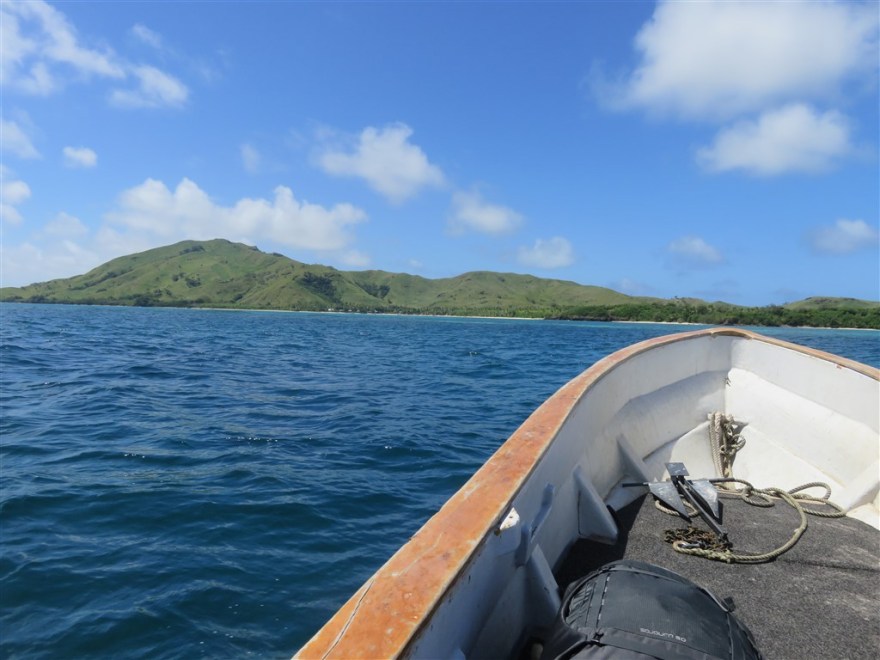
IMG_0159

By then it had become very run down and a campaign was started to restore it as it was the only theatre of that period remaining. It reopened in 1997.

IMG_0381

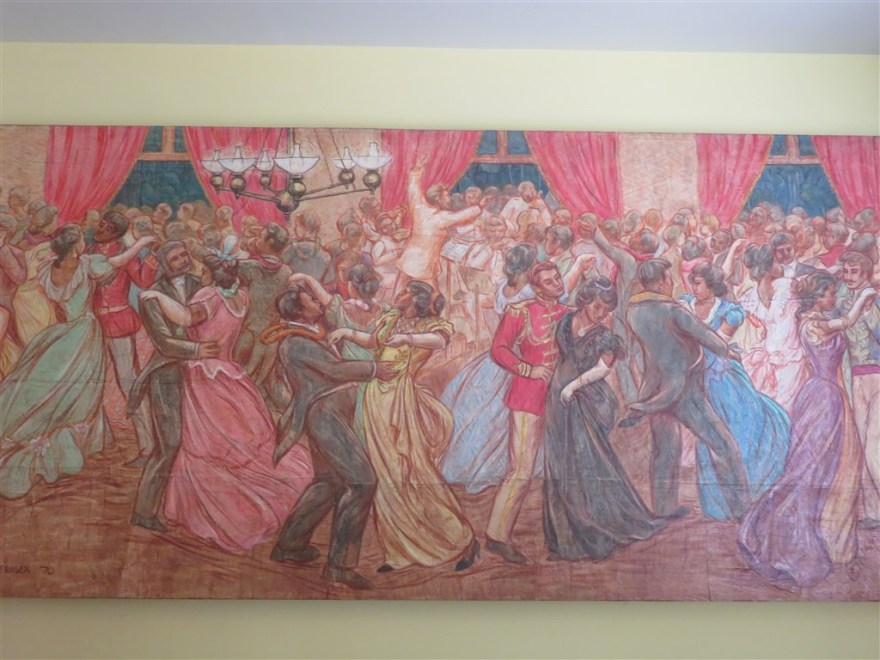
It is also now home to some interesting work by a local artist – Juliette May Fraser.

IMG_0382

She painted them in 1970 when she was 83. She could remember the monarchy and was keen to celebrate that era.

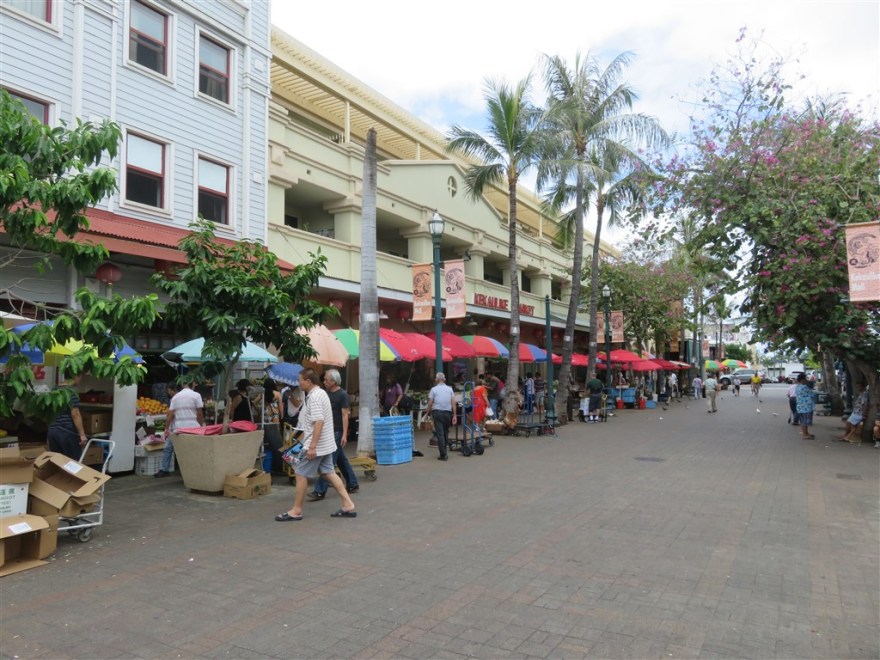
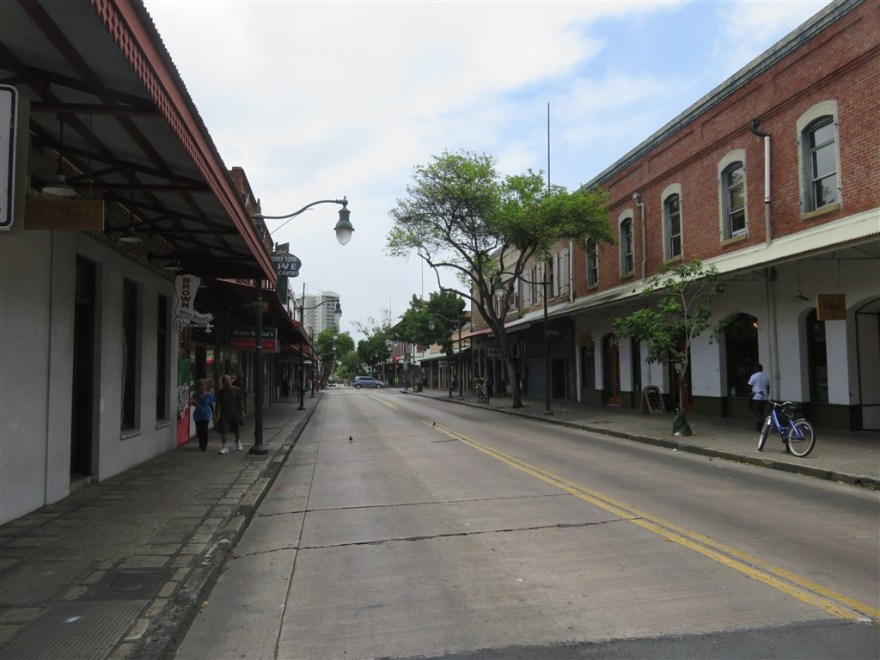
Chinatown is also of interest as, unlike the rest of downtown, it wasn’t rebuilt in the 1970s. It consists of thriving Chinese markets and more interesting bars and restaurants in the original early 20th century buildings.

IMG_0385  IMG_0386

Finally the Aloha Tower. This was originally the tallest building in the City and was the first thing that everybody coming in by sea saw. Today it has lost its original attraction as there are many higher buildings and no one comes to Hawaii by sea anymore (The Cruise ships dock further east nearer Waikiki Beach.)

IMG_0160

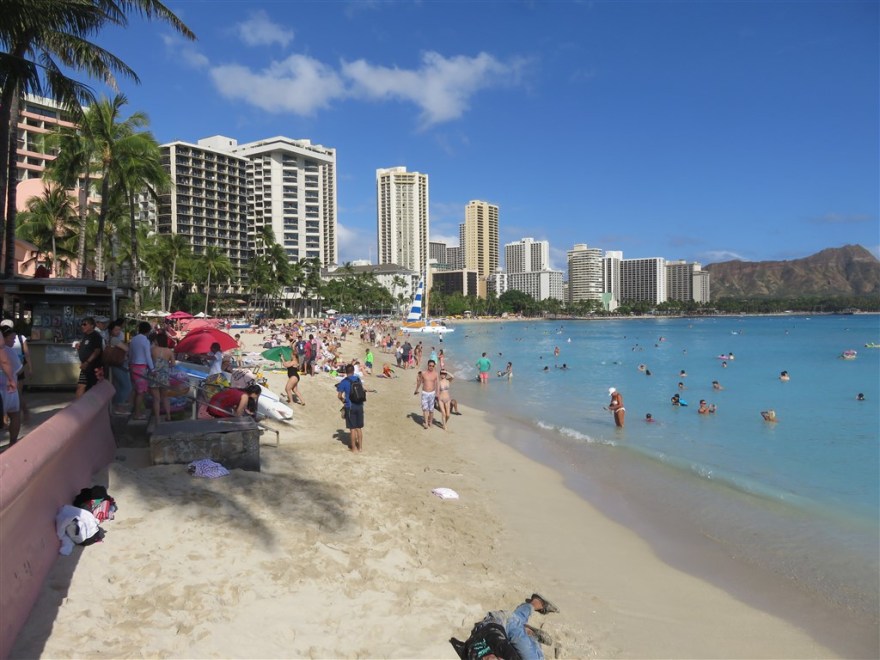
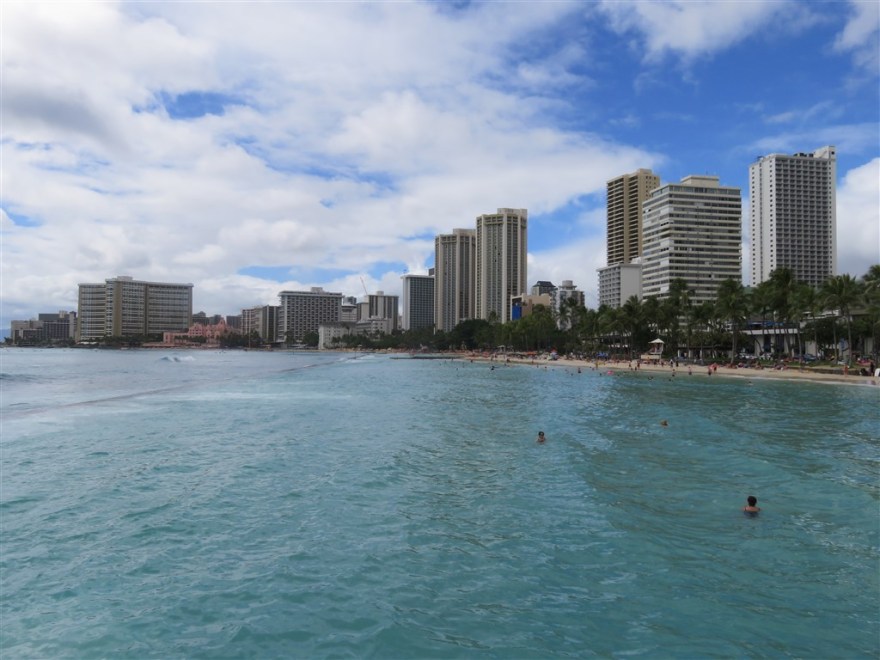
Waikiki Beach is the main tourist destination in the City. The beach itself is very crowded with large numbers of surfers waiting for the waves.

IMG_0162

IMG_0176

IMG_0391

IMG_0393

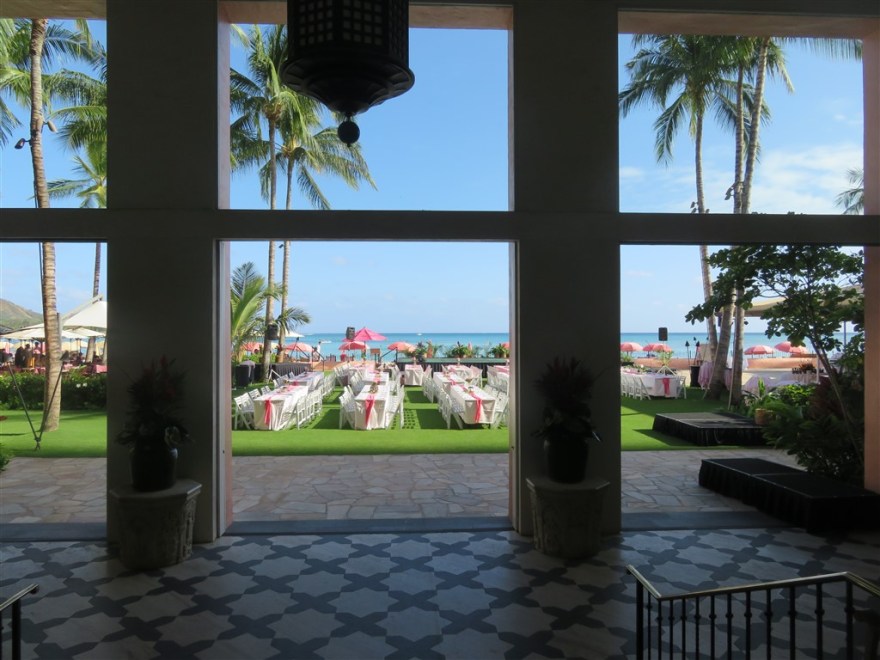
The Royal Hawaiian is one of the original hotels on the beach. It is easily recognisable with its bright pink façade.

When I visited, it was just about to be taken over for a Chinese wedding.

IMG_0164

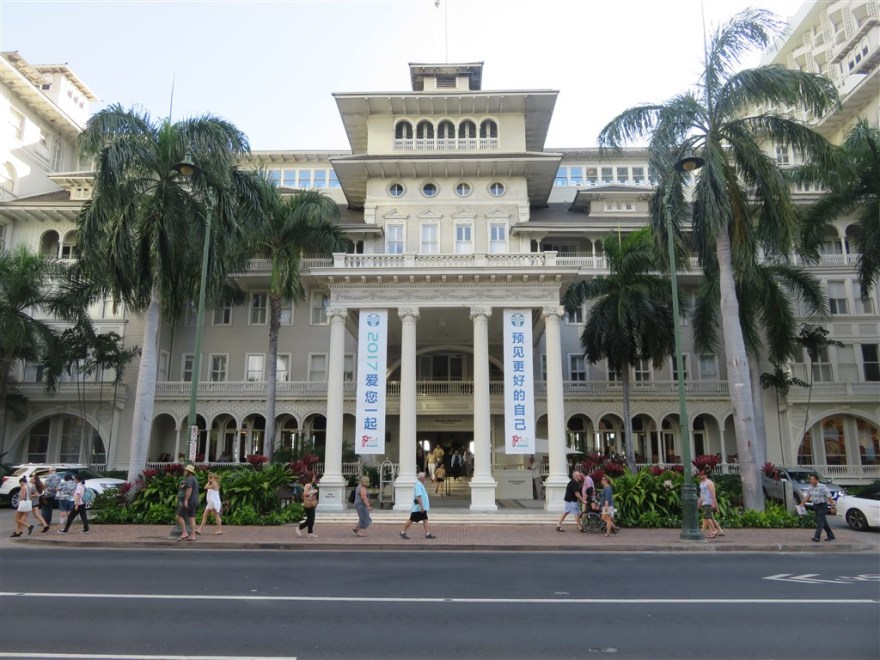
The other original hotel is The Moana Surfrider Hotel which was the first to open on the beach in 1901 when rooms were $1.50 per night. Today it is about $400 per night.

IMG_0181

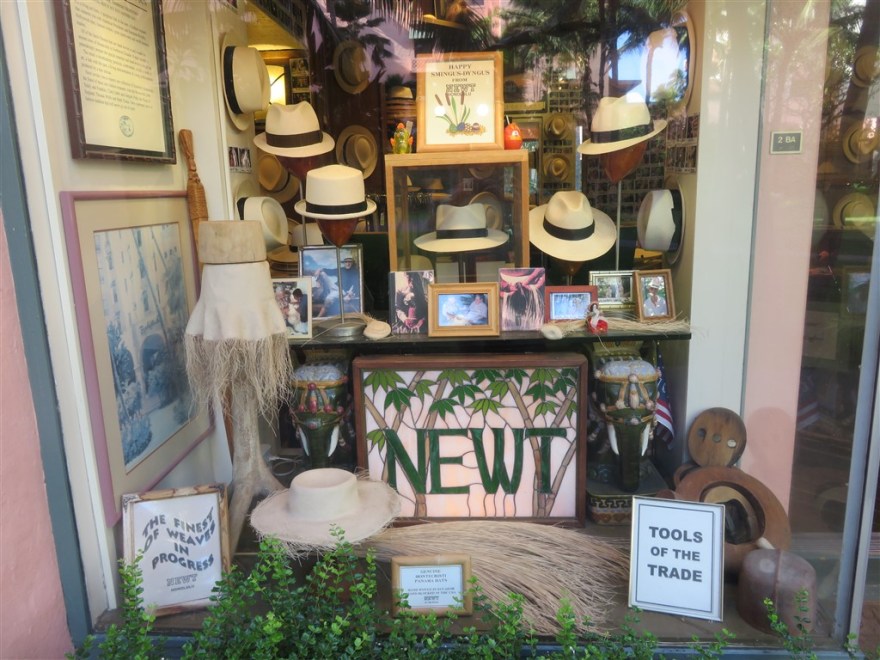
Waikiki Beach is the place to buy a Panama Hat and Hawaiian Shirts.  Newt at The Royal Hawaiian (www.newtattheroyal.com) is one of the best shops.

IMG_0167

If you only plan to visit Honolulu and Waikiki Beach when on Oahu, then there is no need to hire a car. SpeediShuttle (speedishuttle.com) offer quick and cheap transport to/from the airport and your hotel and there is a good local bus service in the city itself. All bus journeys have a flat fare of £2.50.


Yasawa and Mamanucas Islands

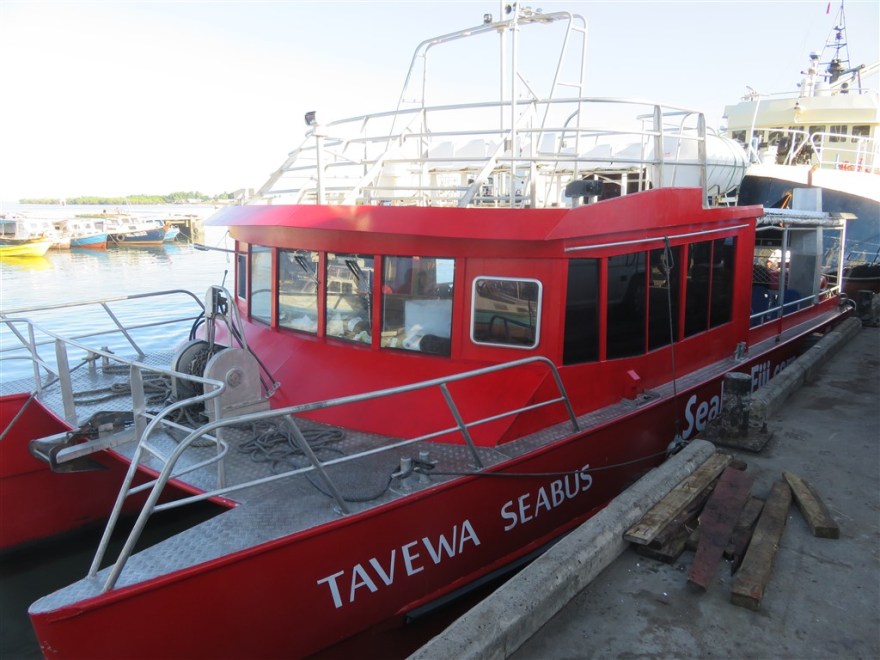
The Yasawa and Mamanucas Islands are a group of volcanic islands that start due west of Nadi and run north for about 80 miles. I set off from Port Denarau, just outside Nadi, on the Tavewa Seabus for the 4.5 hour trip up to the island of Nacula at the north end of the islands.

IMG_0043

For the final leg of the trip I transferred to a small boat which took me to my lodgings.

IMG_0046

My first stop was at the Blue Lagoon Beach Resort (www.bluelagoonbeachresort.com.fj) on the island of Nacula. Areas of the Yasawas were the locales for both the 1949, and 1980 filming of the romance adventure film The Blue Lagoon. The Yasawas were closed to land-based tourism up until 1987. Since the government lifted the restrictions several resorts have opened. The land still belongs to the local villages who benefit from rent and employment.

The Blue Lagoon Beach Resort has a variety of accommodation from dorms, through to basic rooms with shared facilities (which I had) and then various types of villa giving you options from £11 through to £320 per night. My Bure (beach hut) was excellent.

IMG_0089

Due to the remote location of these islands, many resorts offer a fixed meal plan for all residents as it isn’t practical to stock and run standard restaurants. This encouraged all of the residents on various budgets to mix at meal times and everybody got on well. The resort had lovely facilities.

IMG_0086

IMG_0087

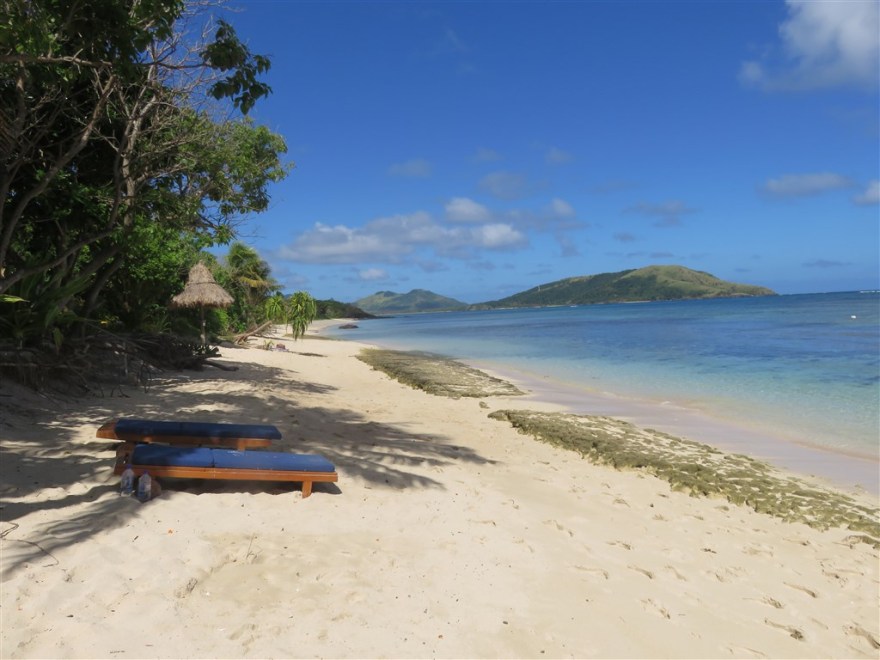
You could swim out to snorkel on the reefs from the resort’s beach.

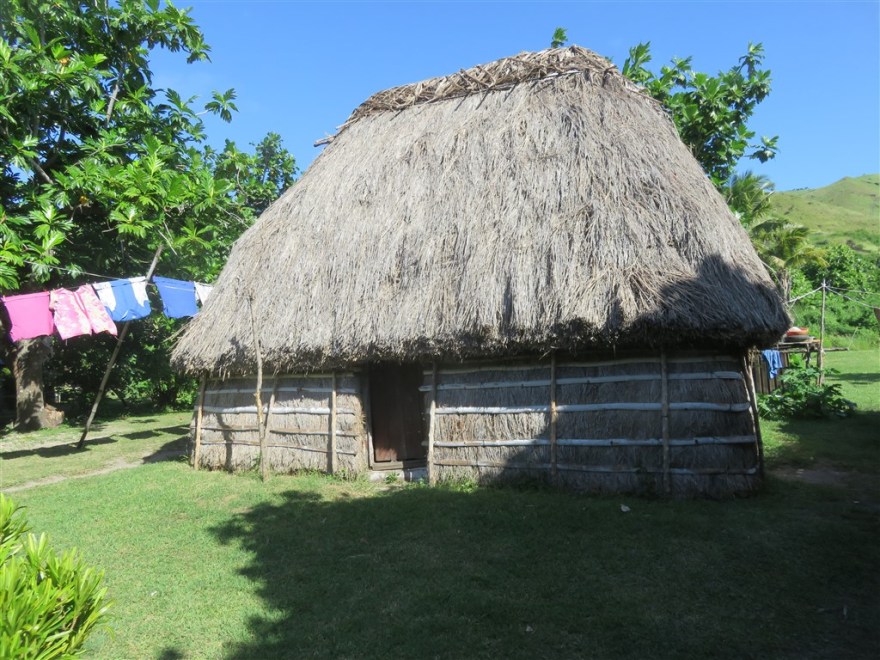
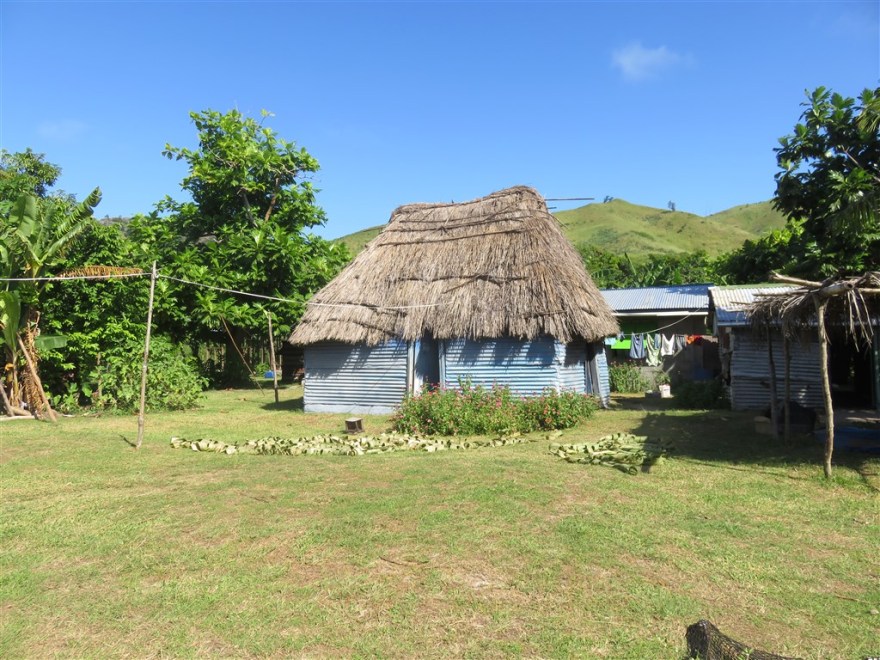
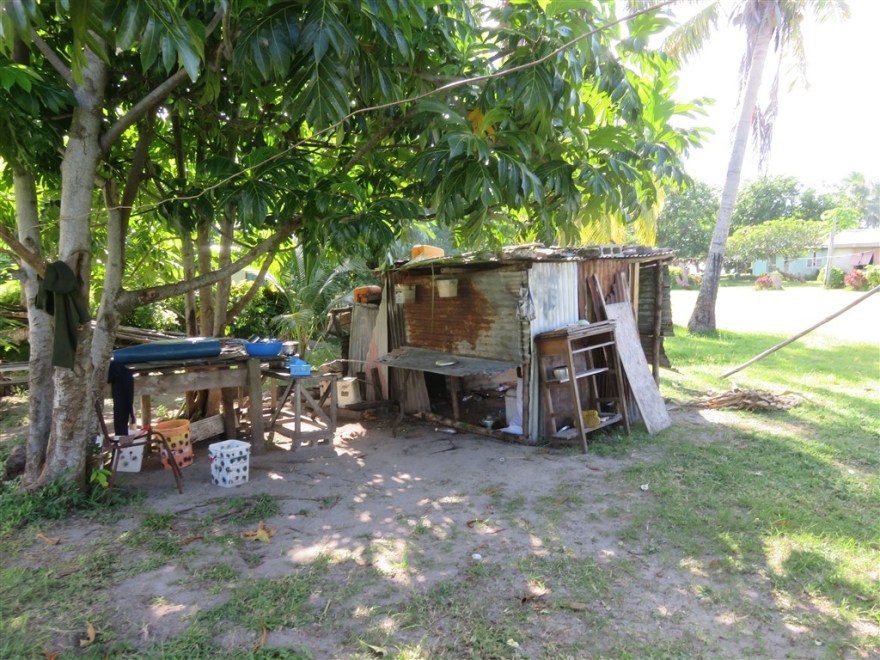
The resort is staffed by Fijians from the local village on the island. We walked further up the beach to visit the village. All the property in the village is centrally owned and the Chief has the final say on all issues. There are still several traditional homes.

IMG_0048

IMG_0047

But many people now chose to live in more modern accommodation as it doesn’t require rebuilding every three years.

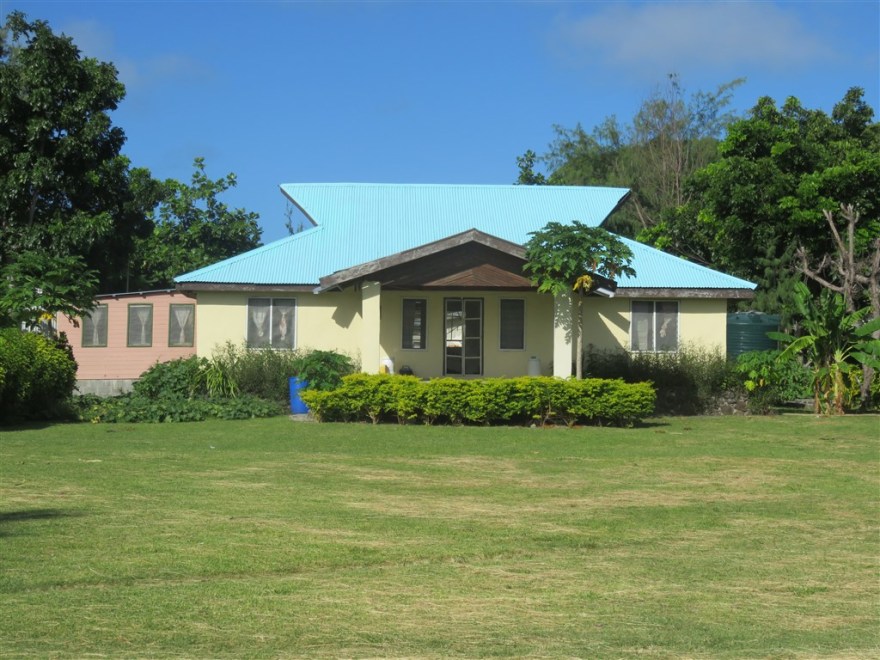
Like any village there were some very posh homes

IMG_0054

and some not so.

IMG_0053

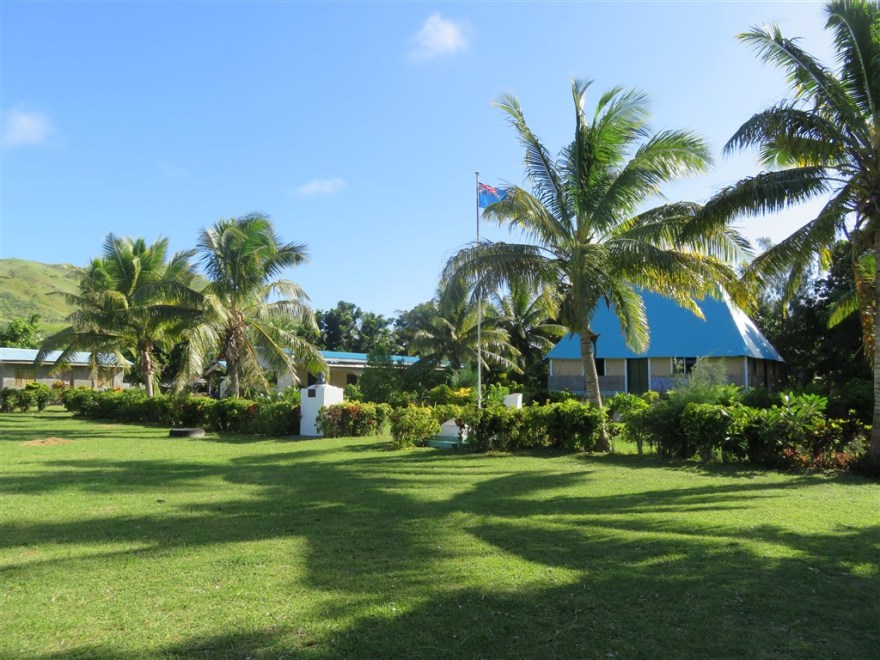
The churches are still very important. About a quarter are catholic.

IMG_0052

and the rest are Methodist.

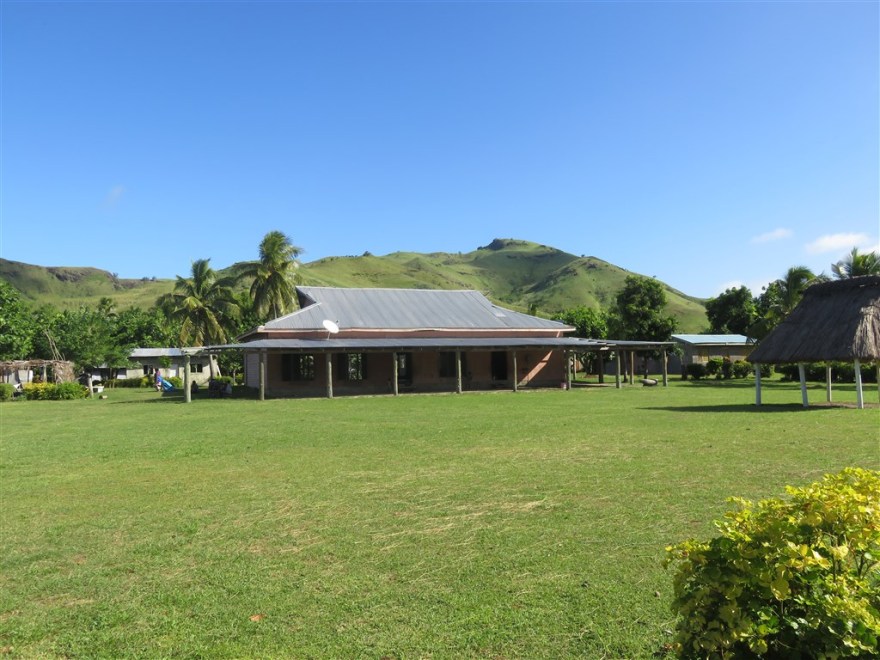
At the top of the village is the building where the Chief meets with the villagers to discuss and resolve issues. He lives in the house to the left of this building.

IMG_0059

For larger meetings, and other big events, the communal hall is used.

IMG_0057

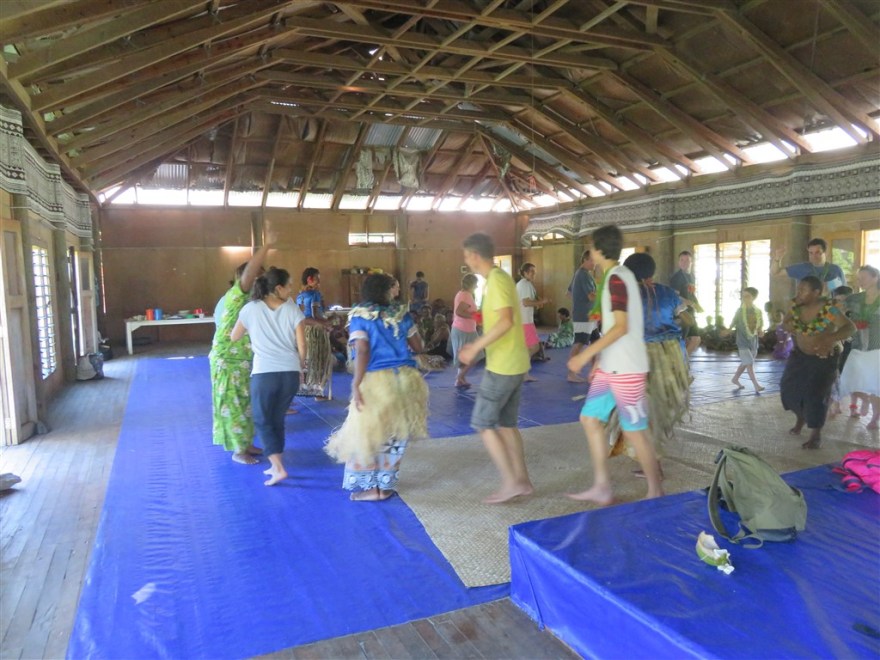
We were invited into the hall to hear some traditional songs which were very good.

IMG_0068

We were also invited to dance (I opted out with the excuse of wanting to take pictures).

IMG_0066

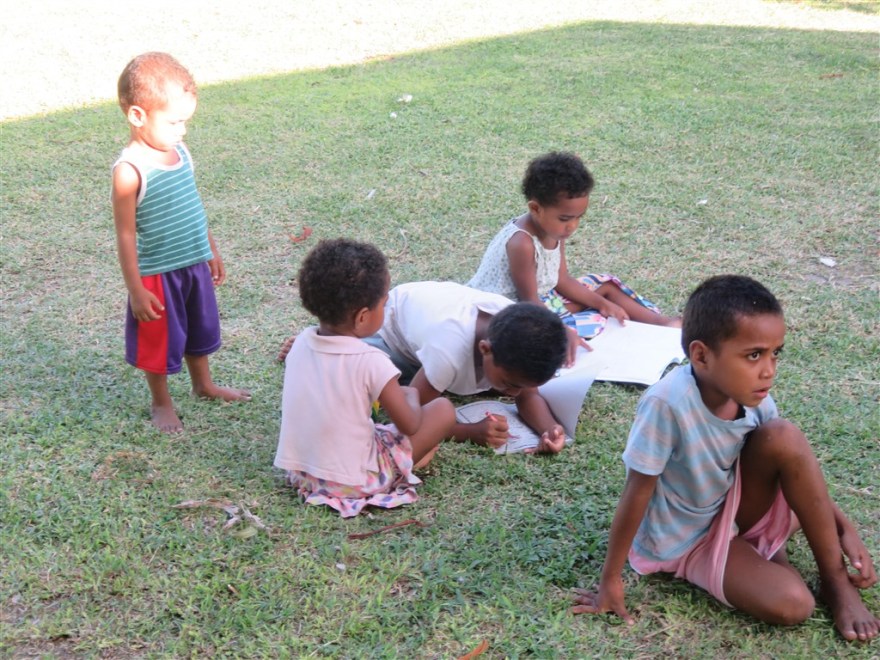
Some of my fellow travellers who had visited before and brought toys and colouring books for the children.

IMG_0076

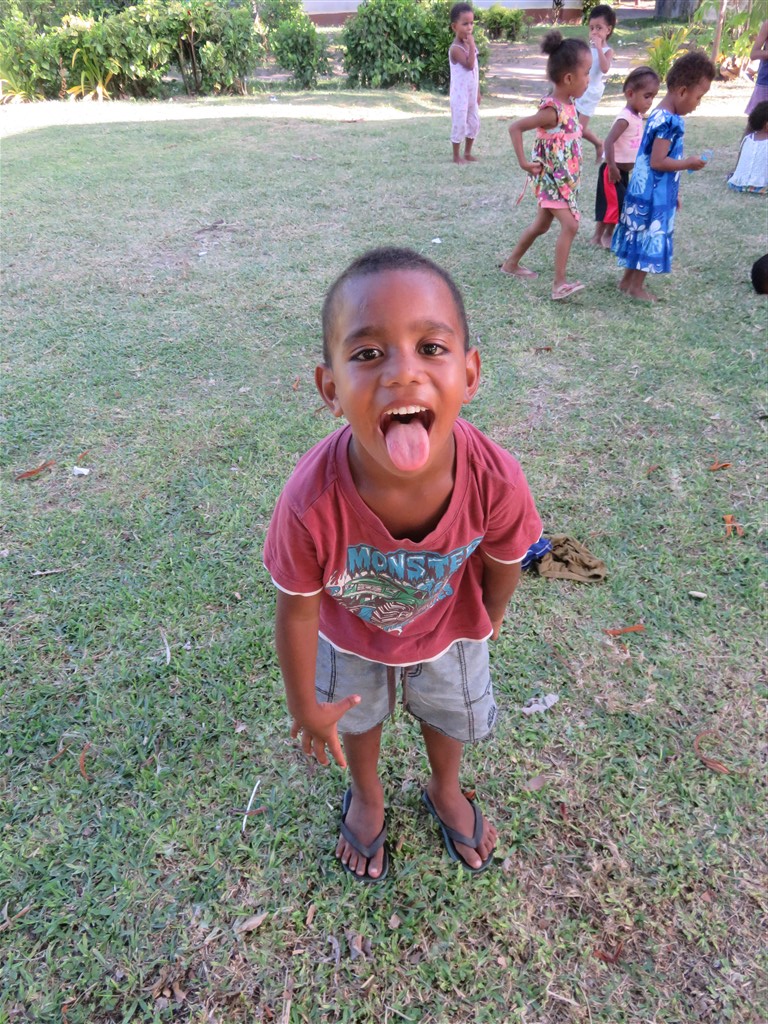
They weren’t appreciated by everybody.

IMG_0074

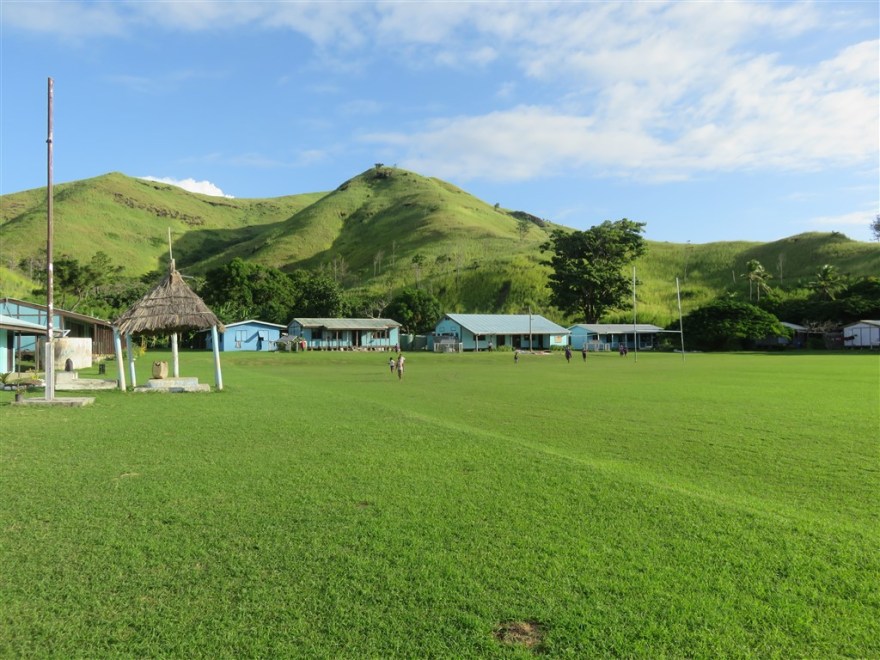
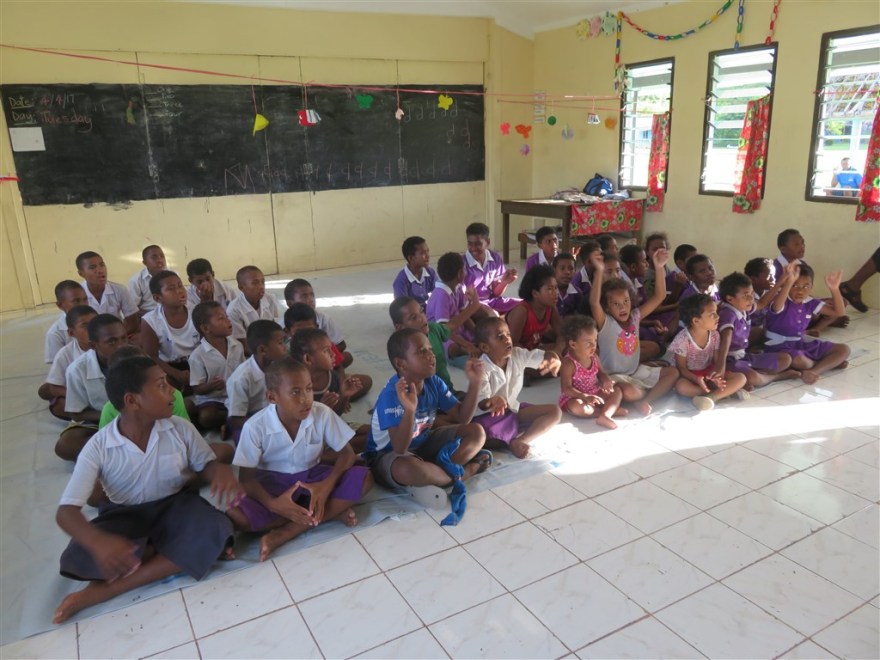
We also visited the local school which is a boarding school as other villages on the island are a couple of hours walk away.

IMG_0082

IMG_0083

There are no fees for either day pupils or boarders. However, if your child does board, you are expected to participate in the rota for cooking for the children which includes supplying the food as well.

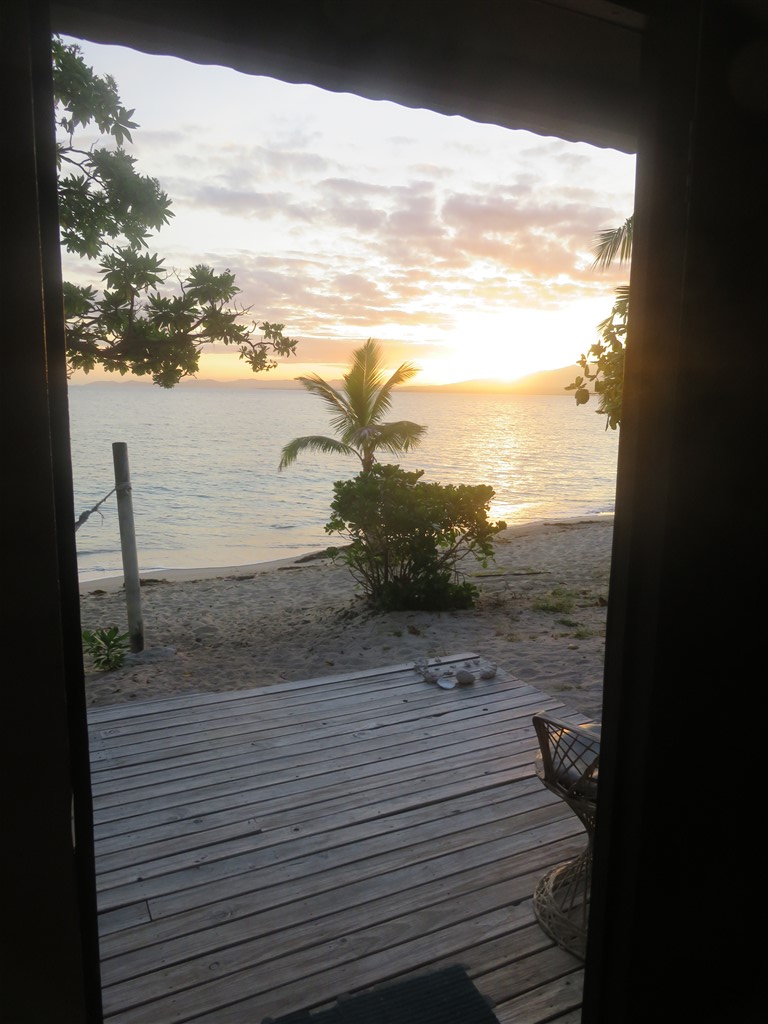
The resort was another excellent sunset spot.

IMG_0090

After Nacula, I went over to Tavewa Island and stayed at the Coral View Resort (www.coralview.com.fj). This was a very different place with much more basic facilities. I had my own Bure.

IMG_0102

The grounds were well maintained.

IMG_0103

However, there was no pool or beach as the emphasis was on getting out to sea. I went snorkelling on nearby reefs. We also went out looking for sharks and saw Whitetip and Blacktip Reef sharks which grow to about 1m long. They swim around the edges off the reefs. Luckily they didn’t seem very interested in us. Finally we went out looking for clams and saw some that were over 1 foot wide. (Sorry for the lack of pictures but my camera doesn’t go underwater).

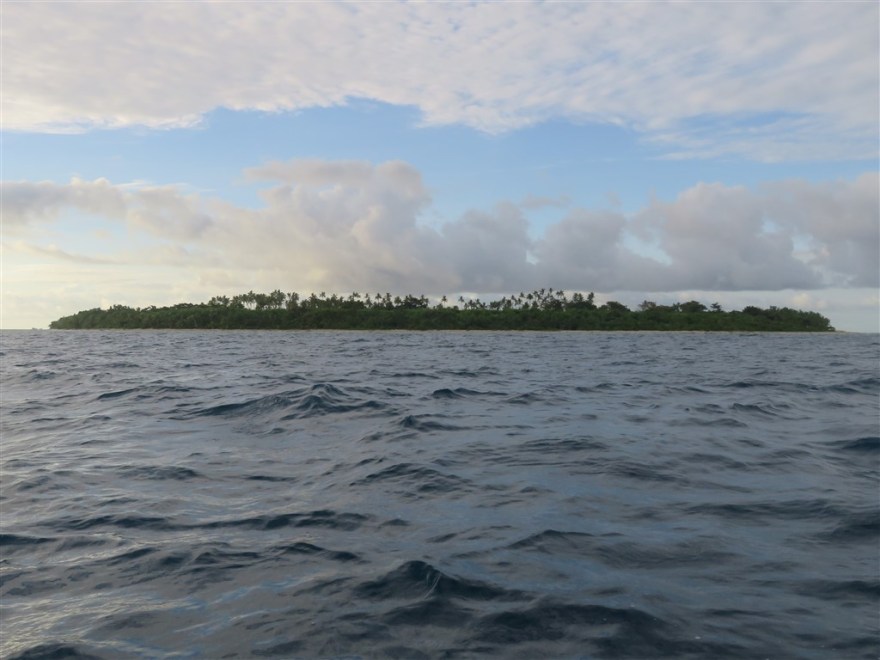
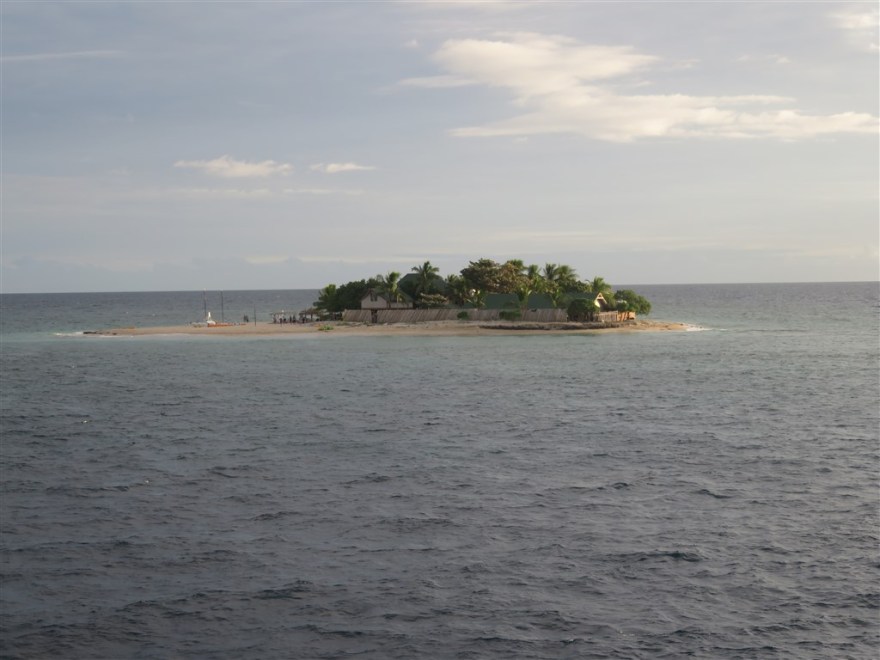
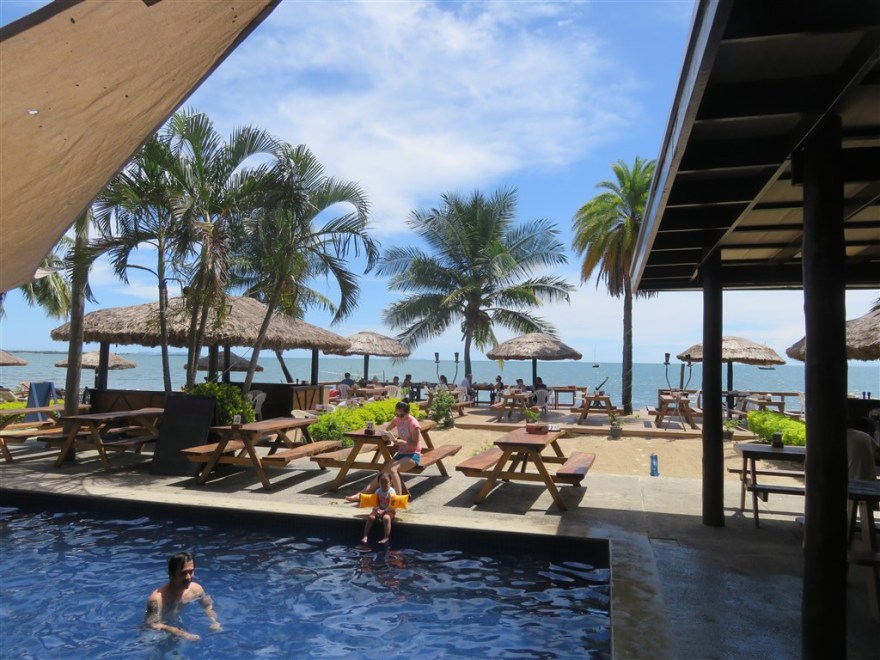
My third and final stop was in the Mamanuca islands at the Bounty Island Resort (www.fiji-bounty.com). The island itself is about 50 acres/20 Hectares and you can walk around it in 20 minutes.

IMG_0118

I finally got a reach beachside Bure.

IMG_0104

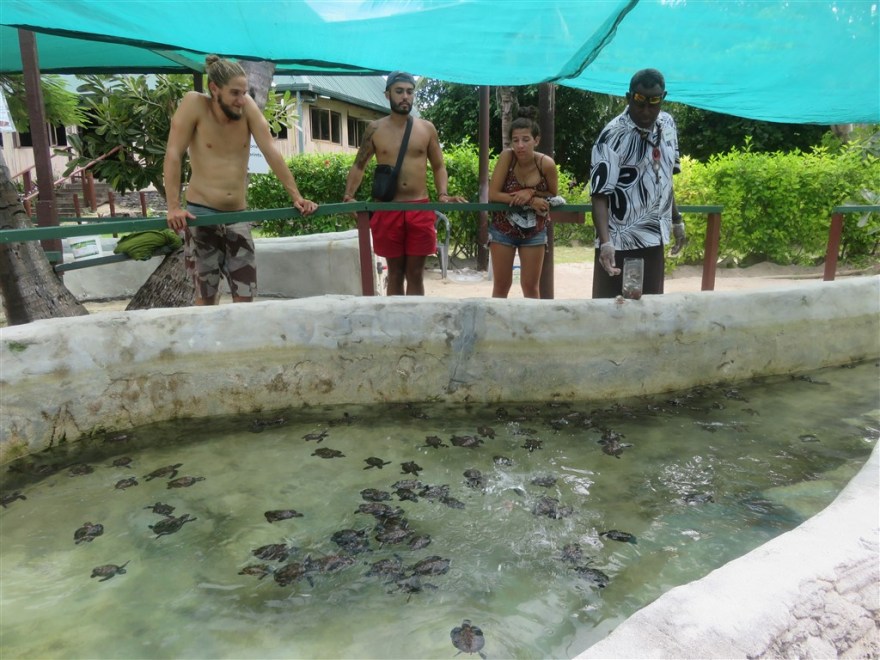
Like many of the other islands, Bounty Island has reefs immediately off the beach. It also runs its own turtle conservation programme. They collect the turtles when they hatch around the island and keep them for 18 months before letting them out into the ocean.

IMG_0106

Bounty Island is very close to Monuriki island where the film Castaway with Tom Hanks was shot. The island is still uninhabited. If you fancied staying on an even smaller island, you can always opt for South Sea Island just next to Bounty Island.

IMG_0119

The island just has a single dormitory and has a reputation as a bit of a party island. I don’t think you would get much sleep.

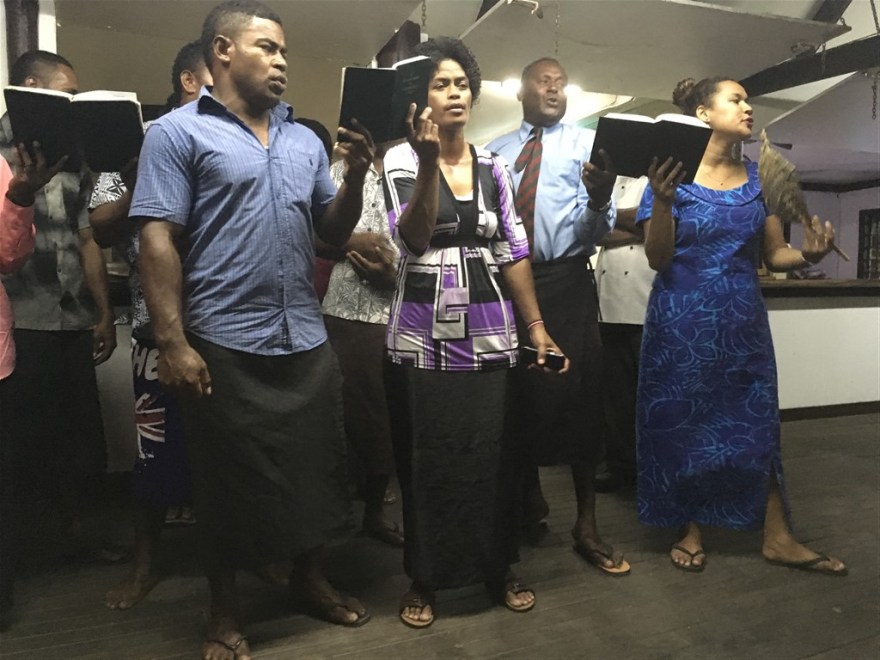
Back on Bounty Island, we were offered the option to go to church with the locals on Sunday evening. No one took them up on the option and so the church choir (which was most of the staff working in the resort) came and sang to us at dinner time.

IMG_0010

They were very good but didn’t manage to change my religious views.

After an enjoyable week on the islands I returned to Nadi.


Nadi

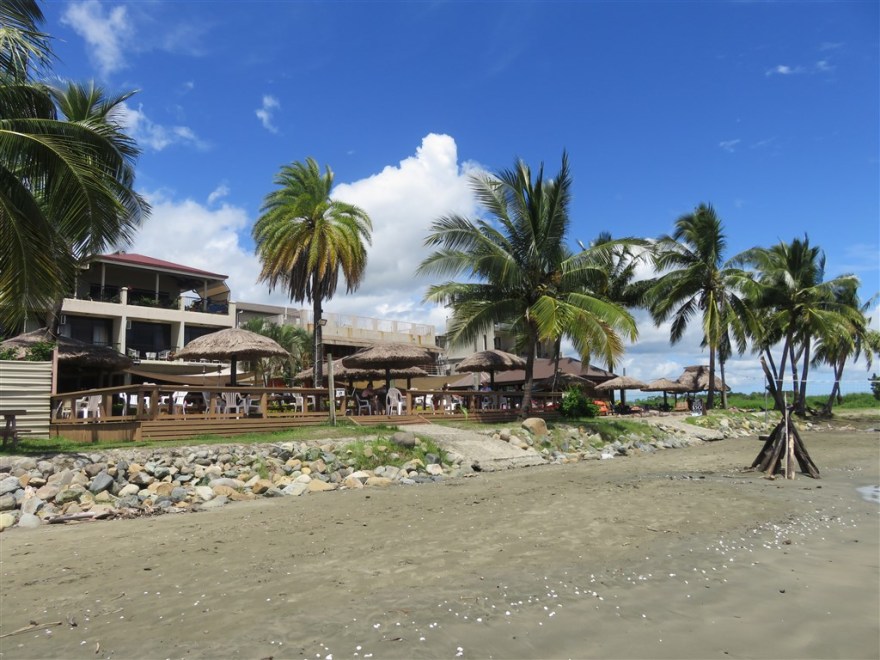
I arrived in Fiji on 1st April. I flew into Nadi Airport on the island of Viti Levu – the largest island in the Fijian archipelago. April is the end of the rainy season in Fiji and I decided to stay on the west side as it has pretty good weather all year round. I spent the first few nights at Smugglers Cove Hostel.

IMG_0041

IMG_0040

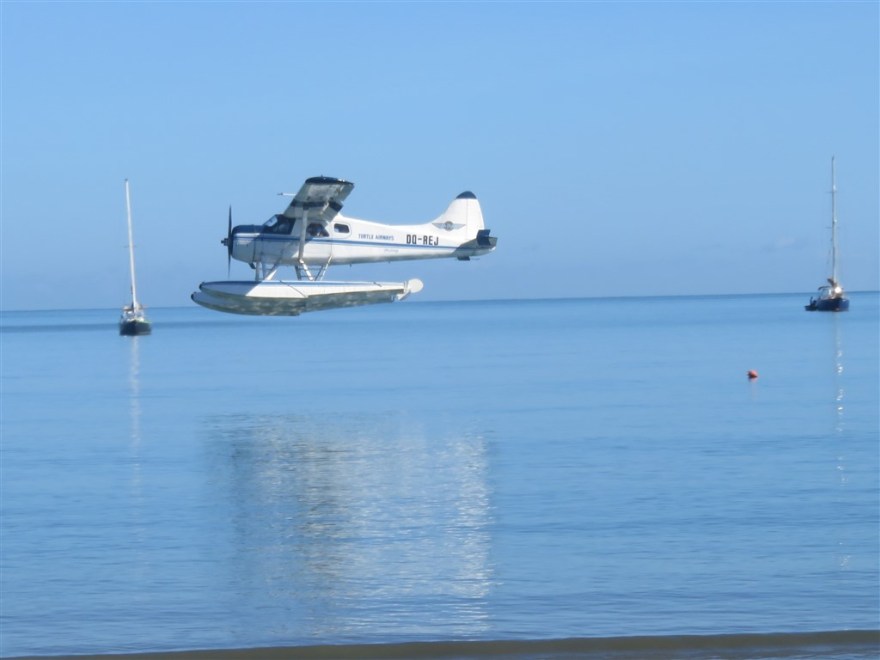
Although just on the far side of the airport it was very pleasant and quiet. We were also near to Turtle Airways whose sea planes took off in front of the hostel a couple of times a day.

IMG_0126

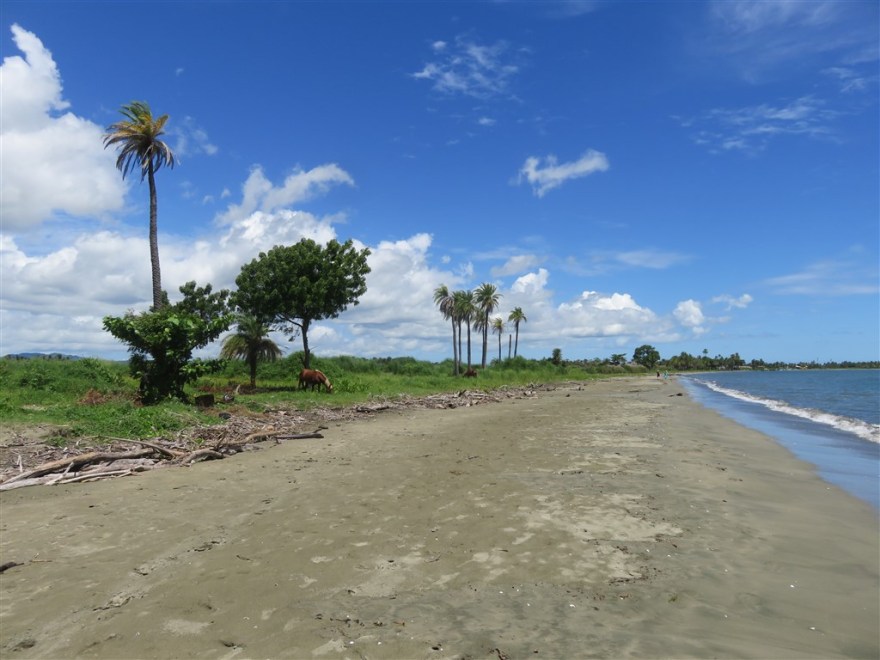
The hostel is in an area called New Town that is just starting to be developed. The hostel was next to a large undeveloped stretch of coast which only appeared to be inhabited by some horses.

IMG_0037

Occasionally the horses took themselves for a walk along the beach.

IMG_0034

I ventured into Nadi a couple of times. Although the home of the countries only international airport, it is a fairly small, single street town. The capital of Fiji is Suva about 3 hours bus drive away on the south of the island. 70% of the country’s population live in Suva but it doesn’t have many attractions for the tourist and is also quite wet at this time of year – I decided to give it a miss.

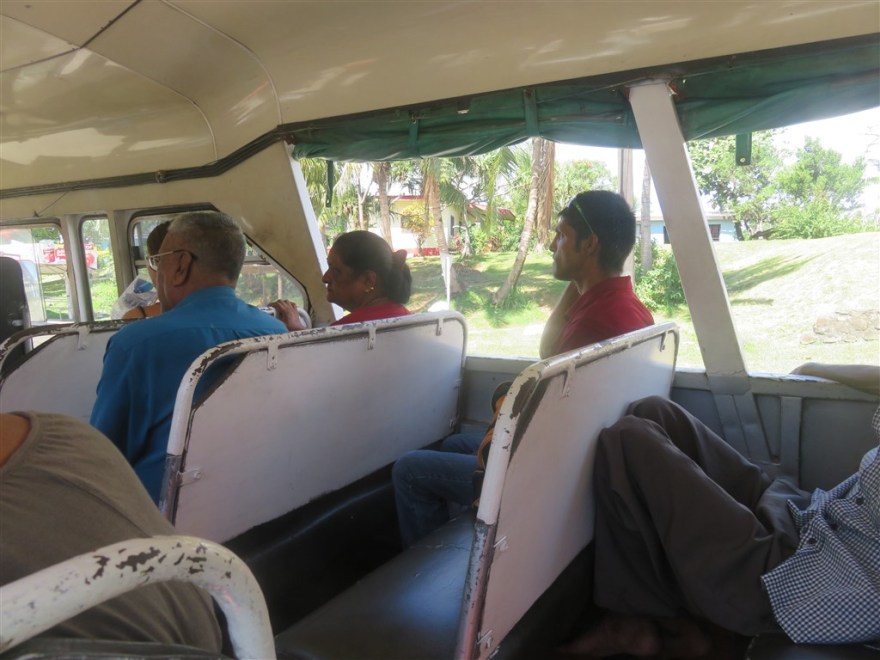
One of the highlights of the 3 mile trip into Nadi were the well air conditioned buses.

IMG_0124

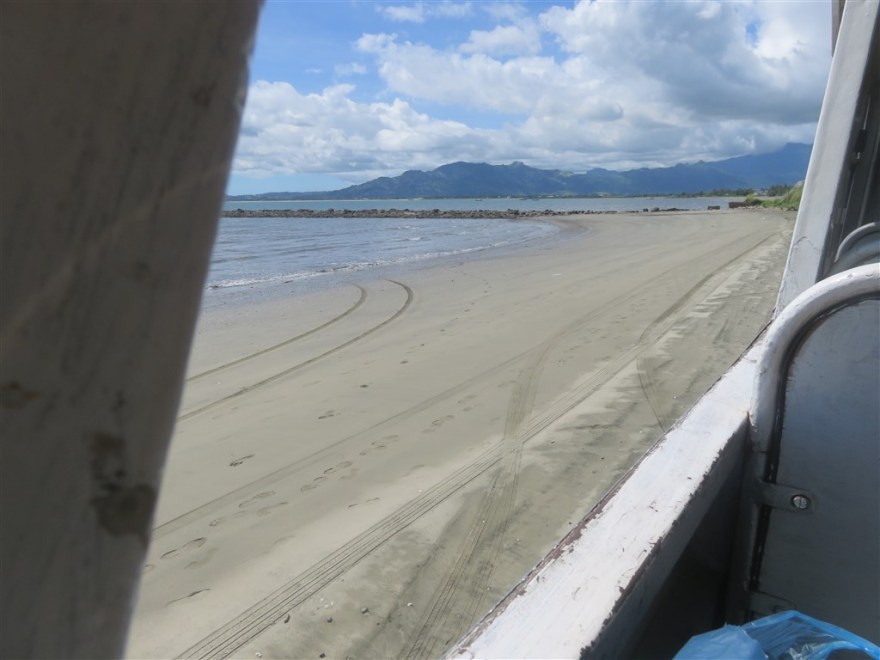
There are no bus stops and the buses stop anywhere on the route to pick up and drop off passengers. The drivers also seem to follow their own routes diverting at passengers requests. Every trip I took followed a slightly different route. At one point this involved driving on the beach.

IMG_0125

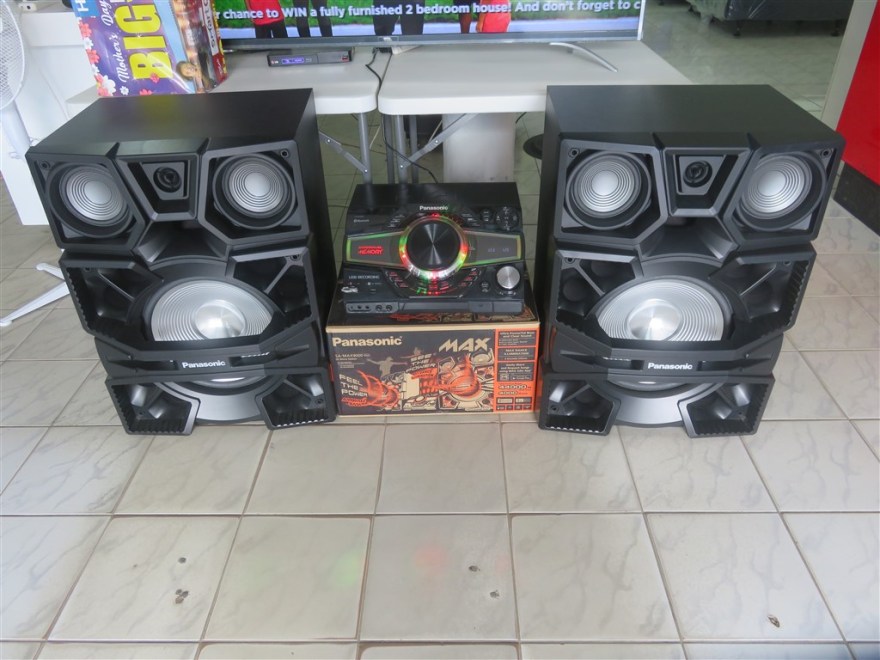
There is very little to note about Nadi town itself and I didn’t find anything really worth photographing. The only thing I did note is that Nadi keeps with the stupid stereo rule. On my travels I have noted that the hotter and more remote a location, the more ridiculous the sound systems on sale are. Nadi was no exception.

IMG_0123

All the hotels and resorts are staffed by very friendly Fijian staff who greet you with a loud “Bula” (pronounced Boo-lah) every time they pass. This is an abbreviation of the phrase in Fijian meaning “wishing you happiness and good health”. After about the 20th greeting of the day, this did become a little grating. (Apologies, the grumpy old man in me coming out there).

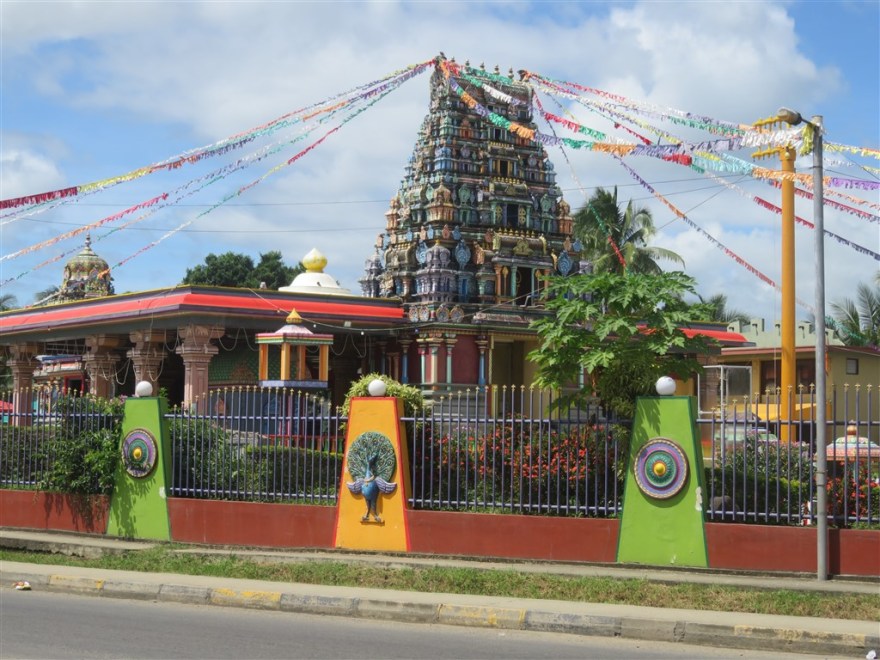
In town you notice a different aspect of the local population which is a very large Indian population with the majority of clothing shops selling sarees and other Indian styles. Nadi also has the largest Hindu temple in the southern hemisphere – the Sri Siva Subramaniya temple.

IMG_0121

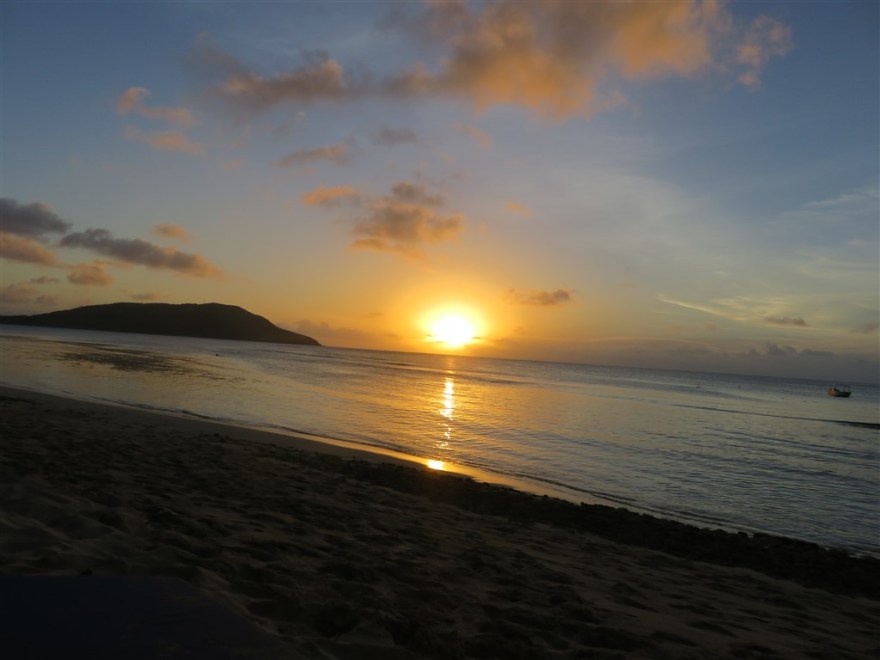
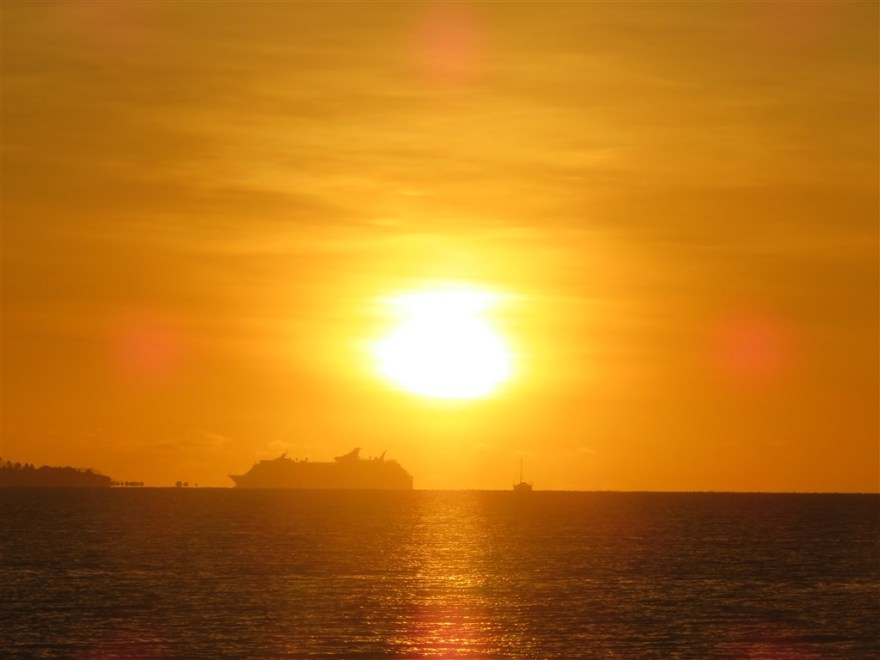
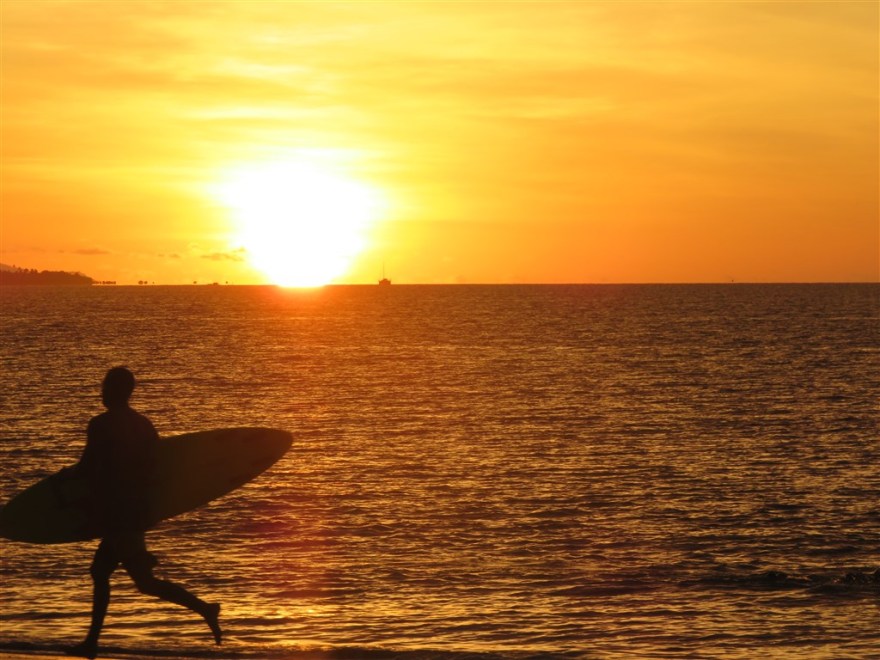
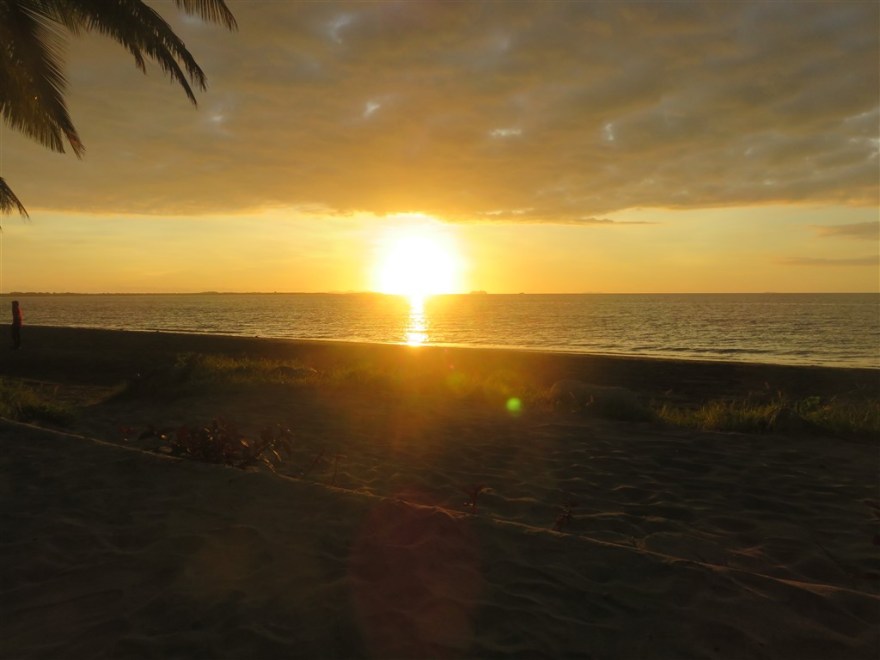
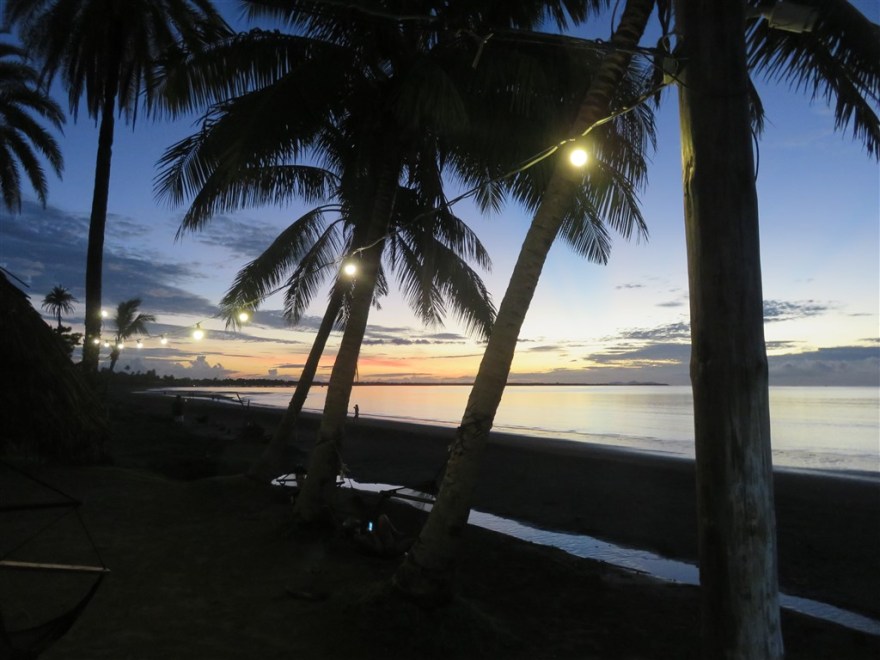
After a month of rushing around New Zealand, I began to get very used to Fiji time where no one is ever in a hurry and it not much happens on time. Although not normally a big fan of beach holidays, I was quite happy to sit around just reading for 3 days. My favourite time of day was sunset and everyone came out to watch it. I took a ridiculous number of pictures, here are a few of the better ones.

IMG_0132  IMG_0134

IMG_0127

IMG_0017

IMG_0018

I was tempted to stay put in the same place but decided to venture out to the islands north of Vitu Levu (where the Tom Hanks’ Castaway film was shot) – see next post.

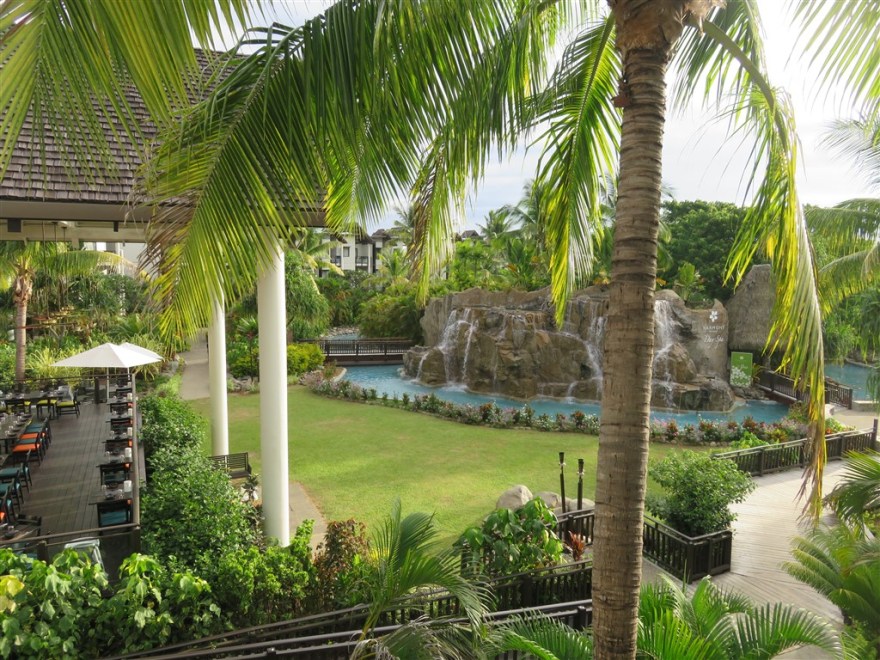
At the end of that excursion, I returned to Nadi for my last 2 days in Fiji. I needed some decent internet access in order to research the next part of my trip and had to book into a big western hotel. I chose the Radisson Blu on Denarau Island. This island is really part of Vitu Levu but just separated by a waterway. It is the location  of all the big hotel brands on the island. The hotel was very pleasant but also very busy as it was Easter.

IMG_0151

After an enjoyable 2 weeks in Fiji I set off or Hawaii.

Sydney

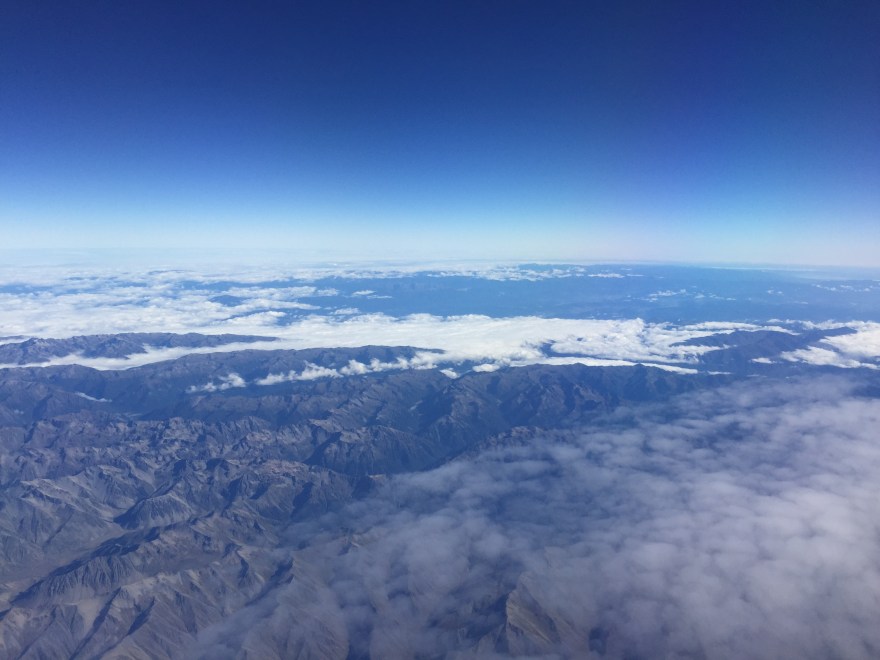
On the flight out of Auckland I got my final view of the New Zealand landscape,

IMG_1004

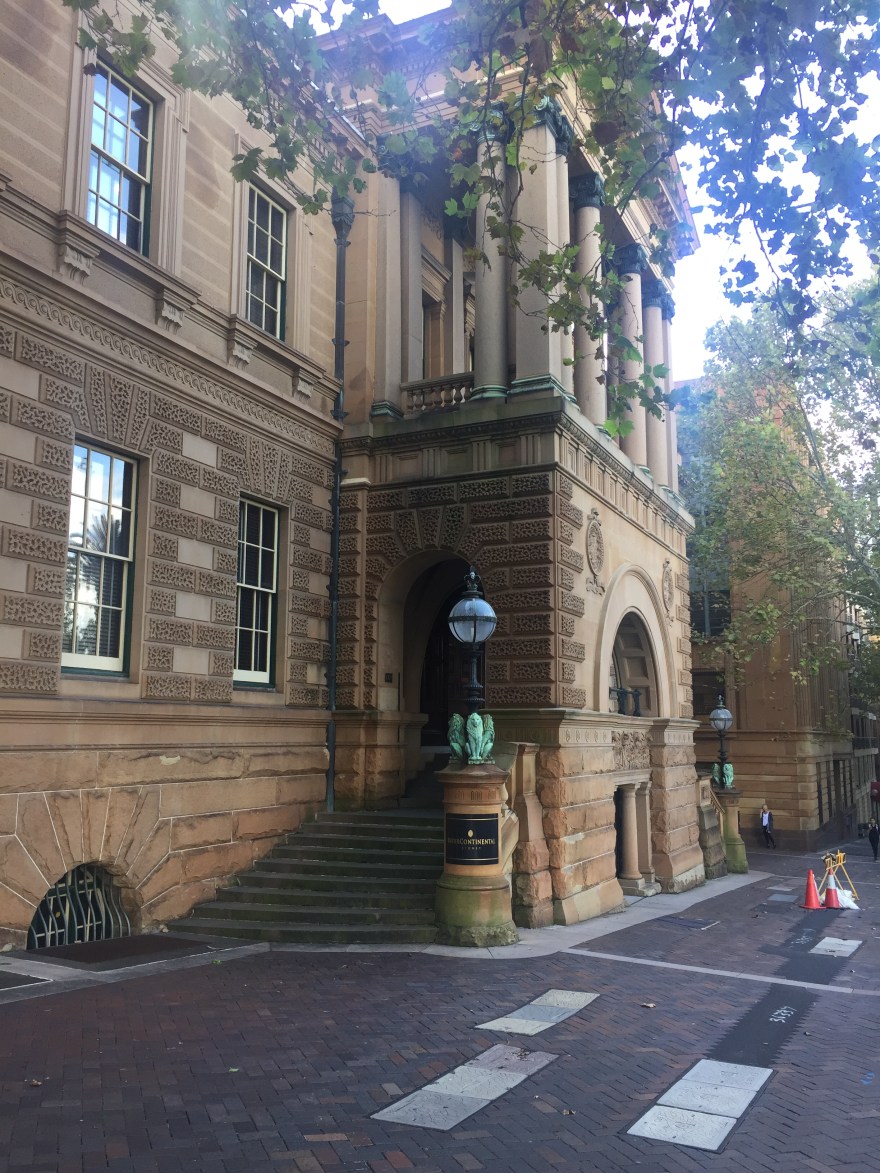
I arrived in Sydney on 30th March for a couple of days stop over before setting off for Fiji. I decided to up the hotel budget for a couple of days and checked into the InterContinental Hotel near Circular Quay.

IMG_1021

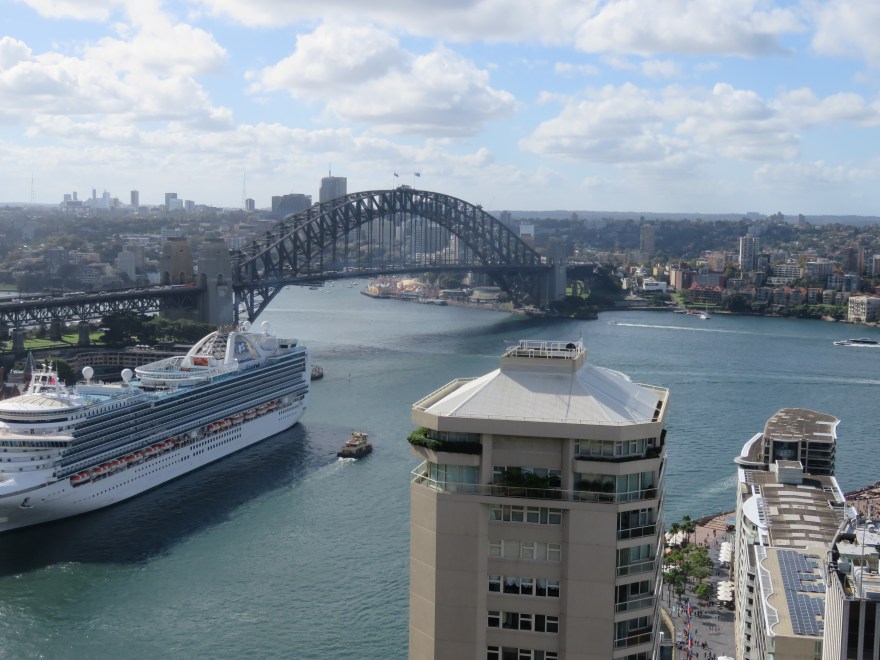
It has great views from its rooftop bar and restaurant.

IMG_0565

IMG_0568

IMG_0567

IMG_0566

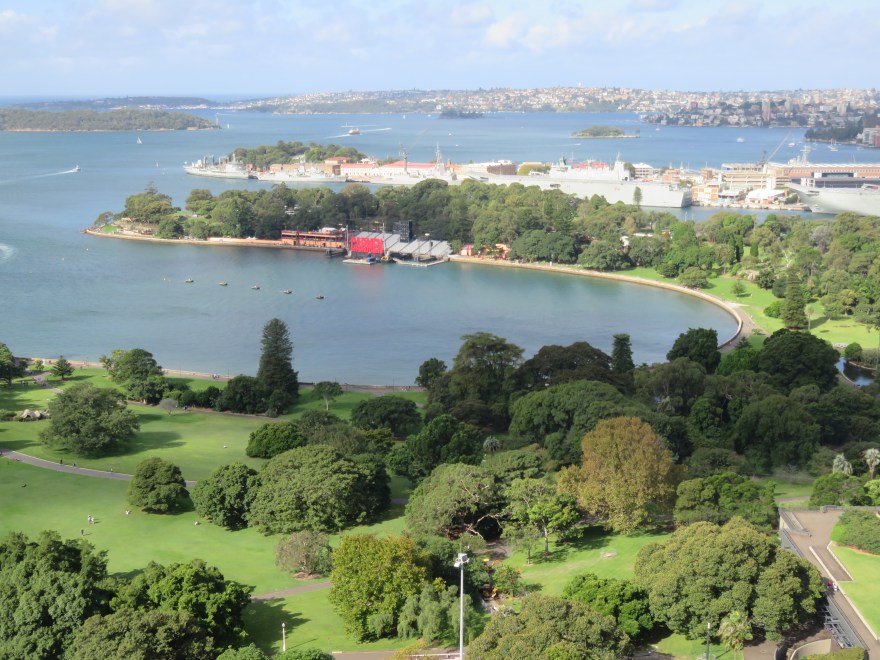
This was my third visit to Sydney and I done all of the main tourist attractions before (except climb the bridge which I didn’t fancy). Instead I decided to start walking from the hotel and see where it took me. I started off across the Botanical Gardens where I saw a variety of unusual wildlife.

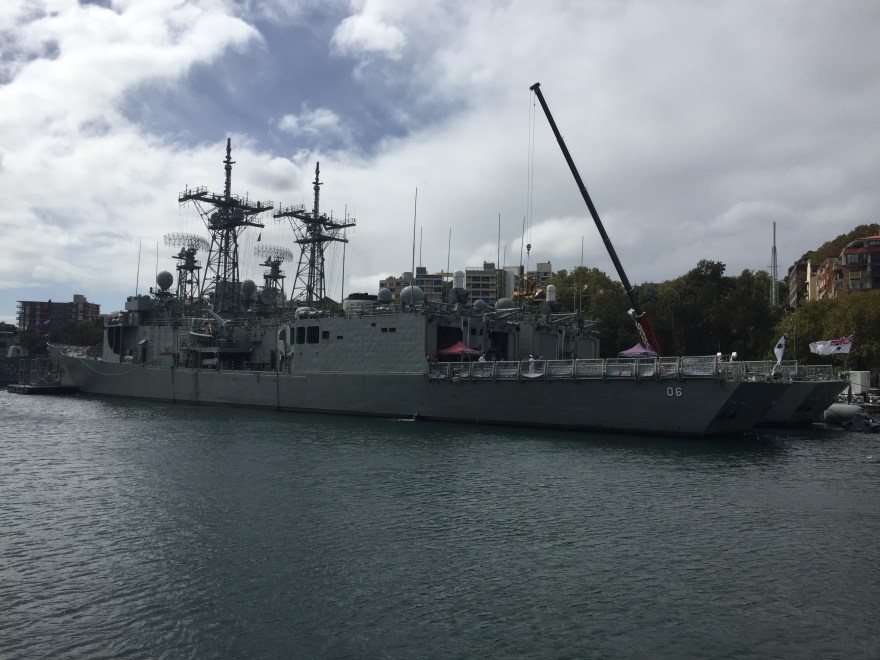
On the far side of the Botanical Gardens is the old wharf area which is till home to HMAS Kuttabul – one of the Australian Navy’s bases in Sydney.

IMG_1012

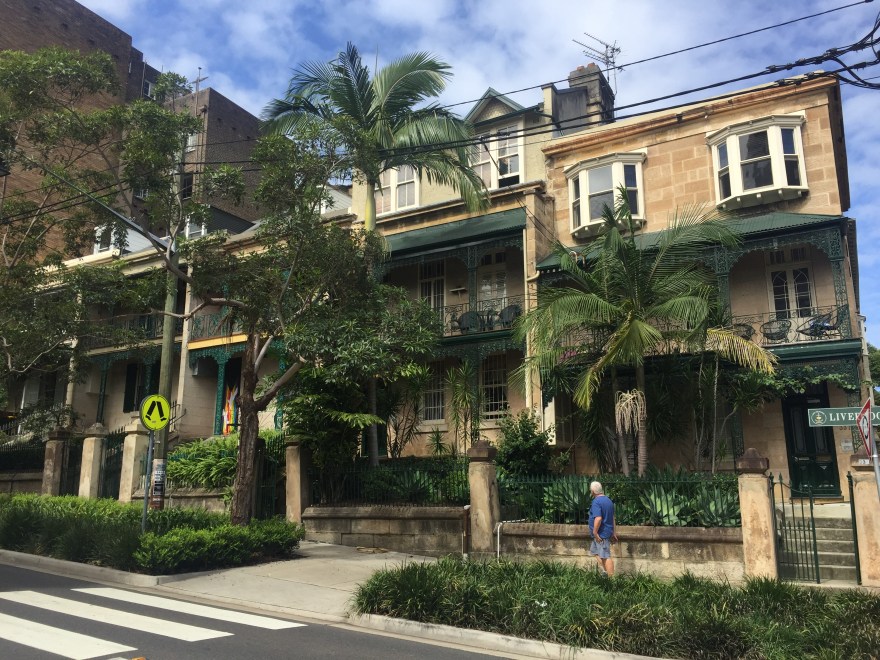
I then headed north through Darlinghurst. Immediately east of the CBD, the area has become quite hip in recent years.

IMG_1014

IMG_1018

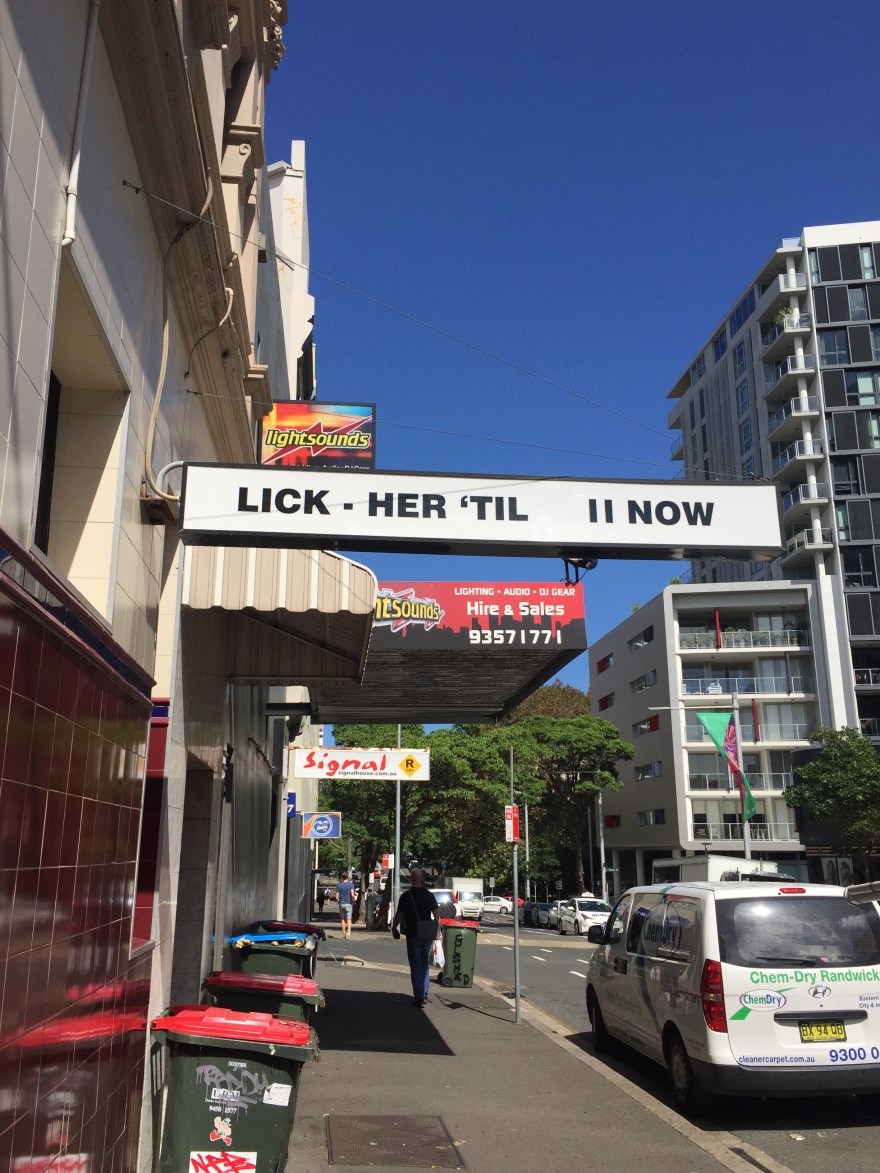
This brought me onto Oxford Street – the main street through Darlinghurst – which is best known for its night clubs. I came across this street sign for an Off License (Liquor Store).

IMG_1019

It was getting late and so I headed back to the hotel through the CBD.

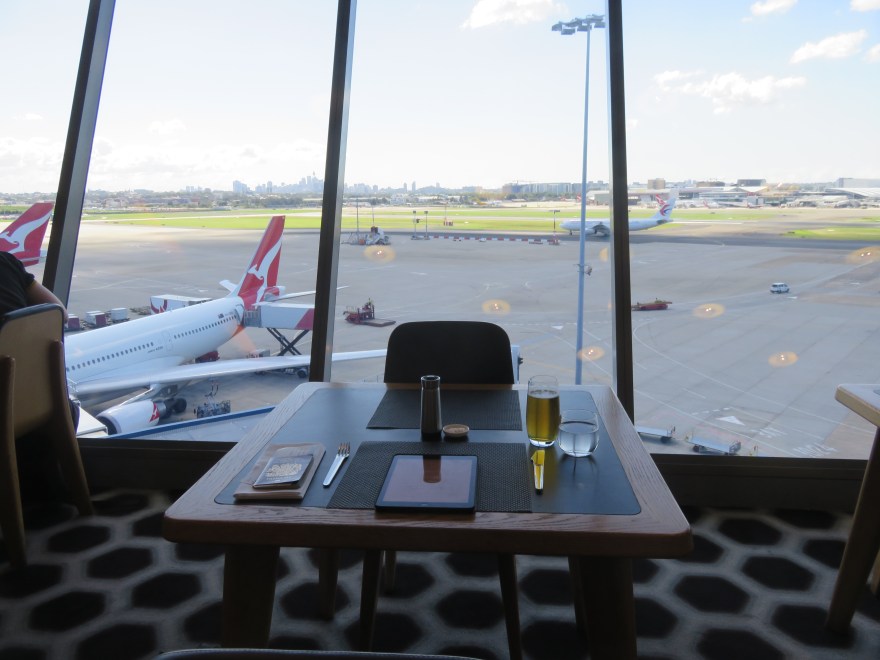
The following day I set off for Fiji. Over the last month all my flights have gone in and out of Sydney and I have got quite familiar with the excellent Qantas lounge there. Unfortunately I’m now heading to the American Airlines section of my trip and I know their lounges are not quite the same standard.

IMG_0569

Christchurch

We arrived in Christchurch on 27th March. It was our final stop on the Exodus trip. On first impressions, Christchurch appears to be a city full of car parks.

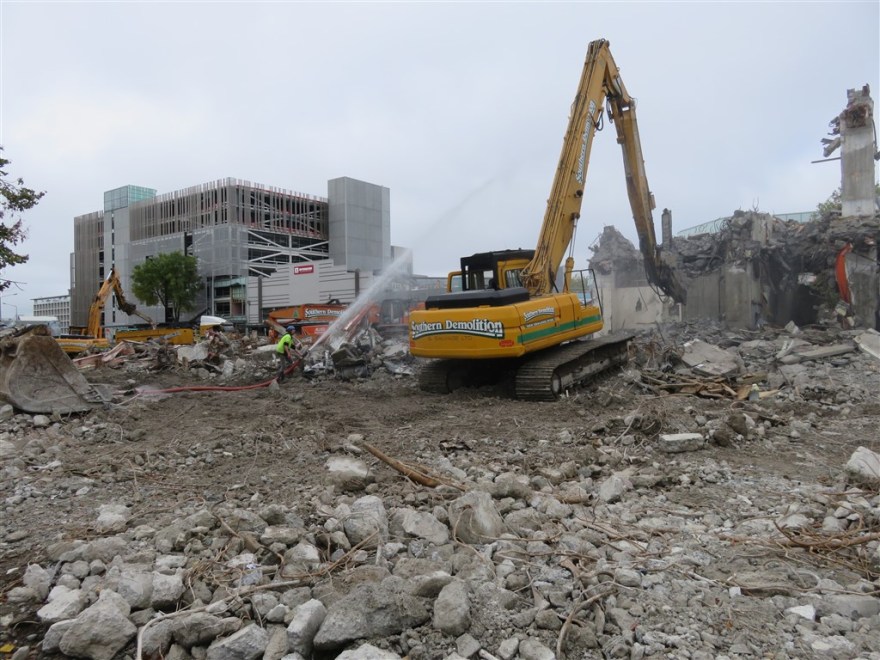
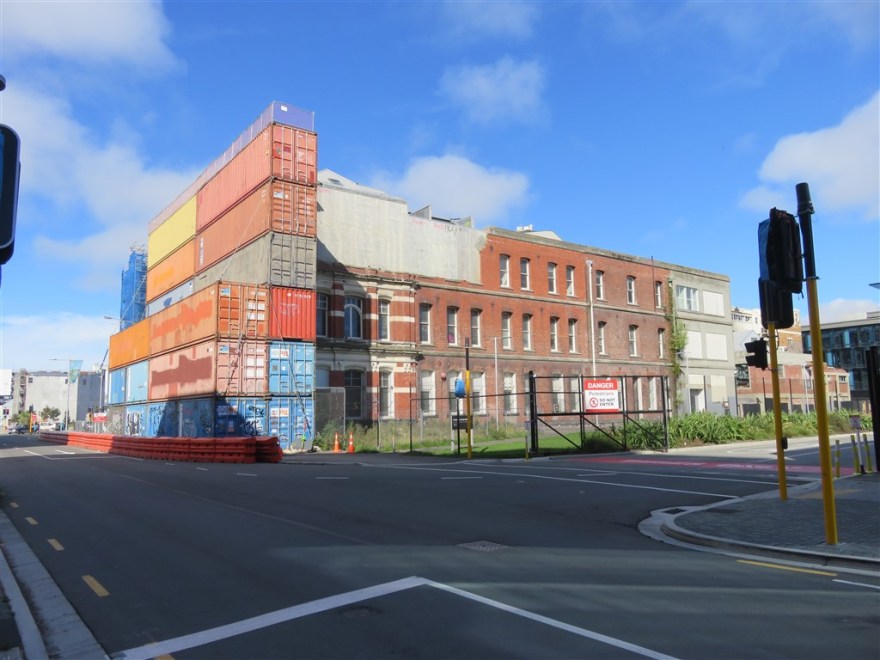
This is a result of the opportunistic Mr Wilson utilising all the sites that have been cleared from the Feb 2011 earthquake and not yet redeveloped. The impacts of the earthquake are still very visible with some damaged buildings only just being demolished.

IMG_0499

and others still waiting for action.

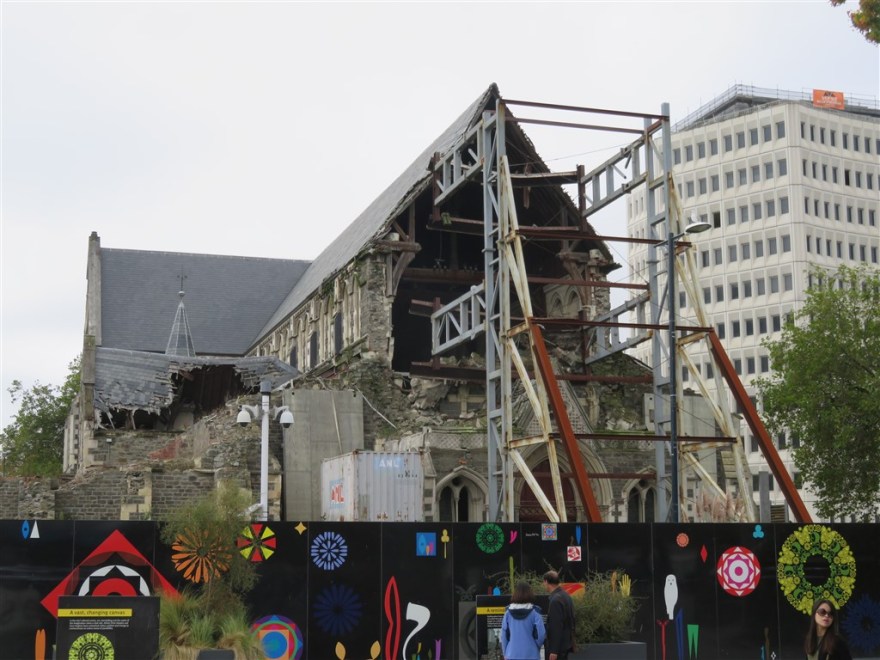
The worst damage was done to the Cathedral.

IMG_0502

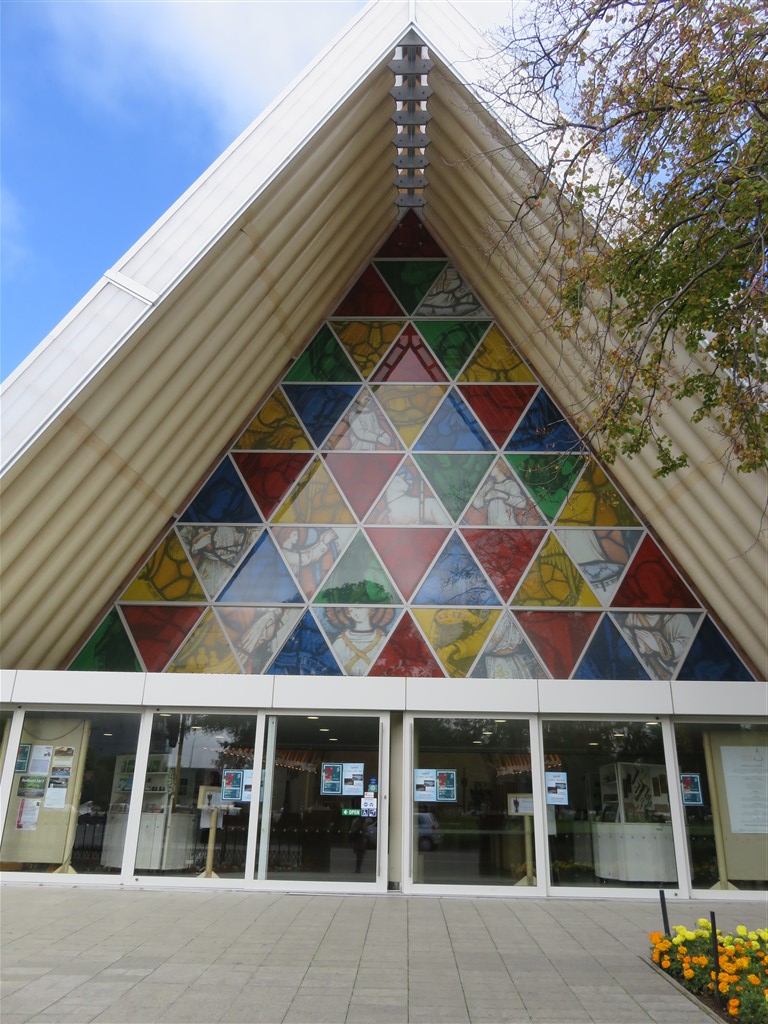
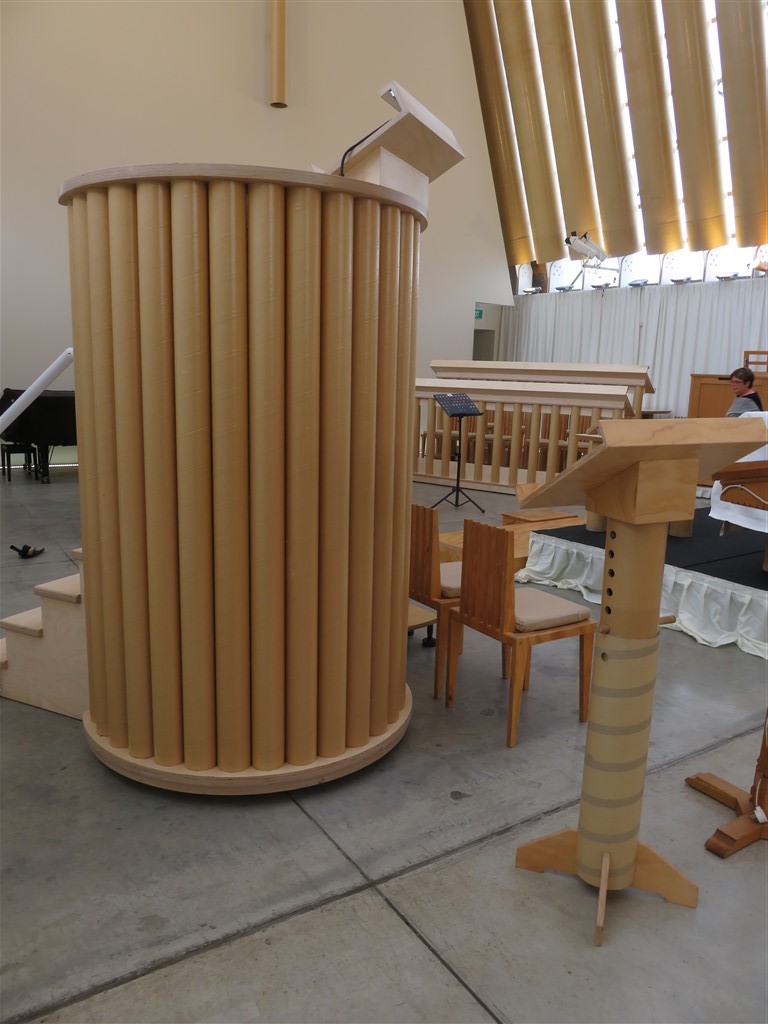
Six years on a decision has yet to be made on whether it will be repaired or demolished. In the meantime a transitional cathedral has been built – it is known as the Cardboard Cathedral.

IMG_0535

IMG_0541

IMG_0537

IMG_0536

IMG_0538

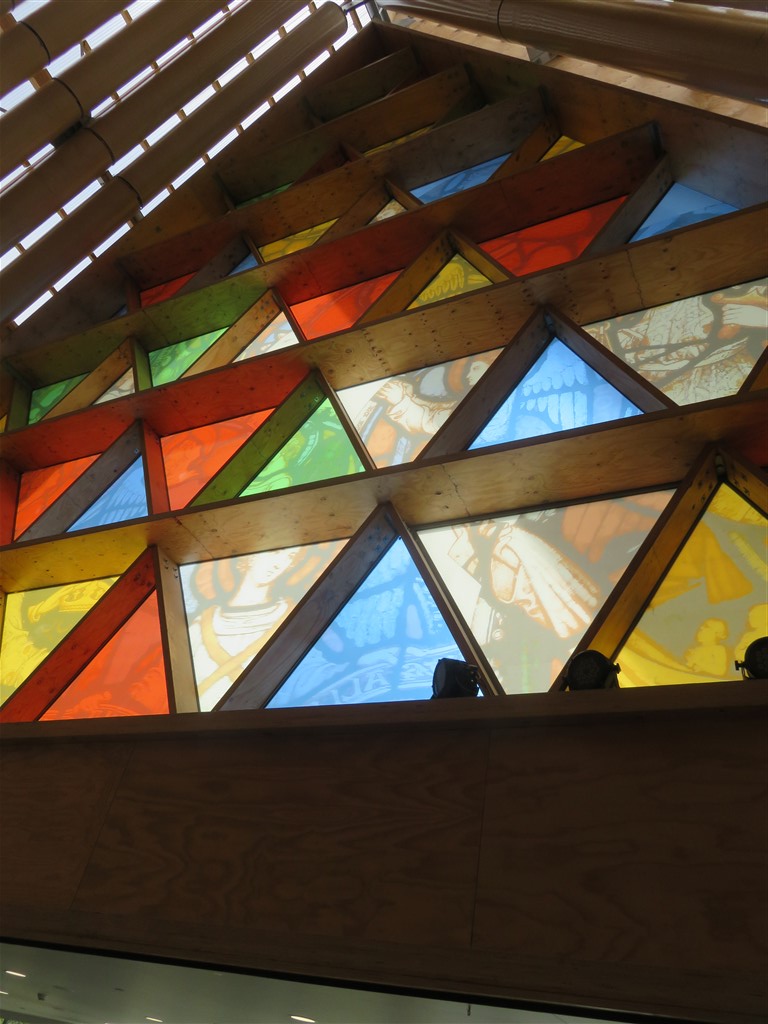
It came about after one of the Cathedral staff saw an article on an “emergency architect” from Japan called Shigeru Ban. He had designed a cardboard church after the Kobe earthquake. He visited Christchurch and two years later this was built. It is primarily built of cardboard, local wood and steel. It sits on a polished concrete base, is designed to 130% of the current New Zealand earthquake code and is expected to last up to 50 years. Hopefully enough time for a new Cathedral to be built in Cathedral Square.

Other examples of innovative thinking brought about by the earthquake are the Re:START shopping mall which is constructed out of shipping containers.

And the many standalone shops created out of shipping containers and other creative spaces.

And sensible footwear for fridges!

IMG_0531

Shipping containers full of concrete are also used to protect roads and paths from unstable buildings.

IMG_0552

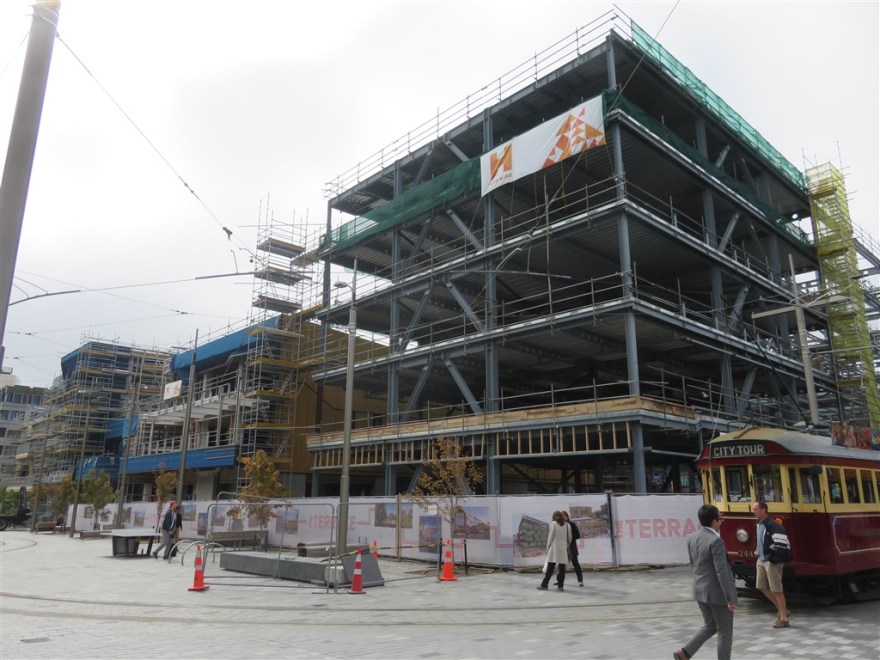
Generally the city is a massive building site.

IMG_0533

The new buildings in the central business district (CBD) – which was the worst hit area of the city – are only just opening this year.

However the earthquake did not destroy everything and some buildings were not impacted.

Christchurch School survived with minor impact, mainly due to expensive building strengthening projects implemented beforehand, and students were back at school a month after the quake. We visited the school and looked around the impressive facilities.

The old City Tram has been revived as a tourist attraction.

The river Avon, which runs right through the city,  and the Botanical Gardens were also untouched.

A memorial to the 185 people killed in the earthquake has been built beside the river.

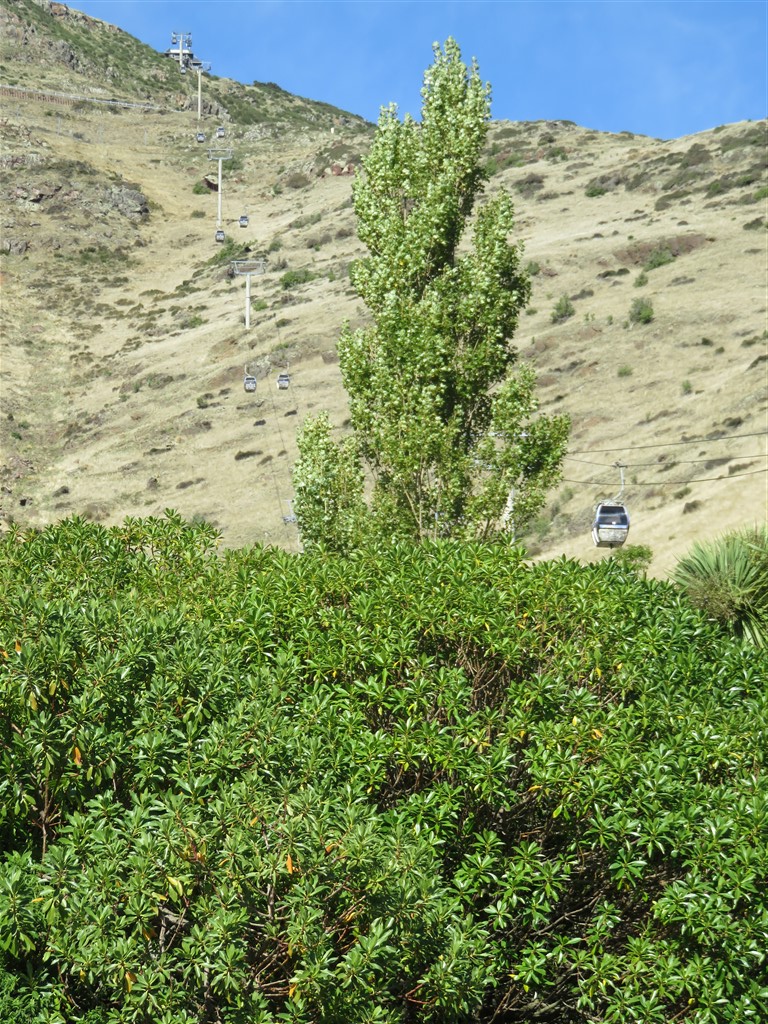
As a City that depends on tourism, there are other attractions outside the city centre such as the Gondola on Mount Cavendish.

IMG_0511

It offers views over the City, Canterbury Plains and Southern Alps. Unfortunately the views north over the City were impeded by low clouds when I visited. I did get some good views south.

We stayed in The Pavilions, a family run hotel on the north west of the City.

IMG_0524

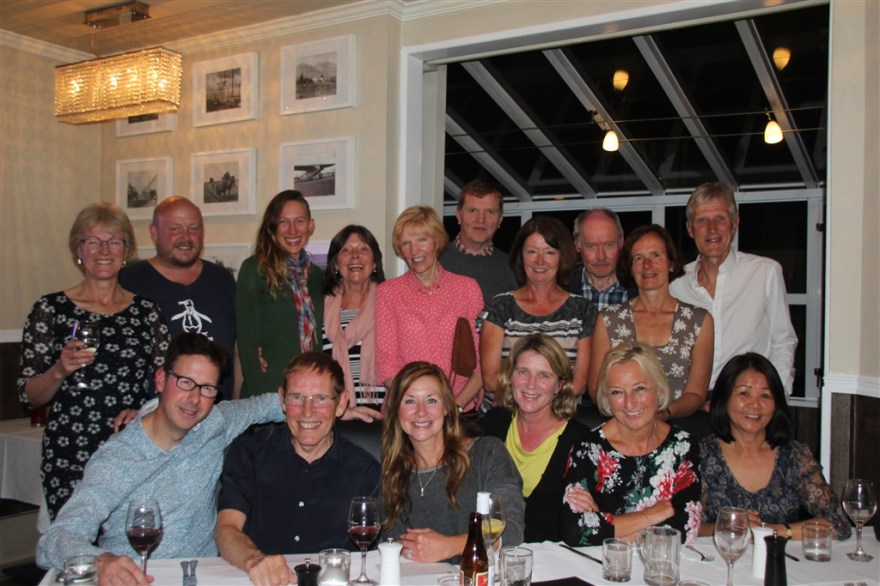
We had our final group dinner there as well.

IMG_1157

I stayed on an extra night after the Exodus tour finished and set off for Fiji on 1st April.

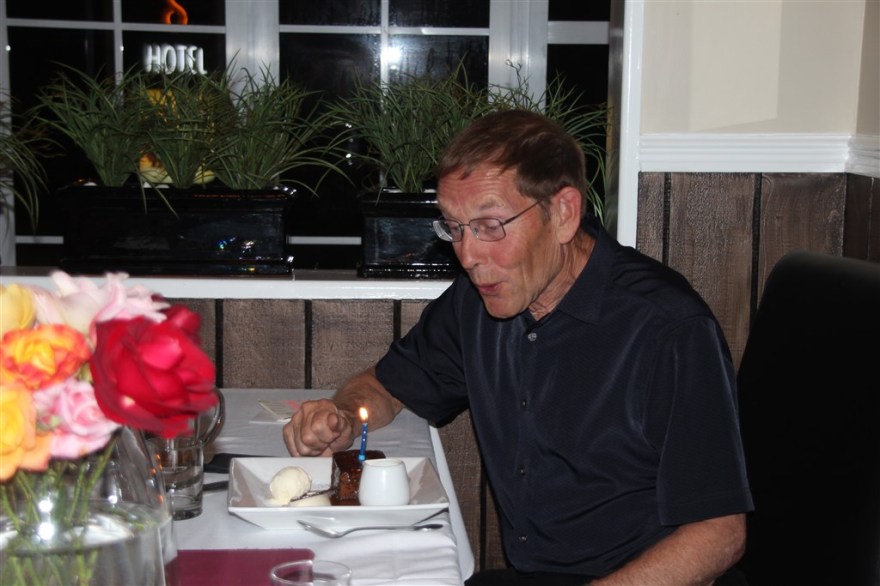
Happy Birthday Terry!

IMG_1160


Mount Cook

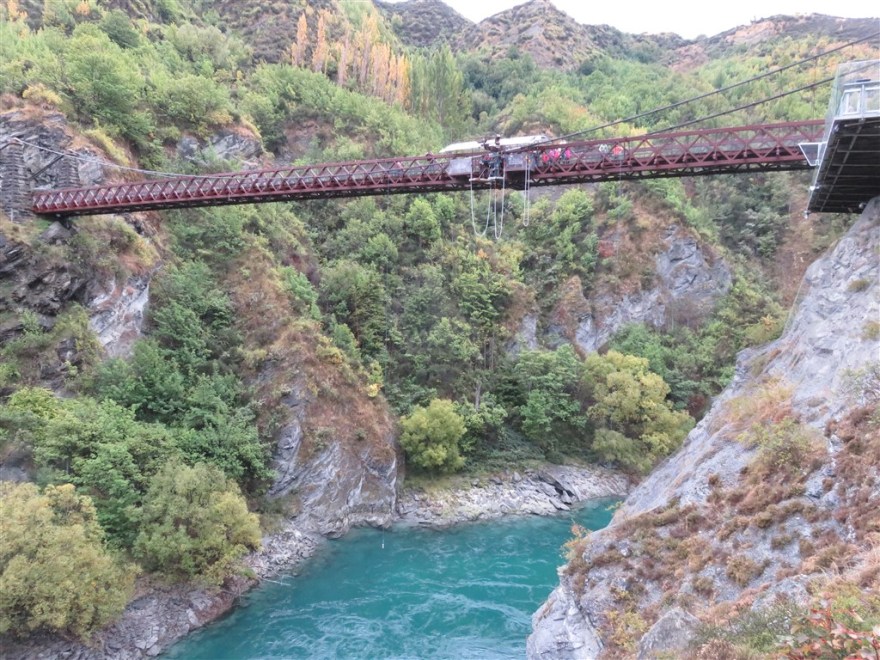
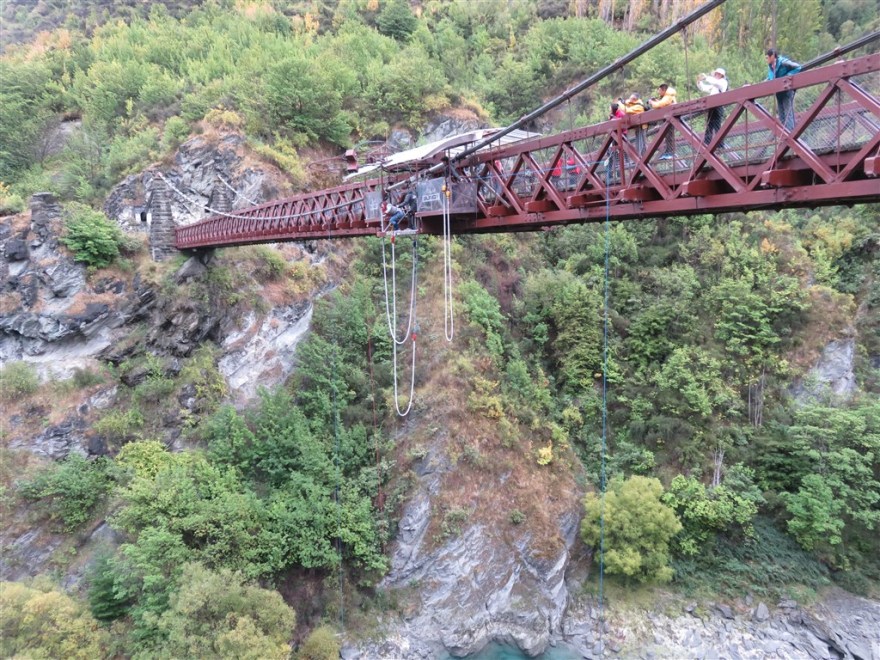
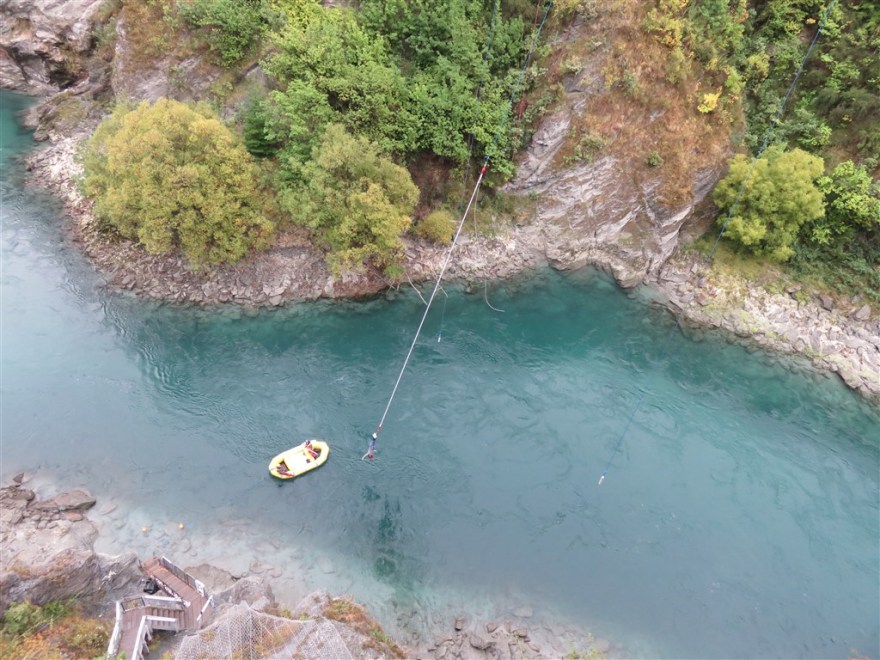
We left Queenstown for Mount Cook on 26th March. On the way out of Queenstown we stopped at the first ever bungee jumping site at Kawarau Bridge. People have been jumping off the bridge since 1988.

IMG_0468

I tried to catch some people jumping but kept pressing the shutter too early.

IMG_0474

IMG_0475

After the Bungee detour, we made our way to the Aoraki/Mount Cook National Park (www.doc.govt.nz/../aoraki-mount-cook-national-park). The park includes 19 peaks over 3,000m of which Mount Cook is the highest at 3,724m (12,218 feet). Mount Cook used to be higher but it shrunk by 40m its peak feel off during an avalanche in 1991.

We set off on a pleasant hike up the Hooker Valley to Hooker Lake.

IMG_0477

Further up the valley you get a good view of some of the glaciers.

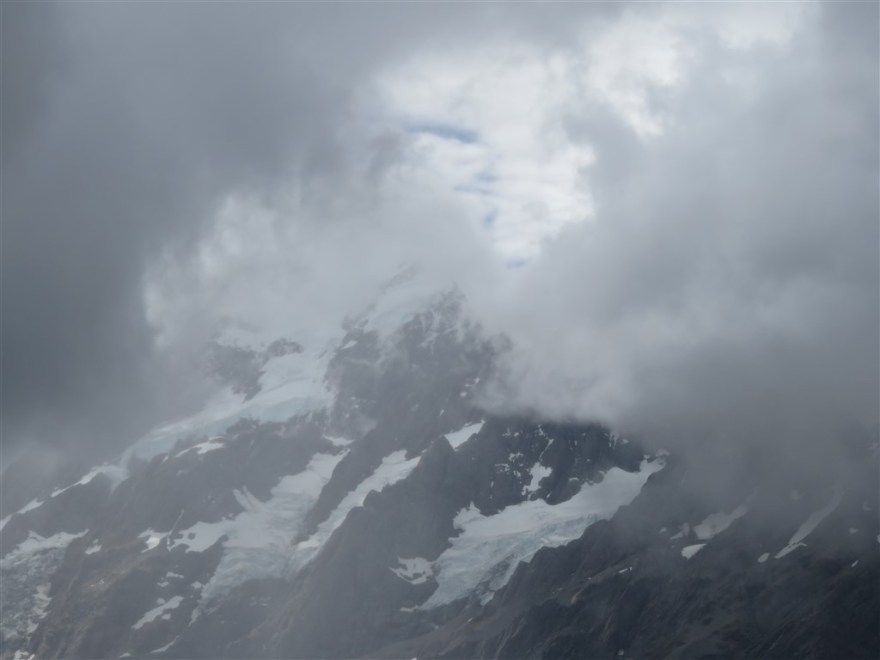
Unfortunately our view of Mount Cook was lost in the clouds.

IMG_0482

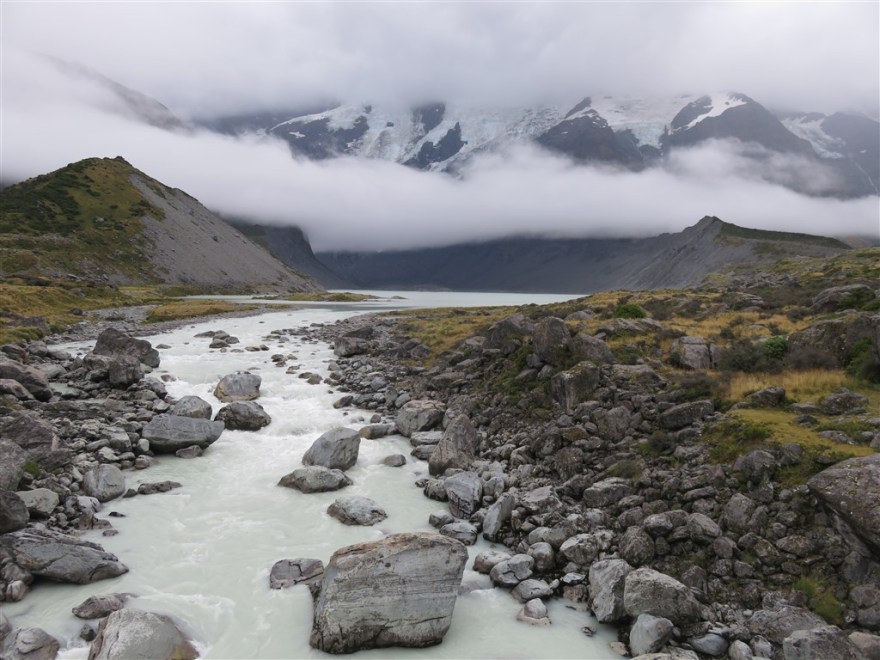
The melt water running off the glaciers is a milky white colour due to the minute particles of ground rock that are created by the glacier scraping over the underlying rock.

IMG_0494

The path ends at the lookout over Hooker lake and its icebergs.

On the way back you get a great view of the Hooker Valley.

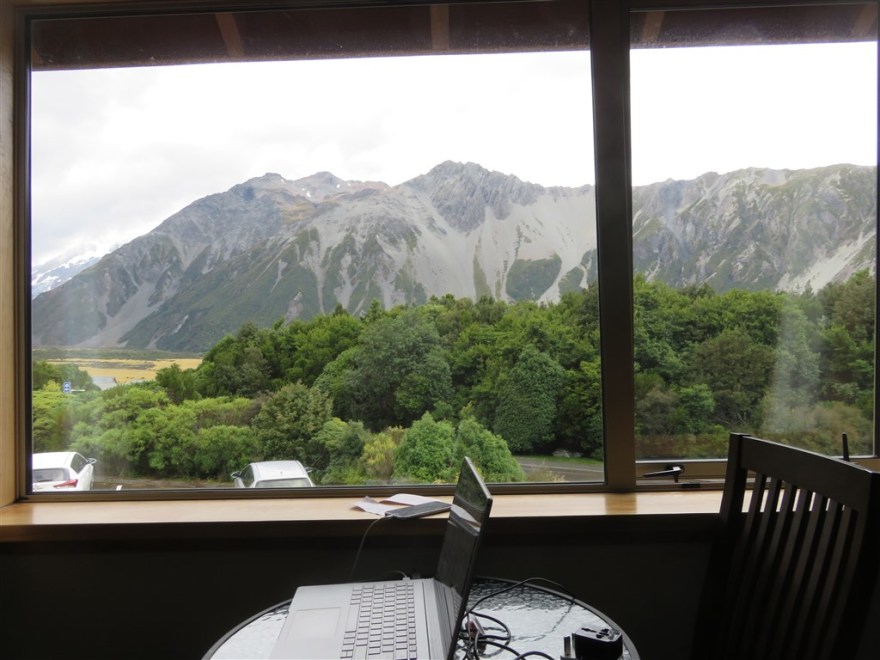
We spent the evening at the Aoraki/Mount Cook Alpine Lodge which is a contender for best view out of a hotel windows for this trip.

IMG_0495


Milford Sound

Milford Sound was billed as one of the highlights of the trip. Although it is only 40Km from Queenstown as the crow flies, in reality it is a 5 hour drive. There are no direct roads and you have to drive a long way south before you can cut across tot he west and pick up the road into Milford Sound. Until the Homer tunnel was opened in the 1950s, the only way in was to hike.

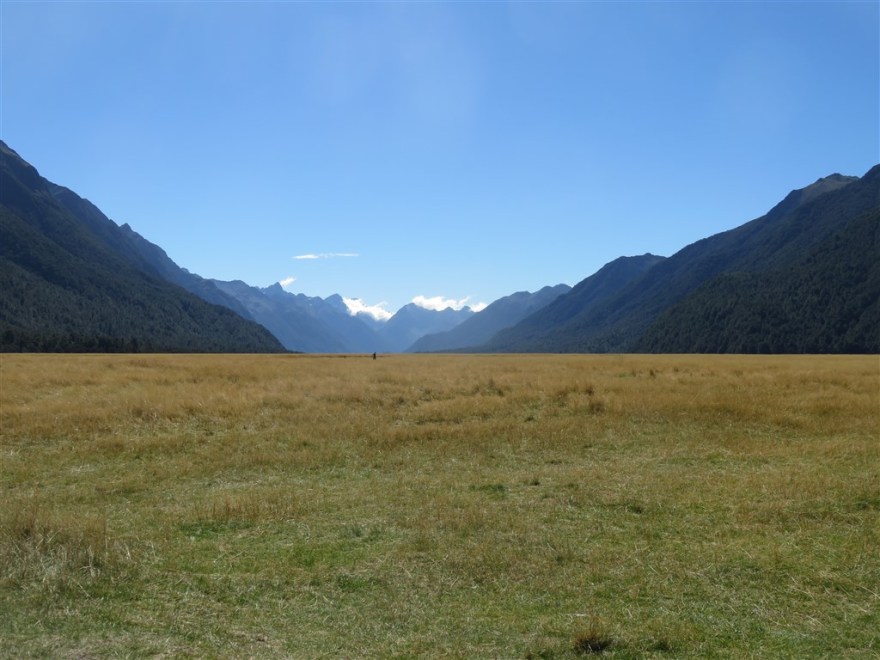
Milford Sound is one of the Sounds and Fiords in the Fiordland National Park (www.doc.govt.nz/../fiordland-national-park). On the way in we stopped for a quick walk in the valley floor.

IMG_0388

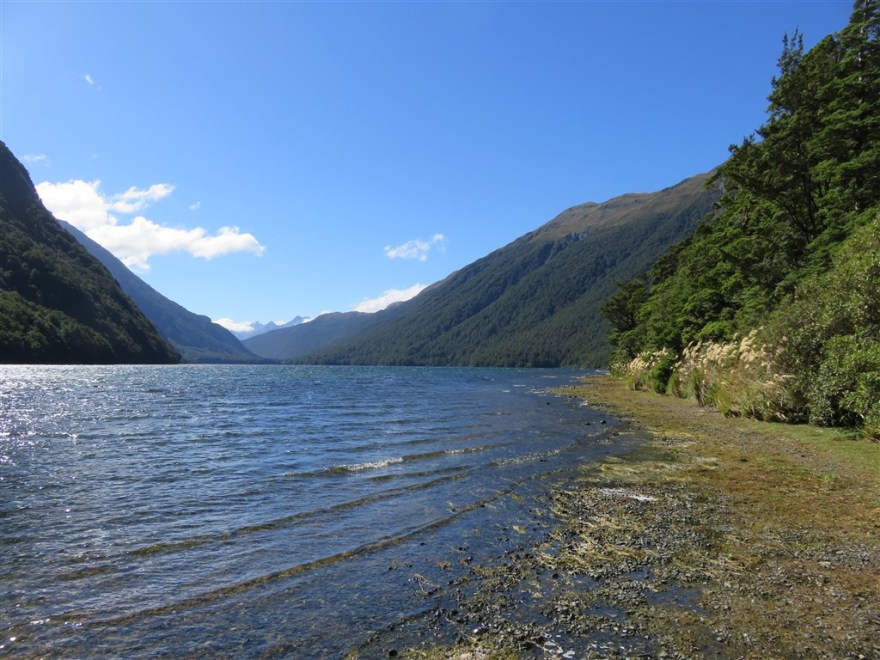
And then a forest walk to Lake Gunn.

IMG_0398

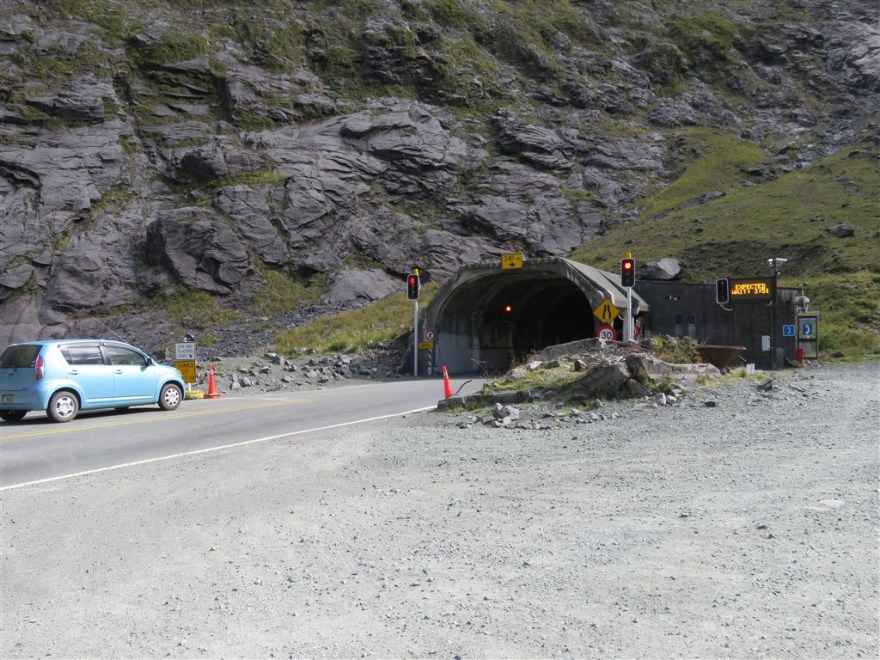
As we got closer, we came to the Homer tunnel. Work began on the single lane tunnel in 1935 and, after a break of several years during the second world war, it opened in 1953.

IMG_0402

While waiting at the lights to go through the tunnel, you are likely to come across the Kea – an alpine parrot. The mischievous birds like plastic.

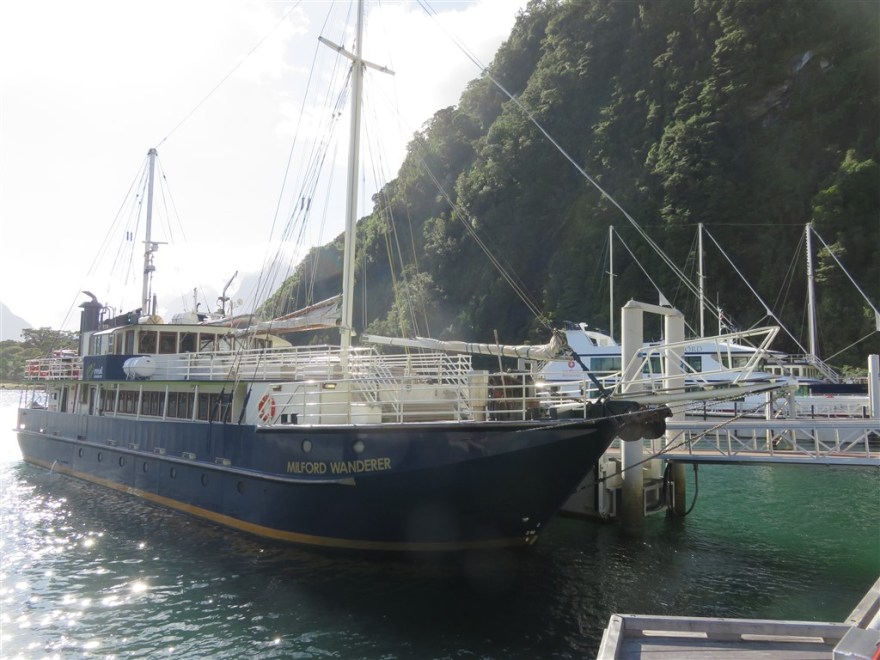
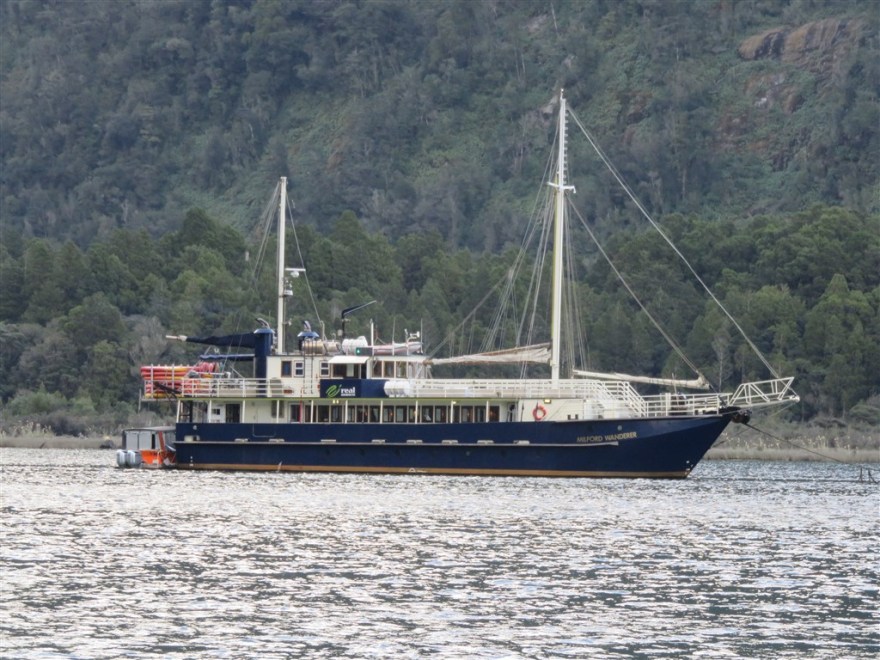
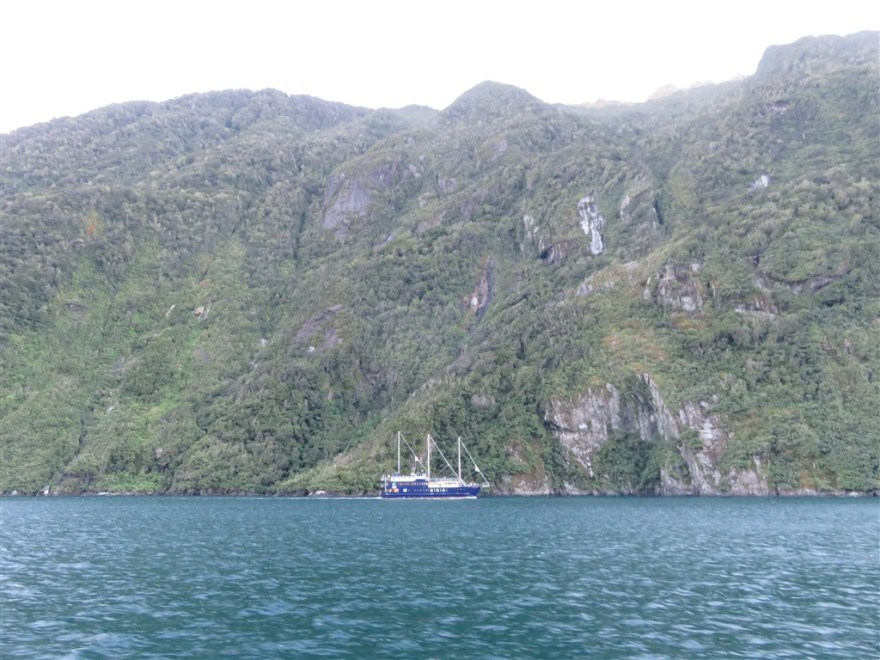
Eventually we reached Milford Sound and checked in for our over night cruise on the Milford Wanderer.

IMG_0407

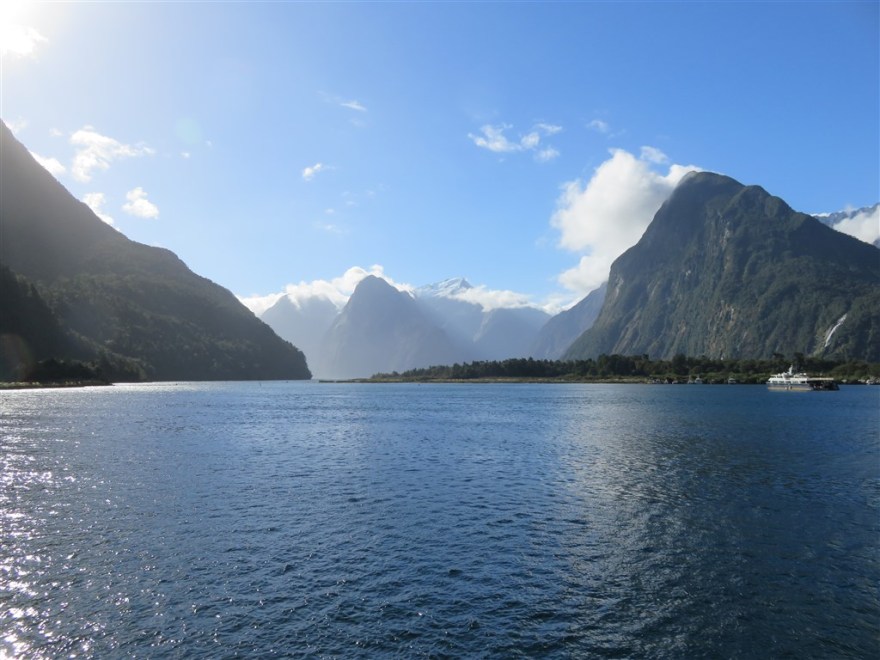
We departed at 4.30pm and cruised out to a cove where we moored. We started to get our first view of the Sound.

IMG_0409

IMG_0410

Some of the us went for the walk along the end part of the Milford Track (the hiking route to Milford Sound) and I opted for the trip around cove in the ship’s tender.

IMG_0417

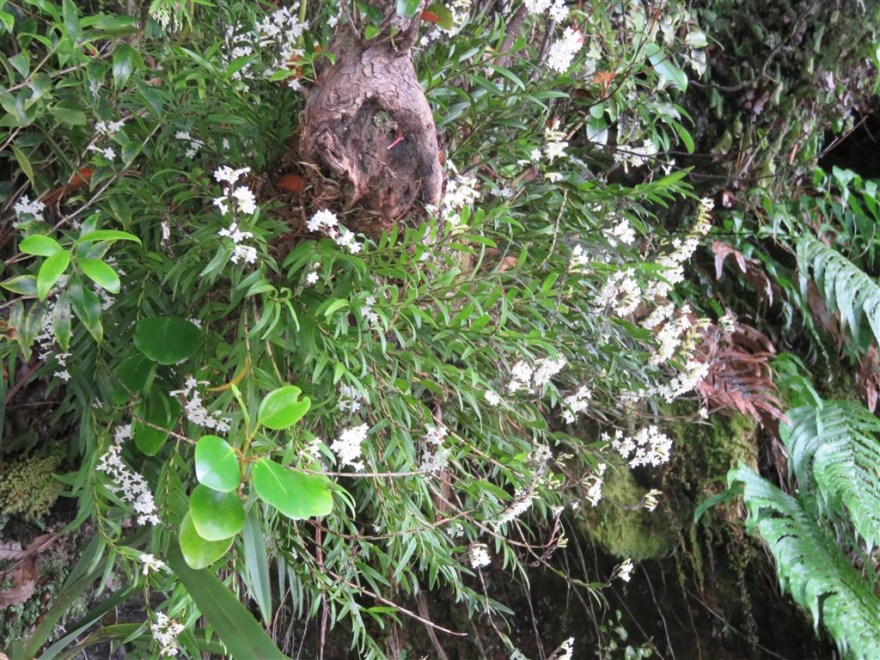
We were looking out for the wildlife and saw some Easter Orchids.

IMG_0414

And a couple of New Zealand Fur Seals basking on the rocks.

We returned to the boat and cruised to our overnight mooring where we had dinner and then went out to view the stars in the perfect darkness. We had great views of the Southern Cross and the Milky Way. Unfortunately both beyond the capability of my camera to take pictures.

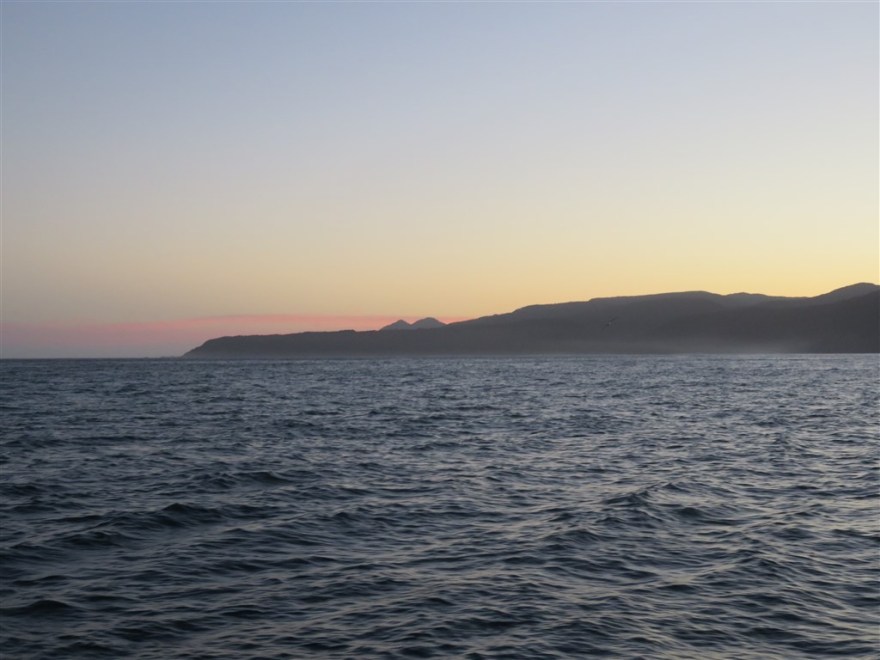
The boat was well equipped. We had an excellent dinner and better showers than many of the hotels we had stayed at. The only downside was that the bunks we very narrow. After a rather uncomfortable night, we rose at 6.30am for an early breakfast before setting out to cruise the rest of the Milford Sound. We were out at the end of the Sound in the Tasman Sea before the sun rose.

IMG_0418

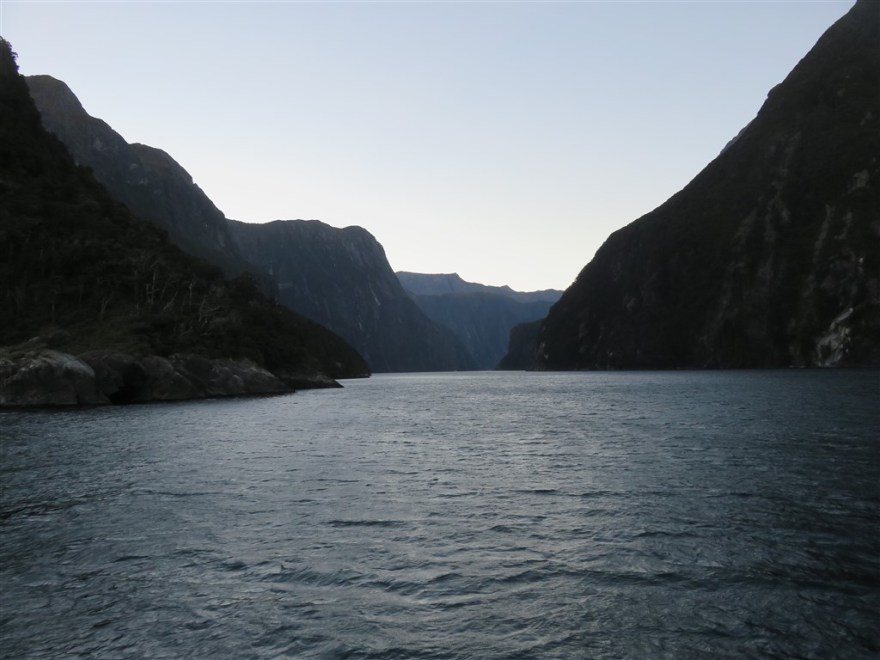
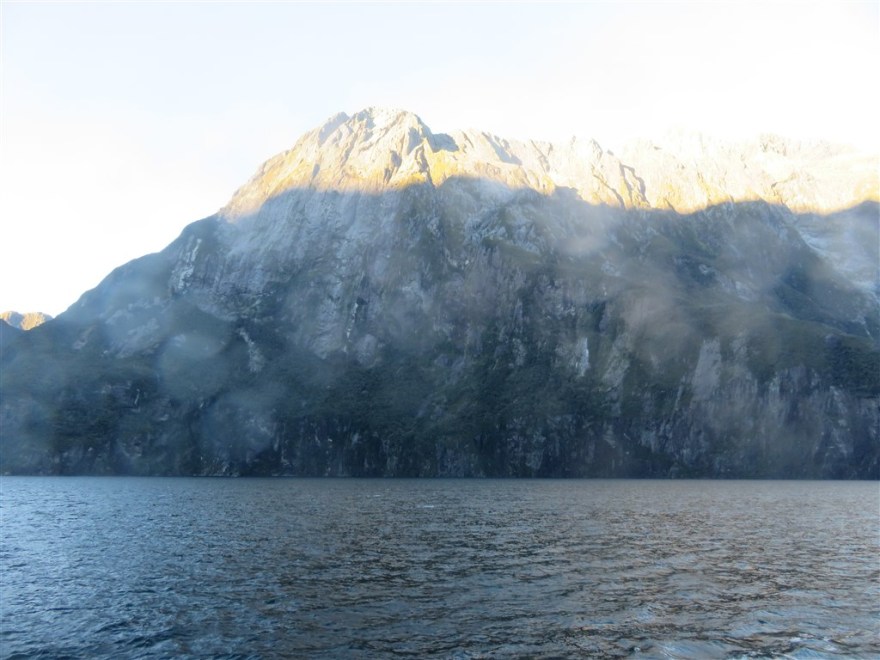
We started to get sight of the steep sides on both sides of the Sound.

IMG_0423

IMG_0424

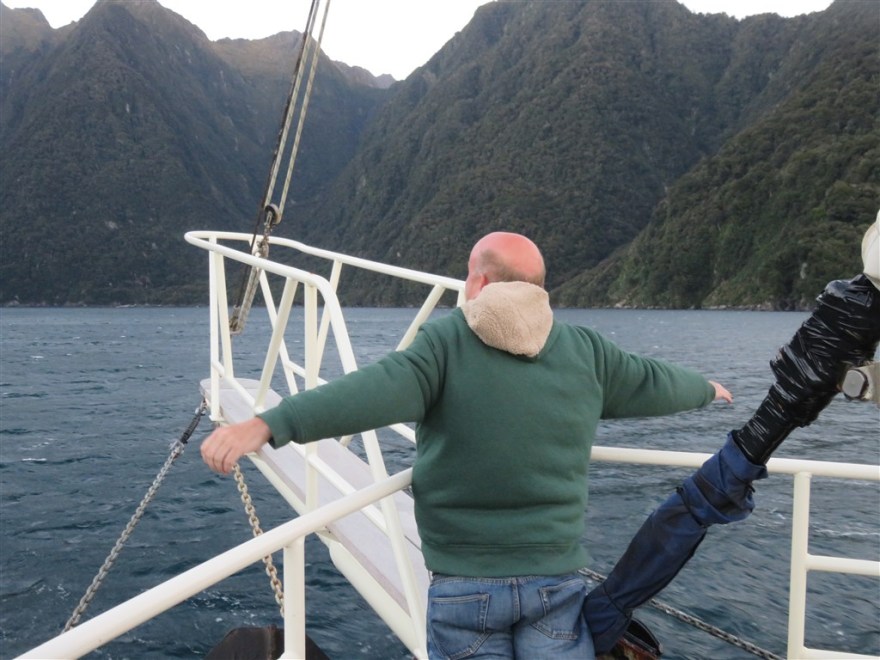
I had a Titanic moment on the cruise back into the Sound.

IMG_0421

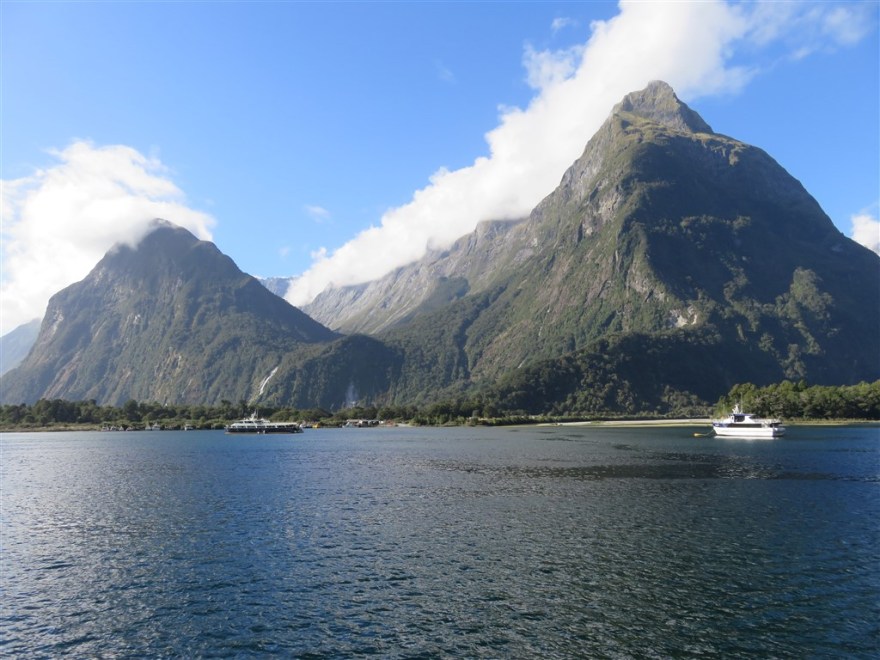
It is hard to appreciate the scale of everything in the Sound. This is Mitre Peak which rises 1 mile (1,600m) straight up from the sea floor.

IMG_0435

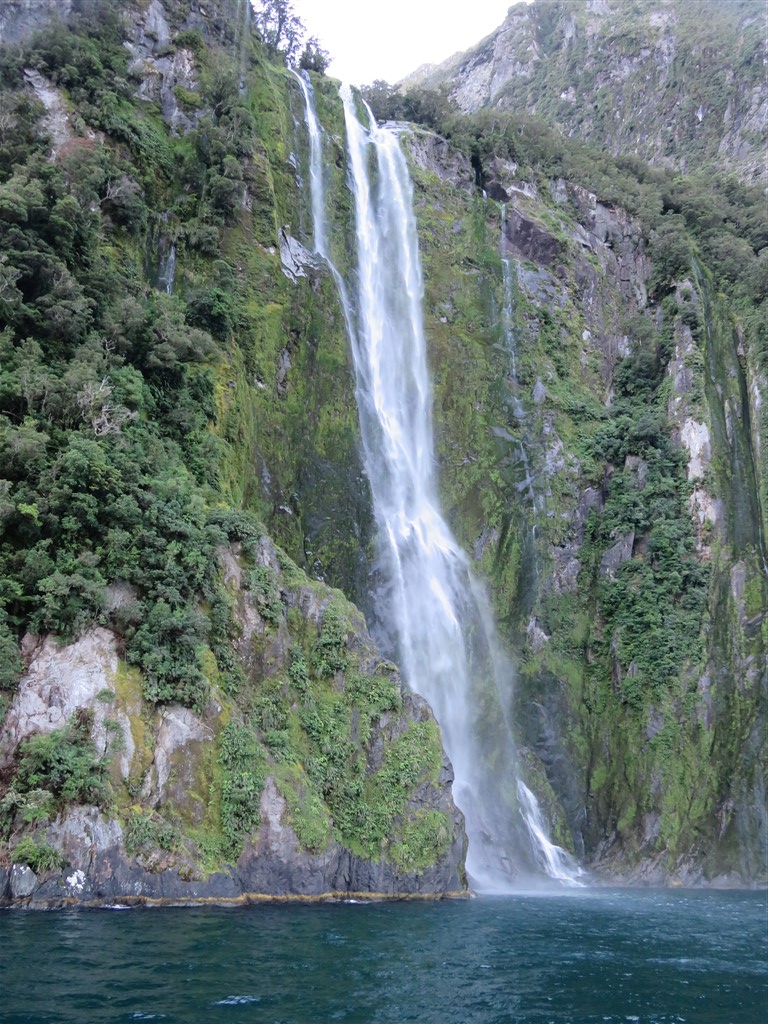
Bowen Falls is more than 3 times as high as Niagara Falls.

IMG_0431

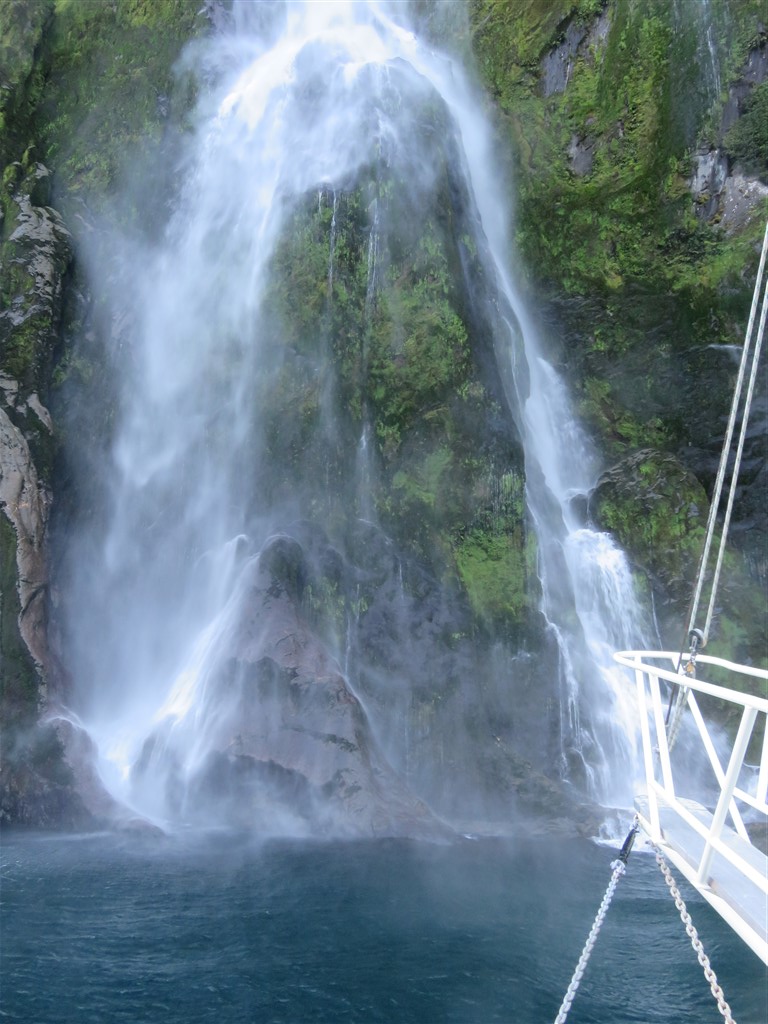
Due to the steep sides of the Sound, the captain as able to take the boat right up to the falls.

IMG_0433

IMG_0426

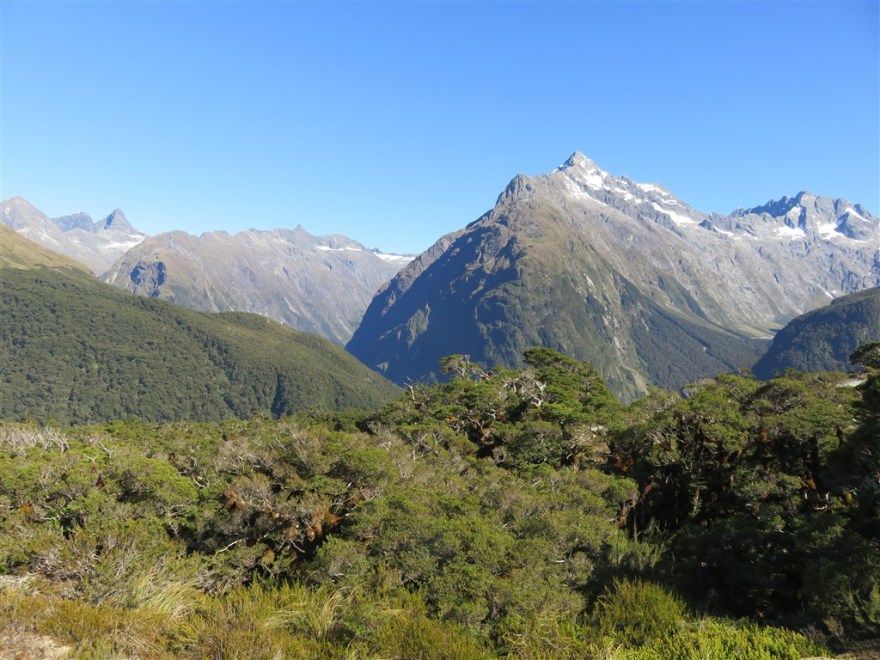
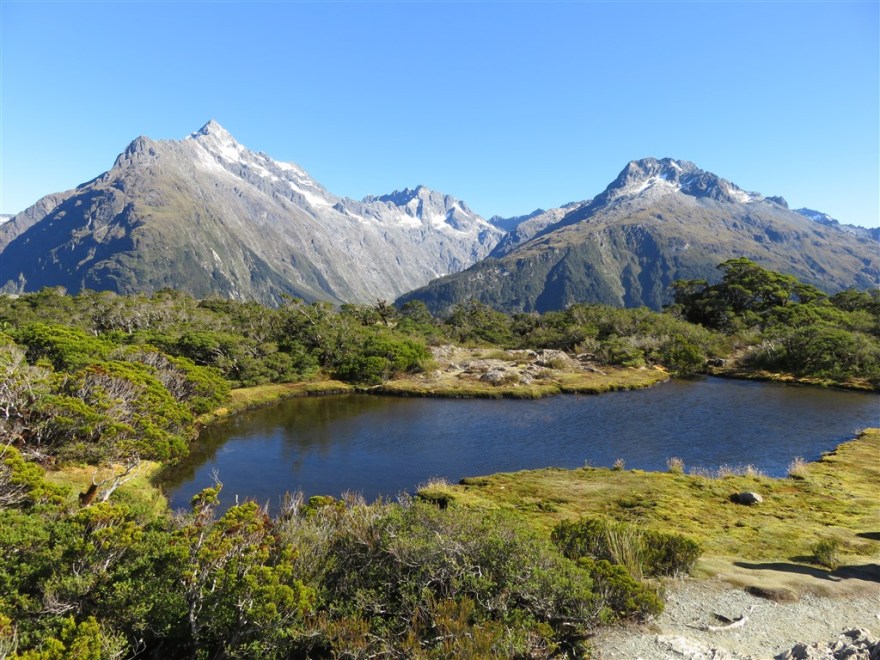
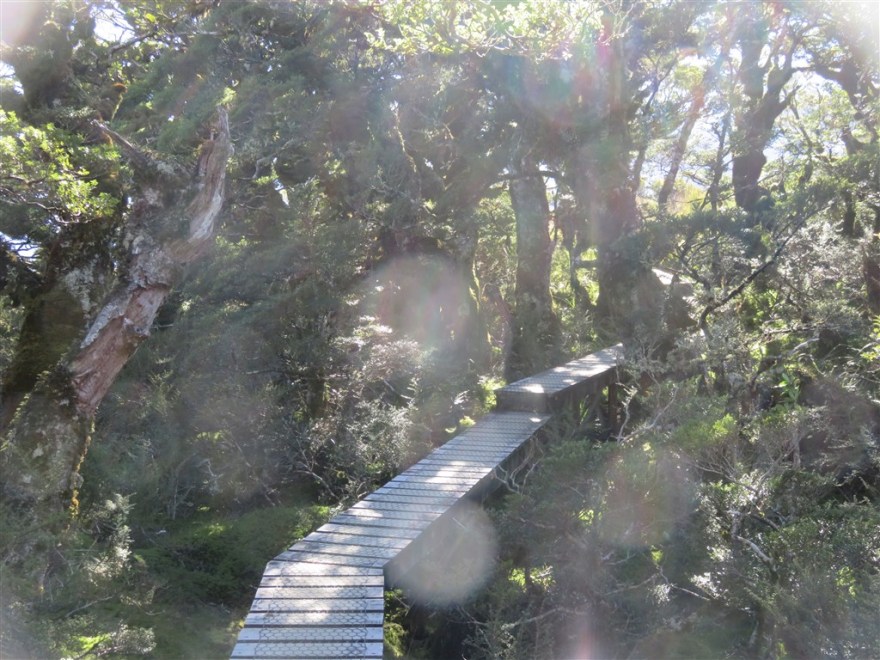
By 9am we were back on land and heading off for our next walk. We did a section of the Routeburn Track up to the Alpine Walk on Key Summit. It was a pleasant walk up and we had excellent visibility from the summit.

IMG_0448

IMG_0449

There is a small lake at the top and a pleasant circular walk around the Alpine environment.

IMG_0445IMG_0452 We then set off back down to the valley floor.
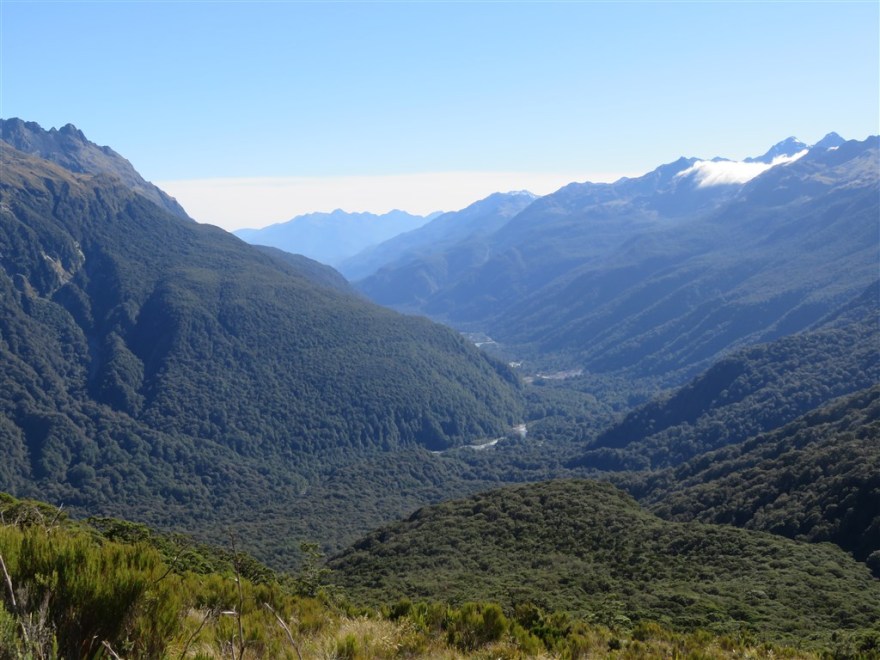
IMG_0454

Passing a lot of wildlife on the way.

IMG_0459

We then had to make the 5 hour drive back to Queensland. For future reference many people fly in and out of Milford Sound and it is one of the busiest airports in New Zealand. You can fly by plane or helicopter.

After another night in the Aspen Hotel at Queensland, we set off to Mount Cook.