We flew from Buenos Aires to Iguazu on 27th October. Iguazu is in north east Argentina on the border of Brazil and Paraguay. There was a severe storm in Iguazu as we tried to land and the pilot had to abandon the landing and fly south 150km to Posadas. The plane sat on the ground for about 45 minutes and then set off to Iguazu again. This time we were able to land.
We had come to visit the Iguazu Falls from both the Argentinean and Brazilian sides. On our first day we went to the Parque Nacional Iguazu on the Argentinean side. (www.parquesnacionales.gob.ar/../pn-iguazu)
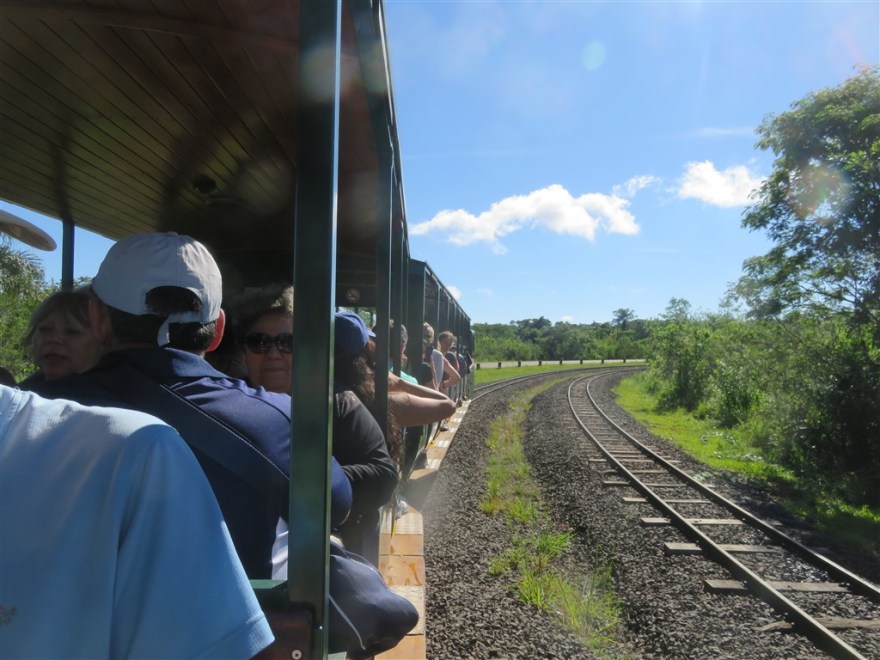
You take a small train from the entrance of the park to the falls. It is about 6km to the end of the line.
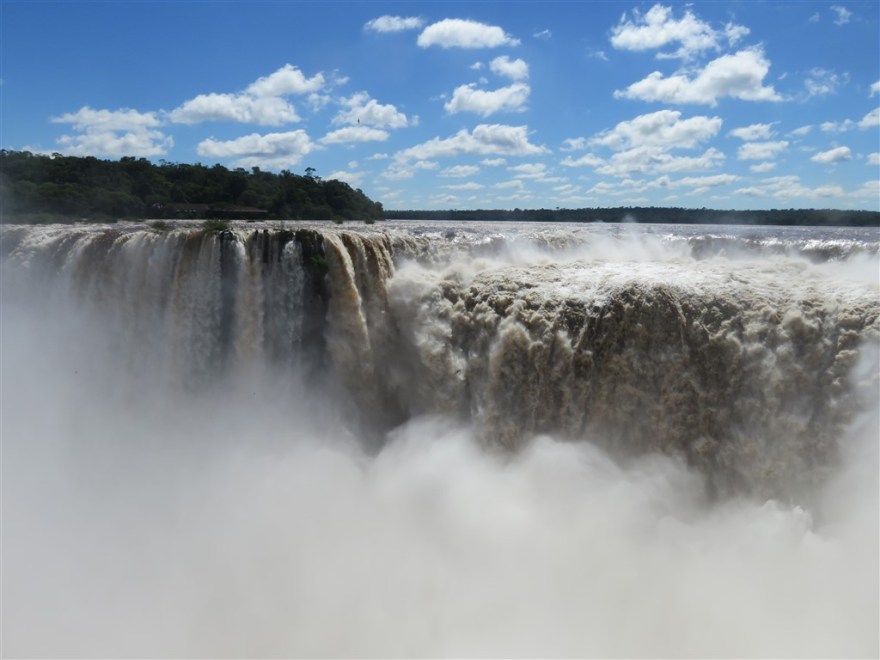
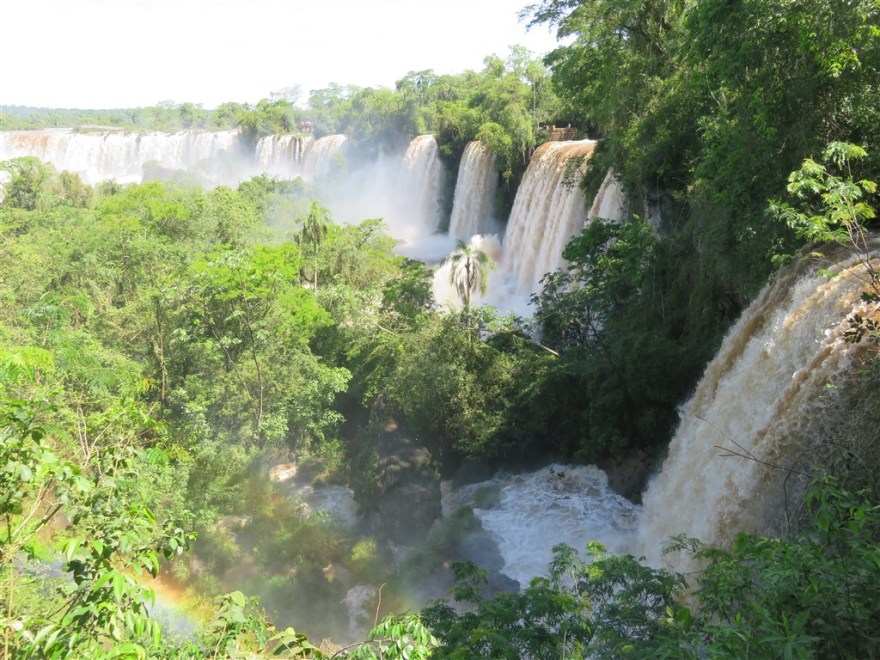
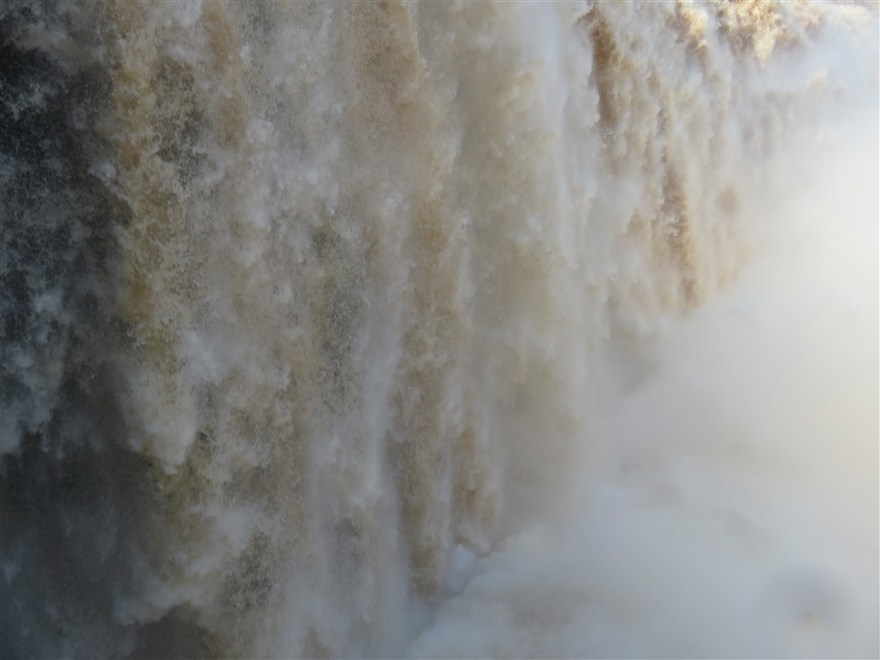
Our first view of the falls was of the of the Devil’s Throat which is the largest waterfall in the park at 90m in height. Due to the previous day’s storm, there was about 3 or 4 times more water going over the falls than normal for this time of year.
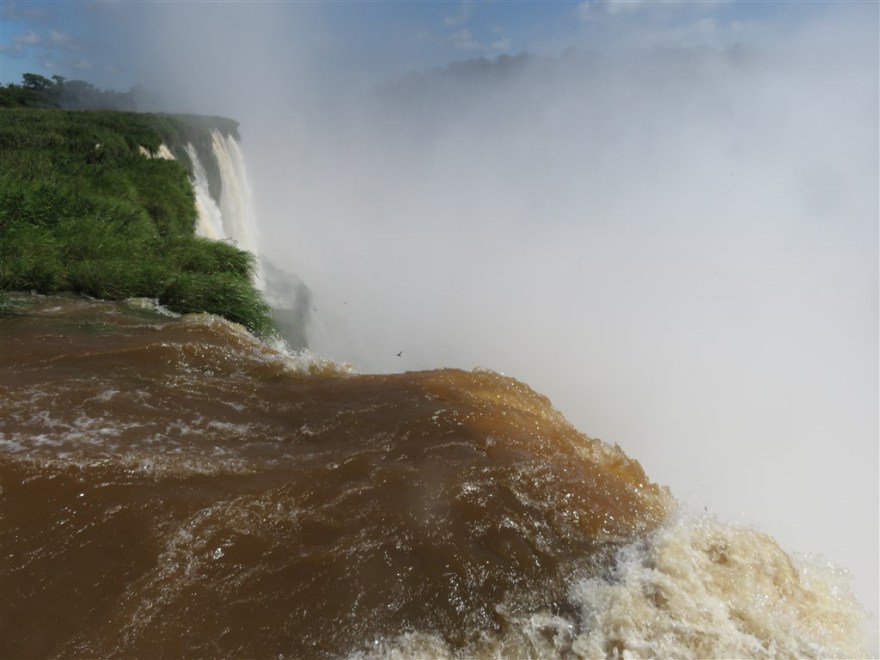
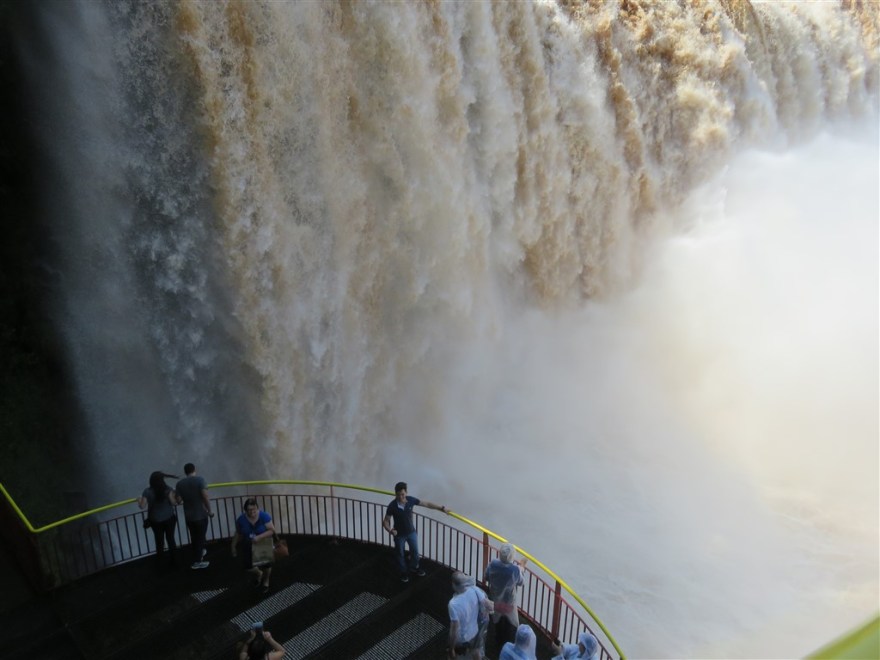
You can get right to the edge of the waterfalls.
However, having enjoyed seeing very few other tourists in Patagonia (except up the last section of Torres del Paine!), Iguazu was very different and it was packed. I would hate to be here in peak season.

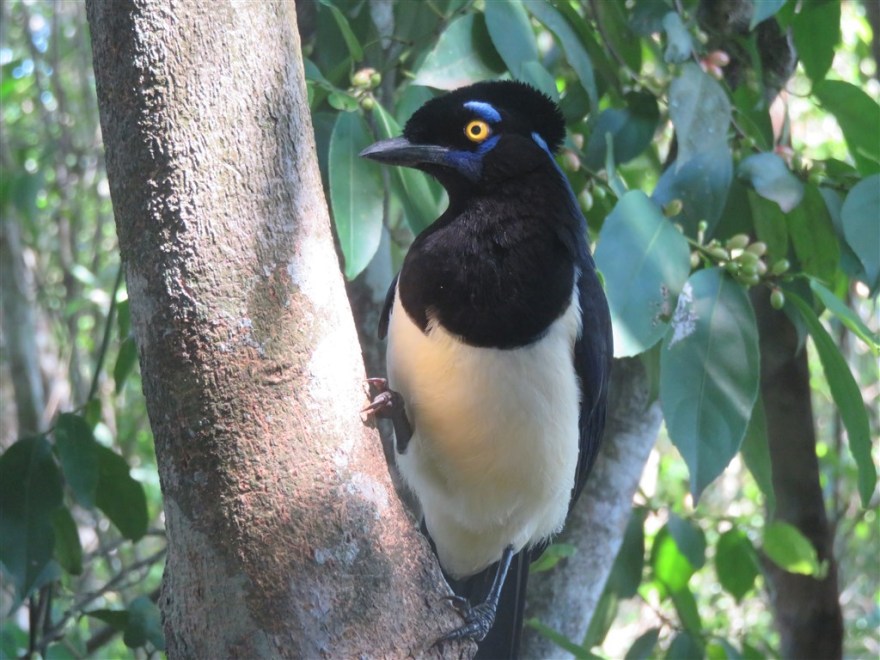
Despite the crowds of people, we saw quite a lot of wildlife. This is a plush crested jay, a member of the crow family.
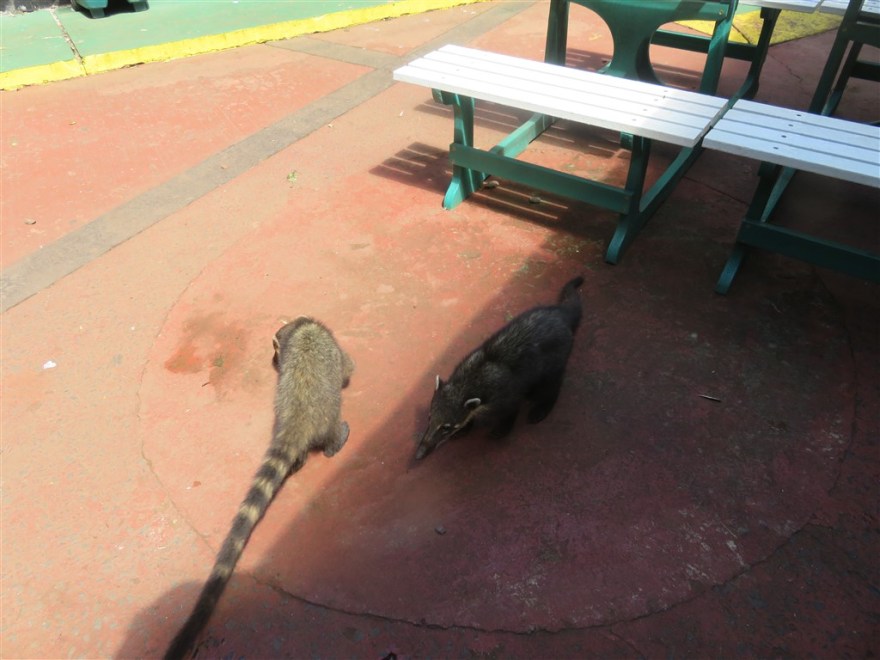
These are Coatis (aka Coati-Mundis), members of the raccoon family. We saw them all over the park scavenging from the tourists.
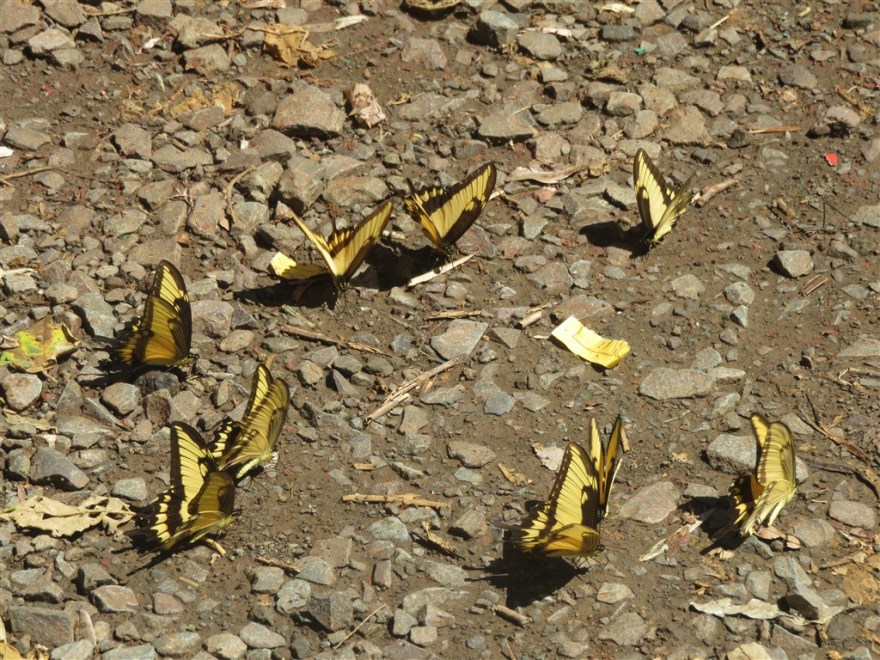
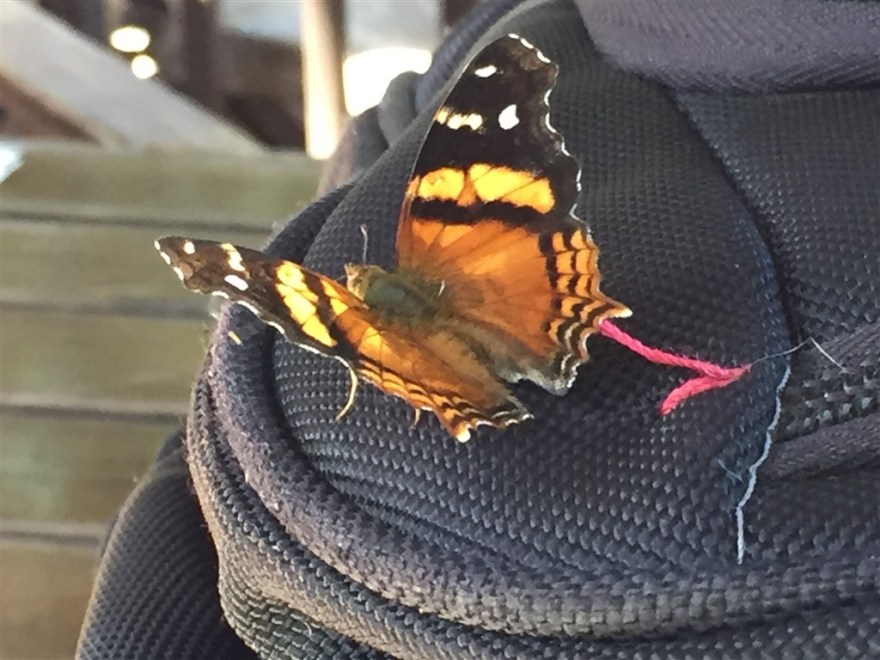
There were also lots of butterflies.
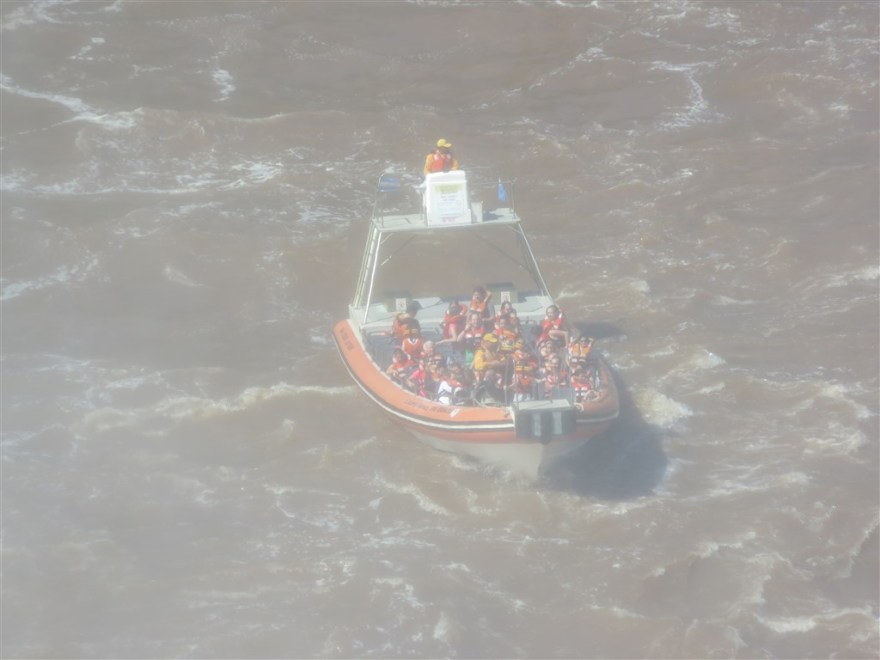
We took a boat trip up the Iguazu river to the base of the falls. We had a chance to take some pictures before getting closer to the falls which was extremely noisy and wet.
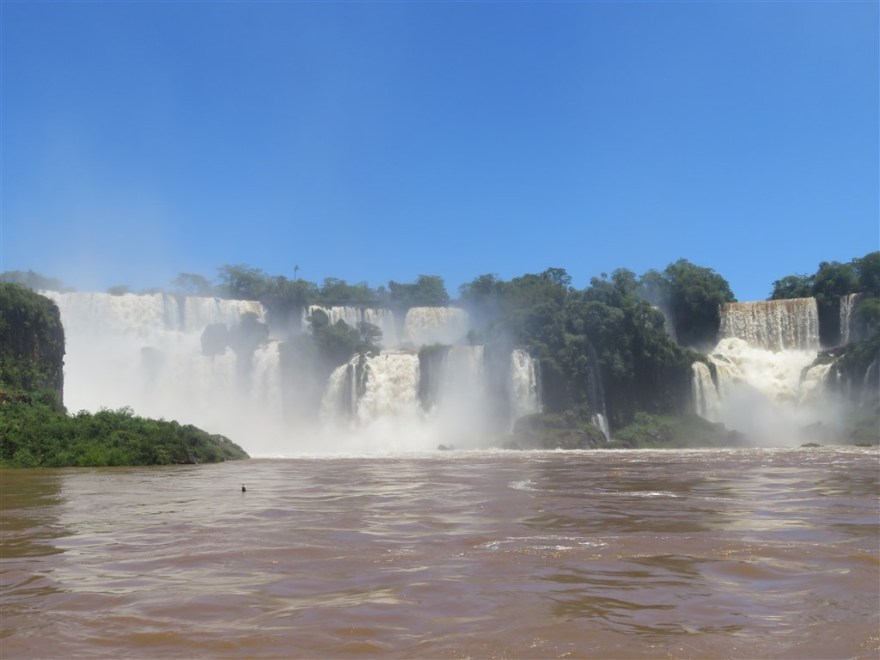
We travelled in powerful motor boats which had to navigate up the rapids to get to the falls.

This picture is of another group in a similar boat taken from the top of the falls.
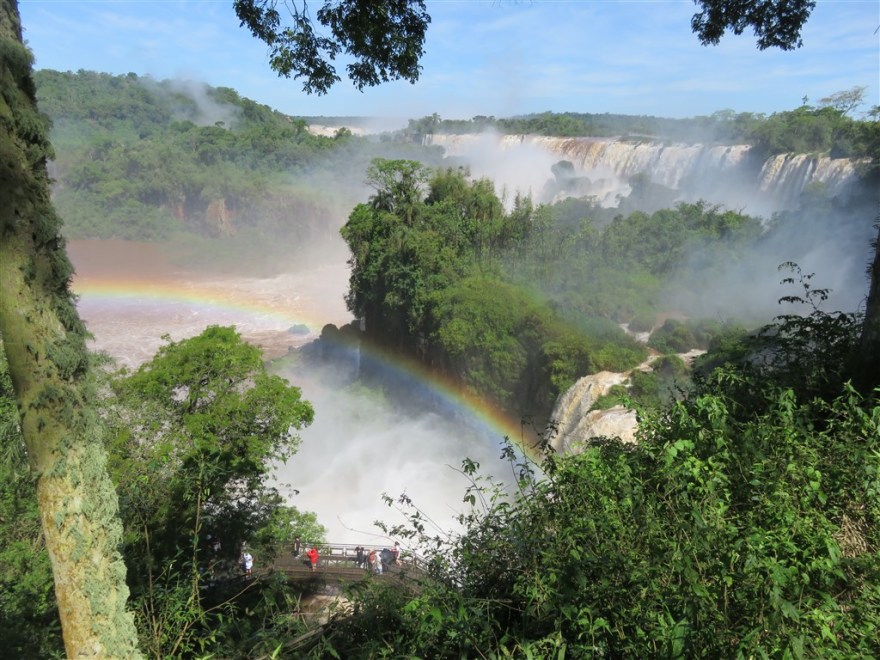
After the boat trip, we went around the upper walkway of the other falls.

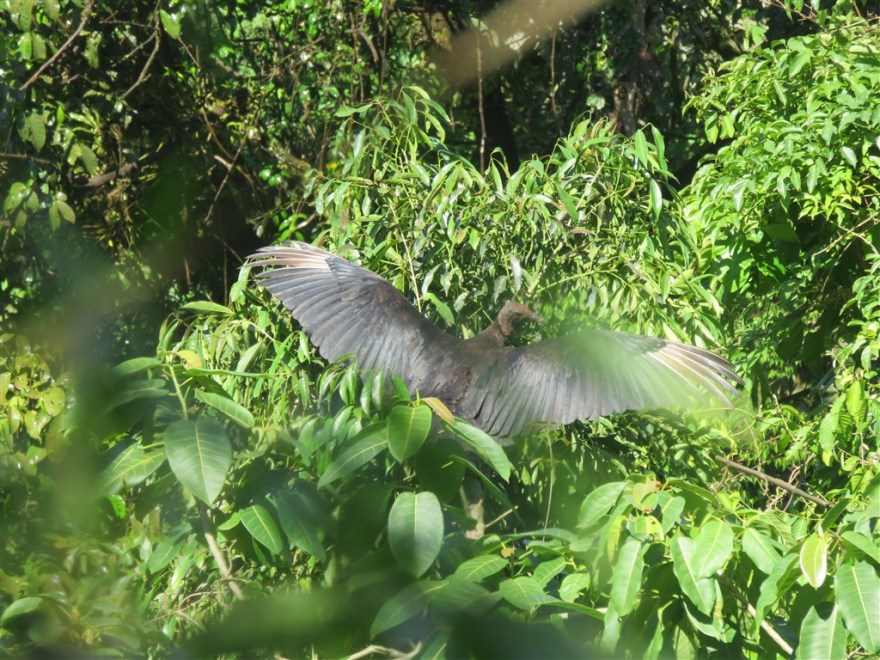
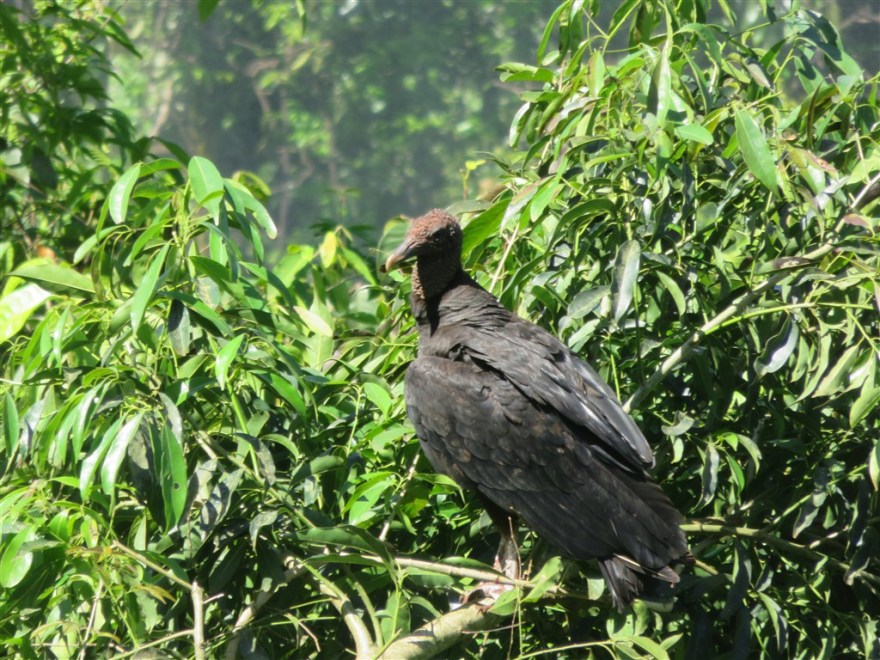
We also saw more wildlife up here as well. This is a Vulture sunning itself.
A lizard.

And Brown Capuchin monkeys.

The following day we crossed the border to see the falls from the Brazilian side. Although Brazil only has about one third of the riverside that Argentina has, their park – Parque Nacional do Iguacu (www.icmbio.gov.br/parnaiguacu) – seemed just a busy. From this side you get a much more panoramic view.
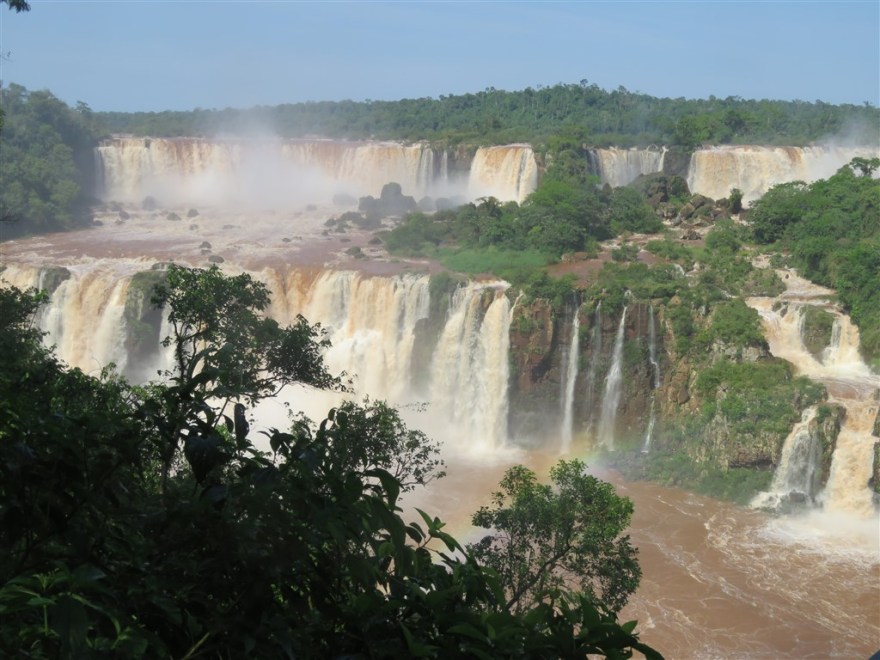
However, you can get very close to the bottom of the falls on this side.
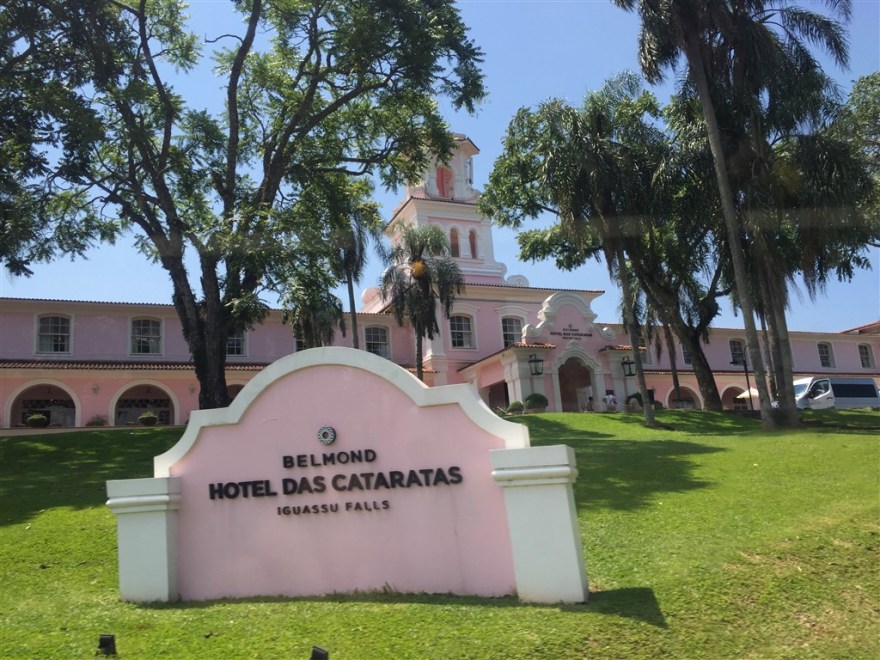
We stayed a very non descript 3 star hotel on the Argentinean side. However, if you prefer something more up market, I suggest you try the Hotel Das Cataratas (www.belmond.com/../belmond-hotel-das-cataratas/..) on the Brazilian side.
We had a great time at the Iguazu Falls. If I had not been on an organised tour, with a fixed schedule, I would have liked to have visited the ITAIPU hydro electric dam (www.itaipu.gov.br/en). The dam was constructed at the site of the Seven Falls on the Parana River – about 50km upstream of the Iguazu Falls. Theses Falls were even bigger than the Iguazu Falls. When the project started in the 1970’s, it was seen as ego boosting project by the military government of the time. However, with sustainable power now of more interest, it has proved a good investment. It supplies 20% of the total power used in Brazil and 94% of the power used in Paraguay.
![Itaipu_Décembre_2007_-_Vue_Générale[1]](https://escapefromealing.com/wp-content/uploads/2017/11/itaipu_dc3a9cembre_2007_-_vue_gc3a9nc3a9rale1.jpg?w=880)
The following day we flew back to Buenos Aires without incident. This was the end of my Explore trip. I spent another day in Buenos Aires before setting off to Uruguay.
 Escape from Ealing
Henry, your blog is amazing. So much good information. Comes in handy because my memory is terrible. Pictures really good too. Thanks for doing this.
LikeLike