I checked into the Axsur Design Hotel (www.axsurhotel.com) in the old city of Montevideo. It was just a few minutes walk away from Independence Square, had excellent rooms (with tea making facilities – something not very common in South America!) and was not very expensive.

I started off in the old city and visited the mausoleum of General Artigas which is under Independence Square. Artigas is a national hero, commonly referred to as “the father” of the modern day Oriental Republic of Uruguay.
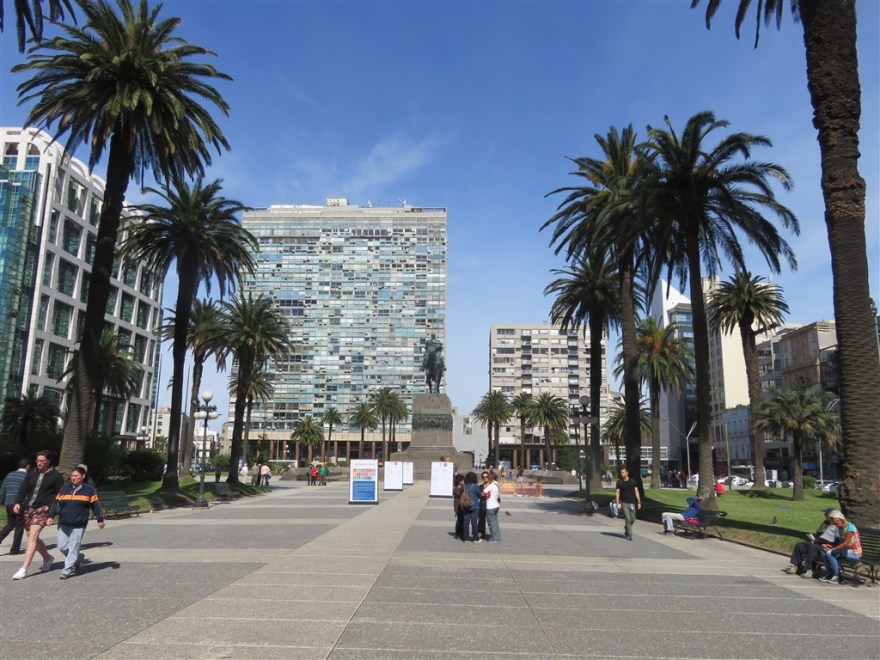

From there I took a tour of the city visiting the following:
The Palacio Legislativo.
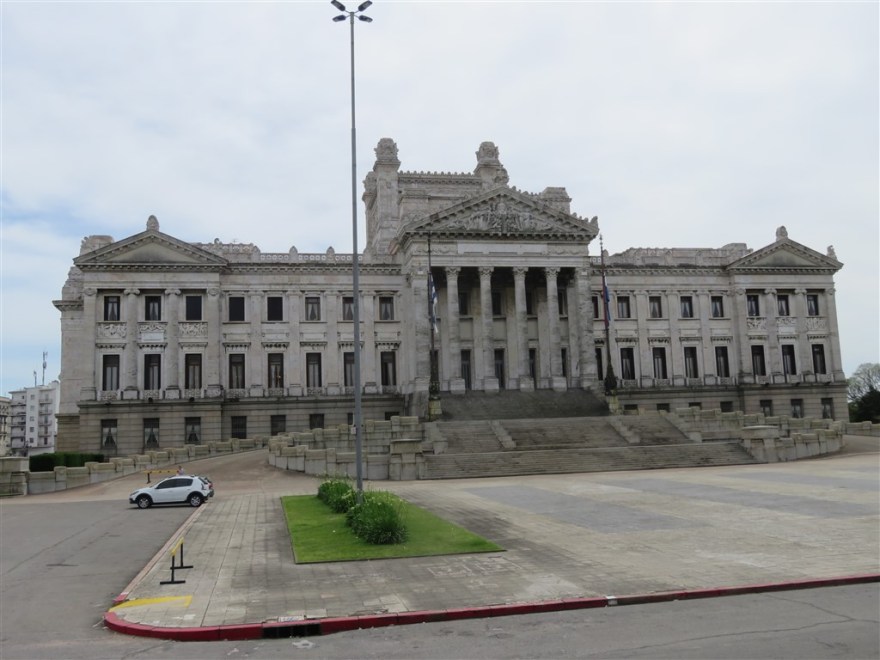
The Cathedral.


Palacio Estevez – the old presidential residence – now the Government House Museum.


Club Uruguay – an English style private members club.
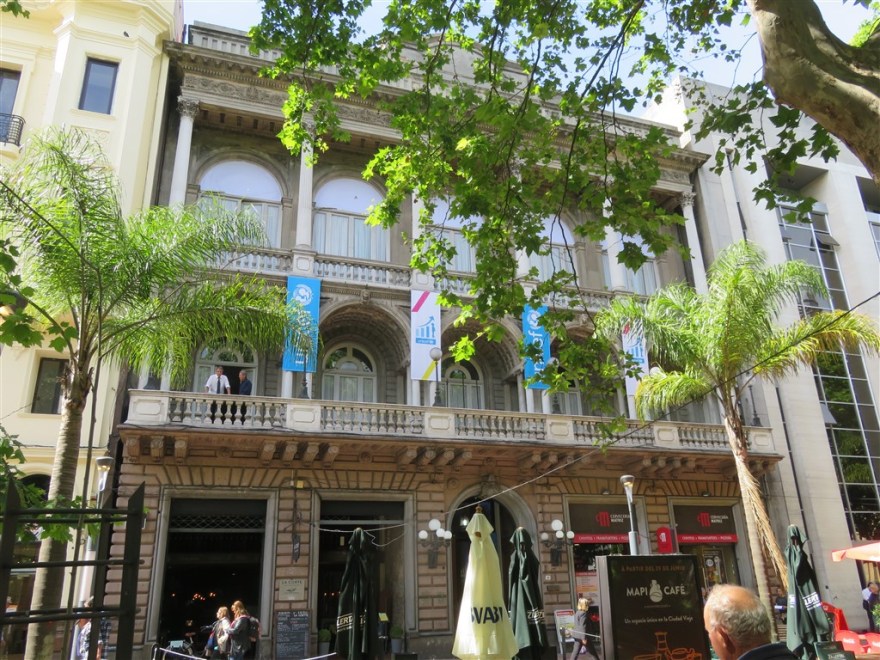
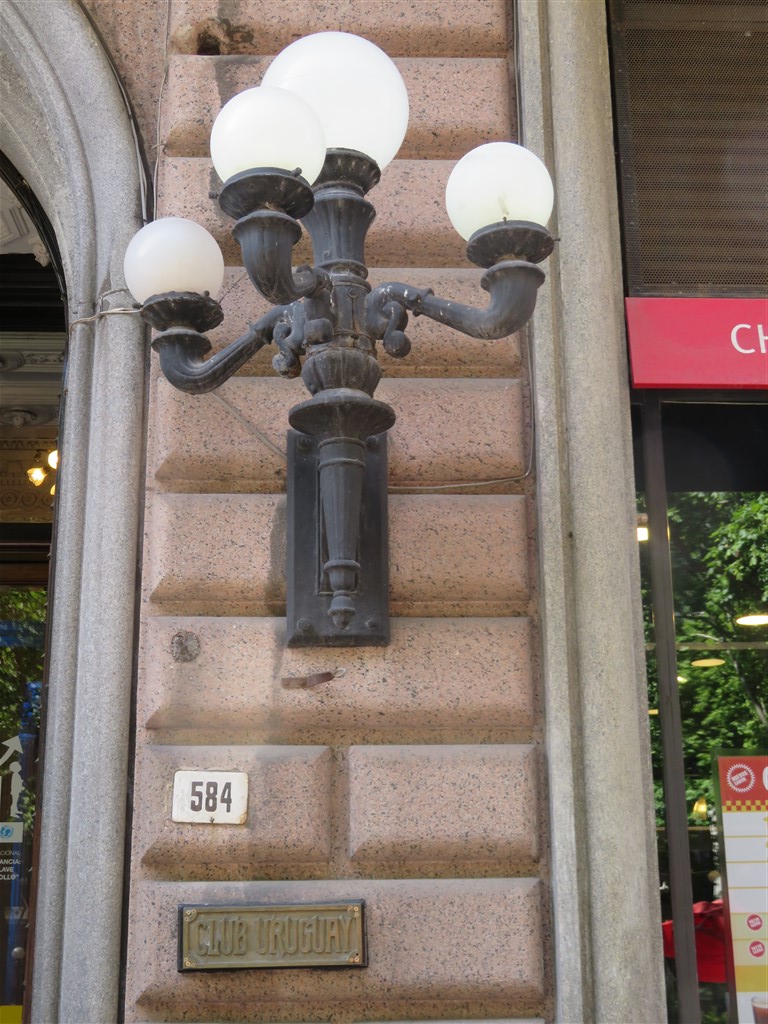
and Teatro Solis (www.teatrosolis.org.uy).
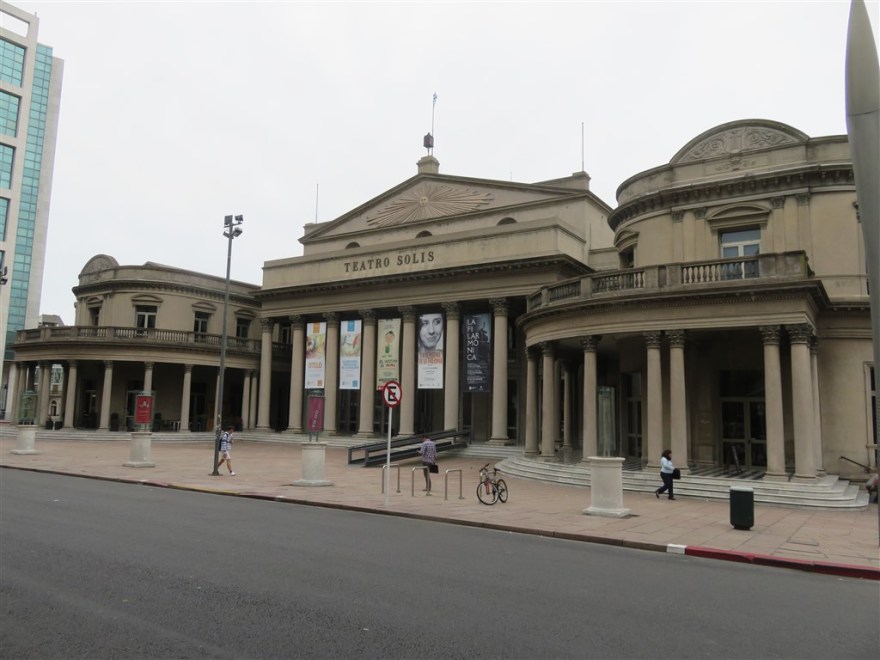
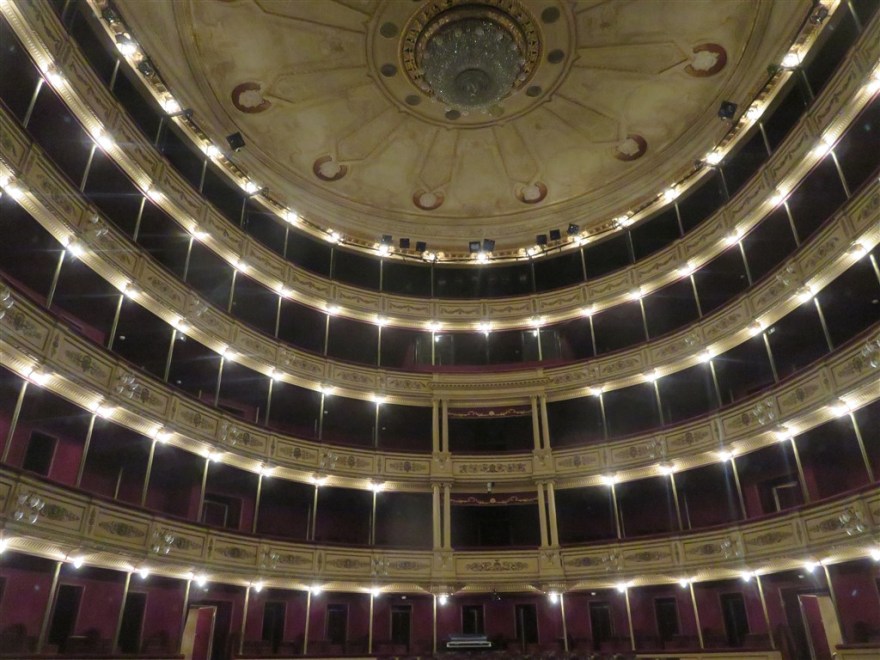
It is probably the most well known theatre in Uruguay. One of the main reasons that it is so well known/loved is the diversity of its uses. It is the home of The National Comedy (Uruguay’s equivalent of the National Theatre) and the Montevideo Philharmonic Orchestra. It also puts on opera and dance.
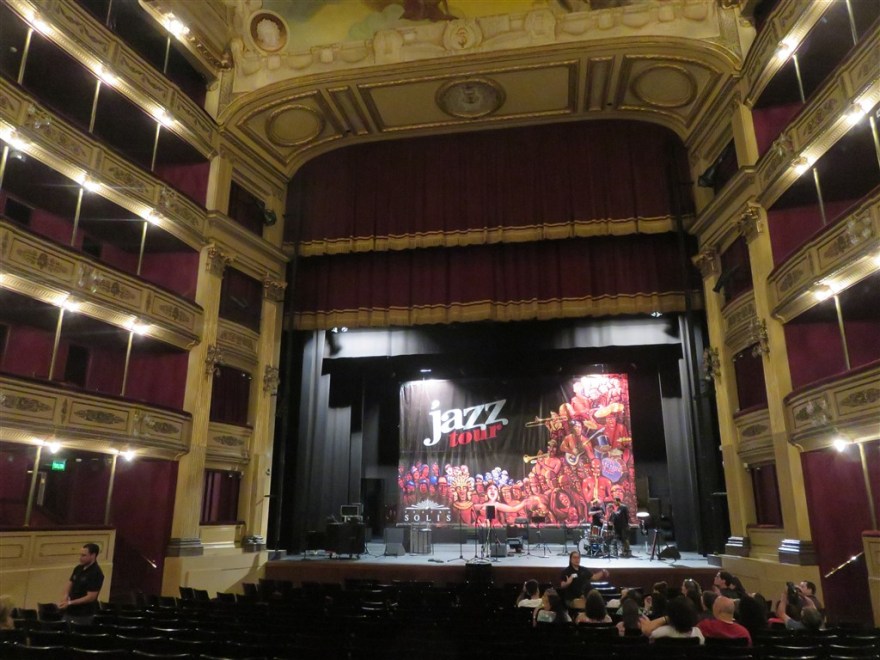
While I was there it was hosting a jazz festival.
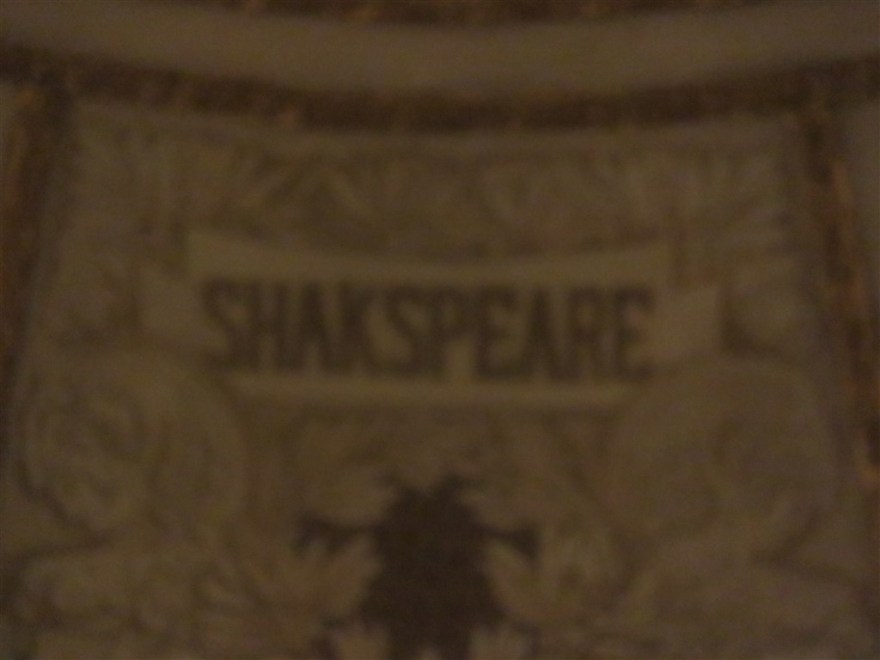
Its ceiling is decorated with the names of great playwrights.
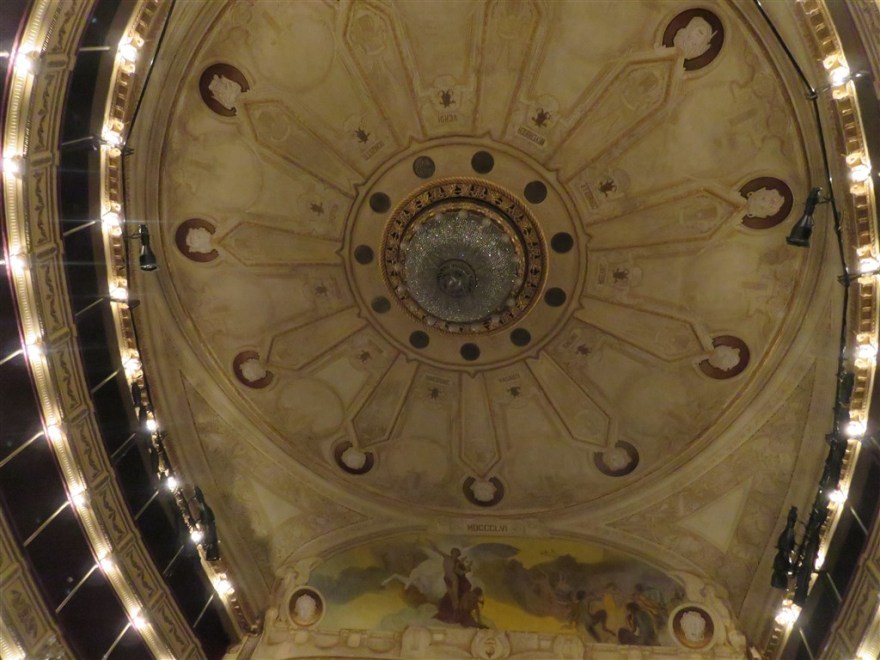
Although they seem to have misspelt one of them (apologies, my zoom is not very good).
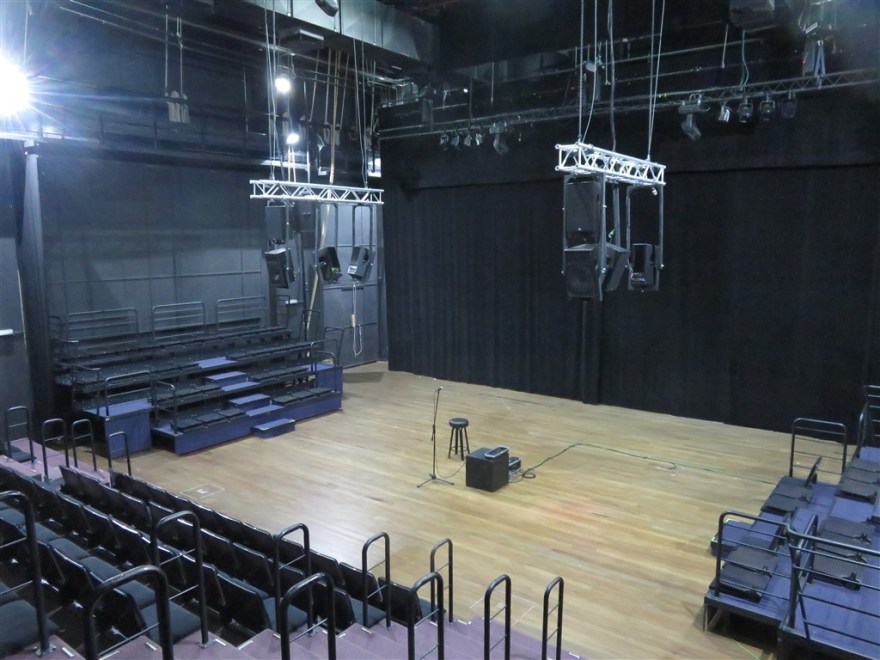
The building has been continually updated and during the last major refurbishment they added stairs in the main lobby so that all ticket holders could enter through the front doors – previously the cheaper seats in the top tiers were only accessible via separate side doors. They also converted space in one of the buildings wings into a new performance space.
Another lovely old building is the General Artigas Central Railway Station. Opened in 1897 as part of the mainly British developed and managed railway. It was designed by an Italian engineer/architect named Luigi Andreoni who also designed other buildings in the city such the Club Uruguay building.
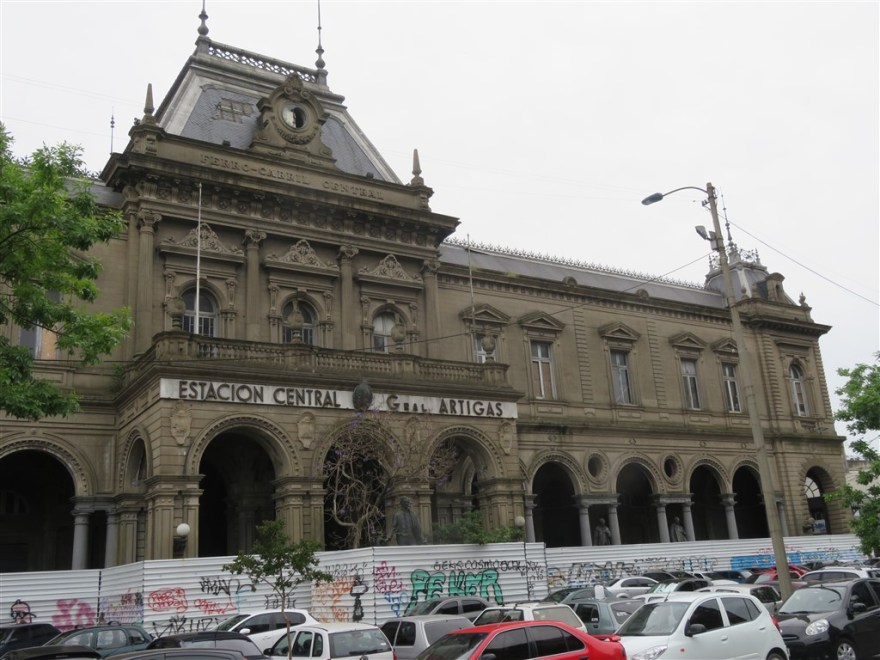
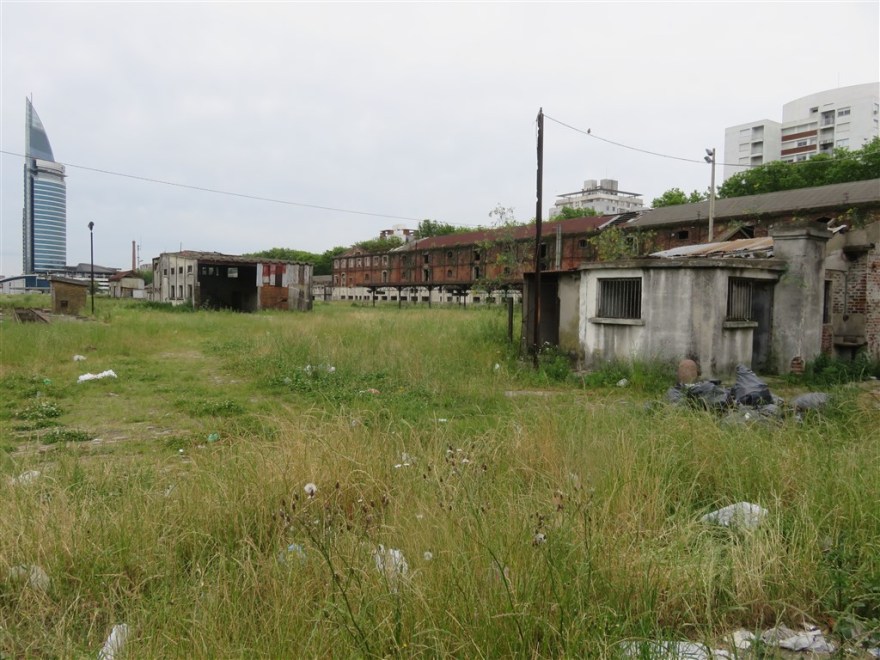
The last train departed at 9.40pm on 28th Feb 2003 and it was replaced by a smaller station with only 3 tracks just north of the old station. There have been attempts to reuse the old station and it was used as a concert venue for a while – Duran Duran played there. However, it now appears to have been abandoned completely.
One building that has faired better is the port market in the old city. Today it is the home of several traditional Uruguayan Parrillas (Grills) and coffee shops.
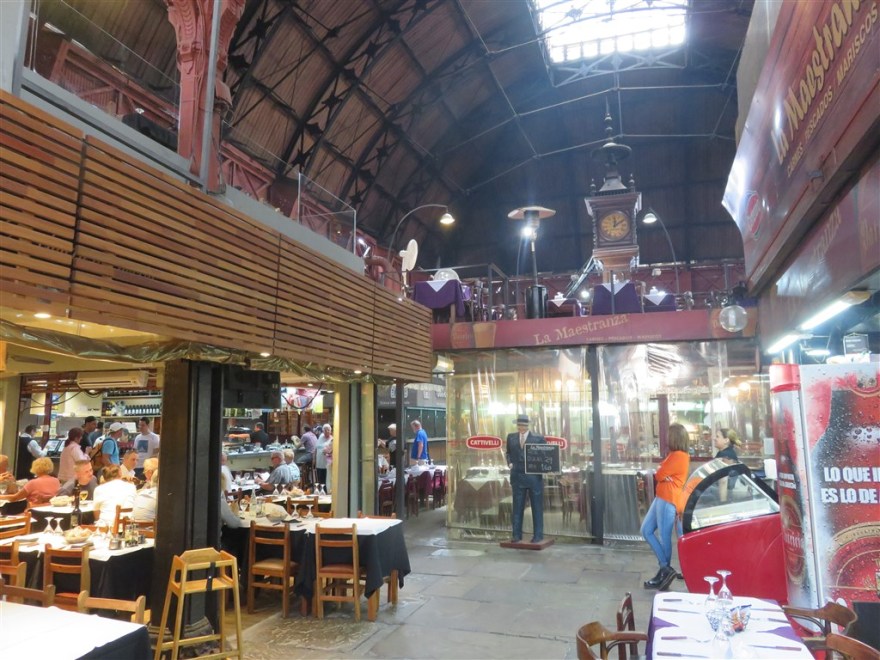
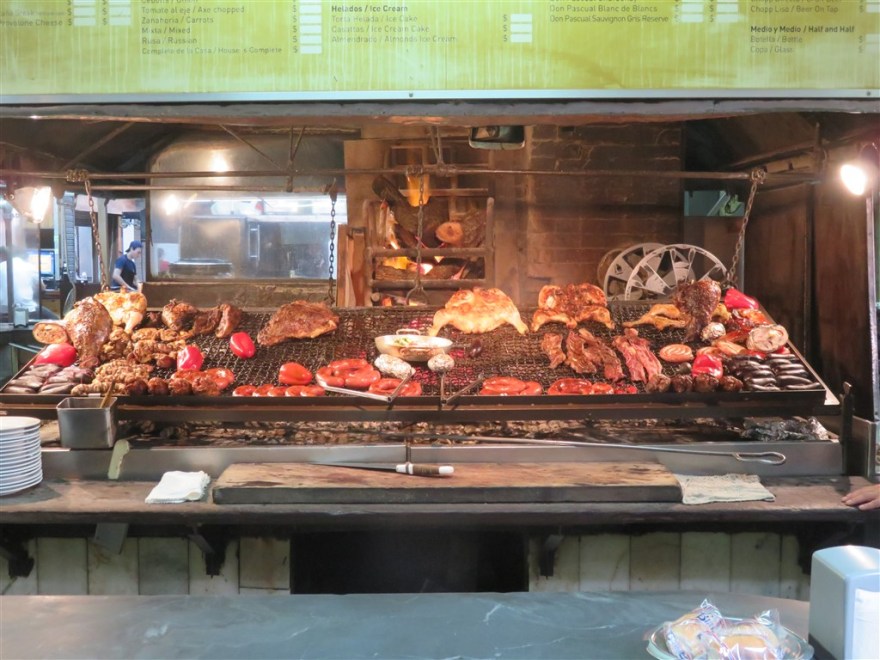
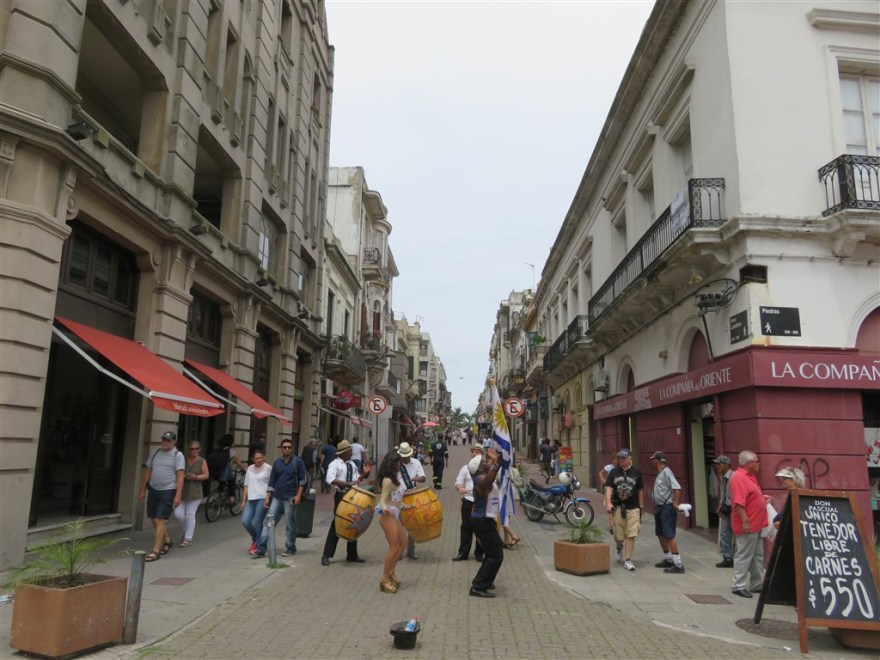
The streets around the market building have also been redeveloped around tourism. At the weekends, this area is also very popular with locals and there is a lot of live music. The troupe below were a Candombe band. Candombe music and dance is considered an important aspect of the culture of Uruguay and was recognized by UNESCO as a World Cultural Heritage of humanity.
One of the buildings I was most looking forward to visiting was Palacio Salvo in Independence Square. It is the sister building to Palacio Barolo in Buenos Aires. Both buildings had the same developer and architect. Unfortunately the Montevideo building has not fared as well as the one in Buenos Aires.
Palacio Salvo was originally built as a hotel but it closed in the 1960s and has since been used as residential and office space.

We toured the building and saw that some of the original features, such as the stairs were still intact, but the majority of the light house at the top had been converted to house lift equipment (the Buenos Aires building still has a working light).

You get a better view of the main tower from the main mansard roof.

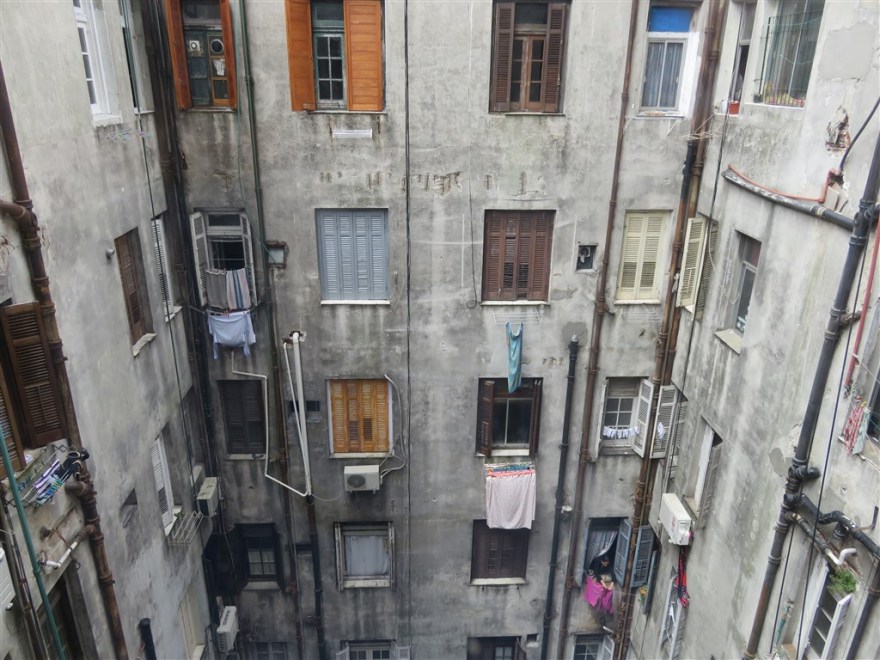
Unfortunately up here you could also see the decay (despite some reasonable attempts at roof gardening).
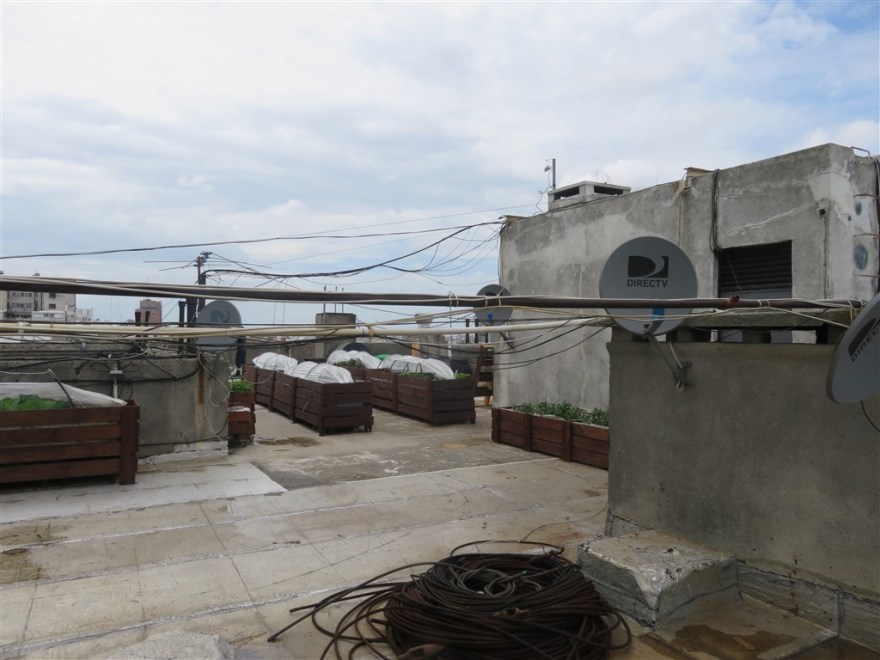
Despite once being such a grand building, it now mainly consists of low rent apartments and offices.
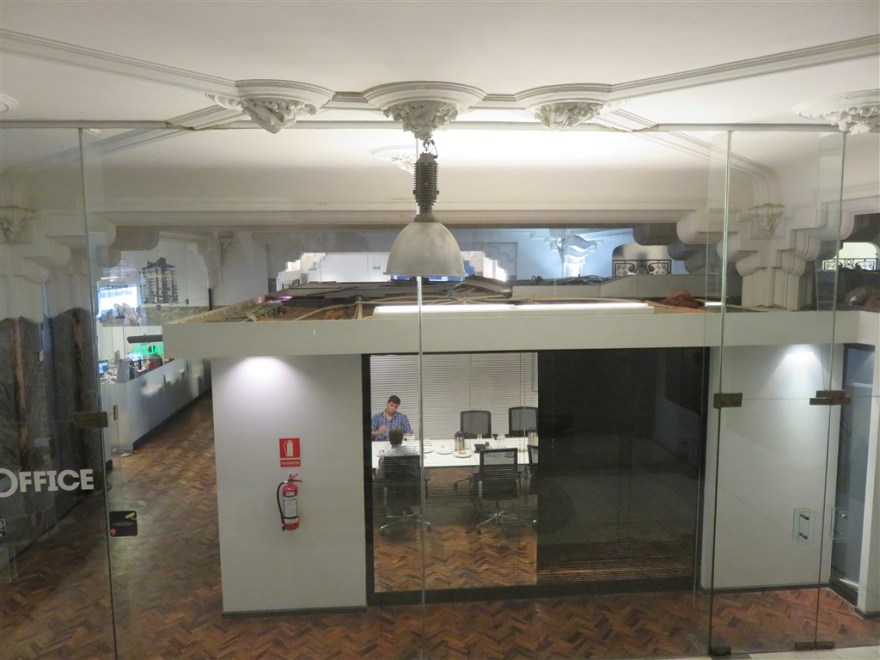
The worst thing I saw was this horrible conversion of the old hotel Ball Room into office space.
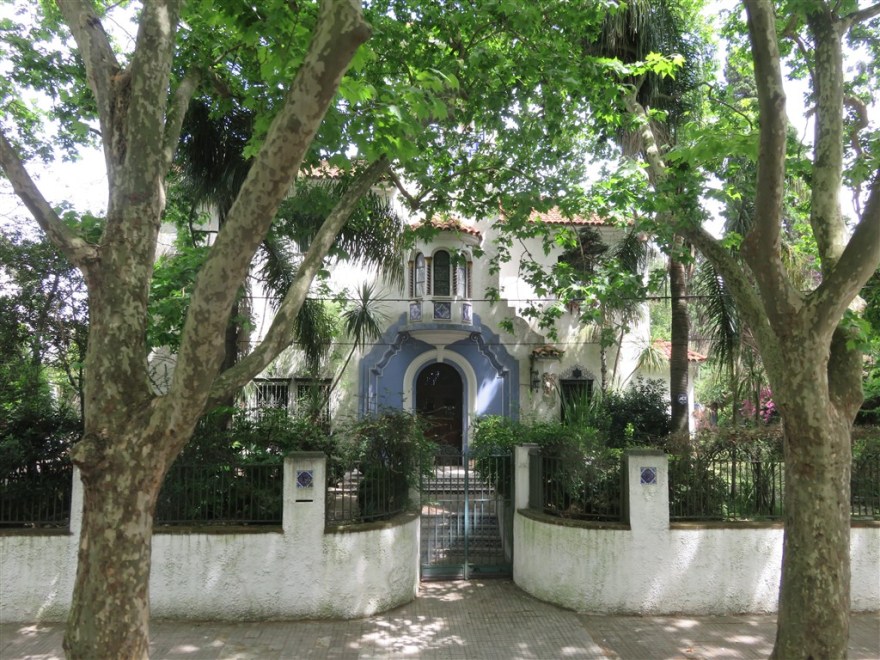
On a more positive note, Montevideo seems a nice place to live and outside the old and new city centres are some pleasant residential areas.


There are also plenty of city squares, such as this one near my hotel (Plaza Constitucion)

and parks.
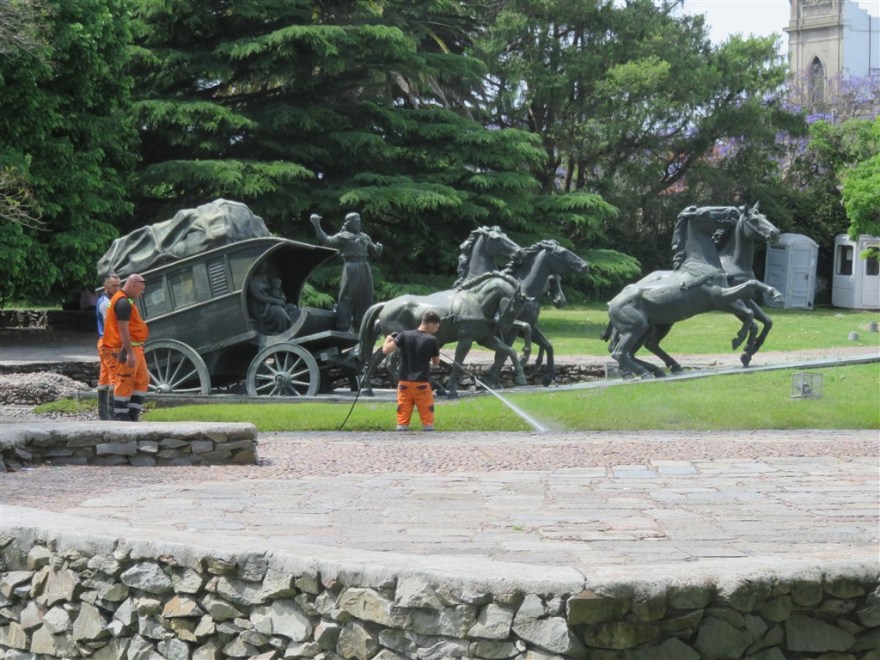


However, my favourite outdoor space was the Rambla of Montevideo. This is the wide walkway that runs along the Rio de la Plata for 22.2 uninterrupted kilometres – an ideal length for a half marathon. Indeed it is used for the annual Montevideo Half Marathon (www.halfmaraton.com.uy). The Rambla is an integral part of Montevidean identity and has been proposed as a World Heritage site.
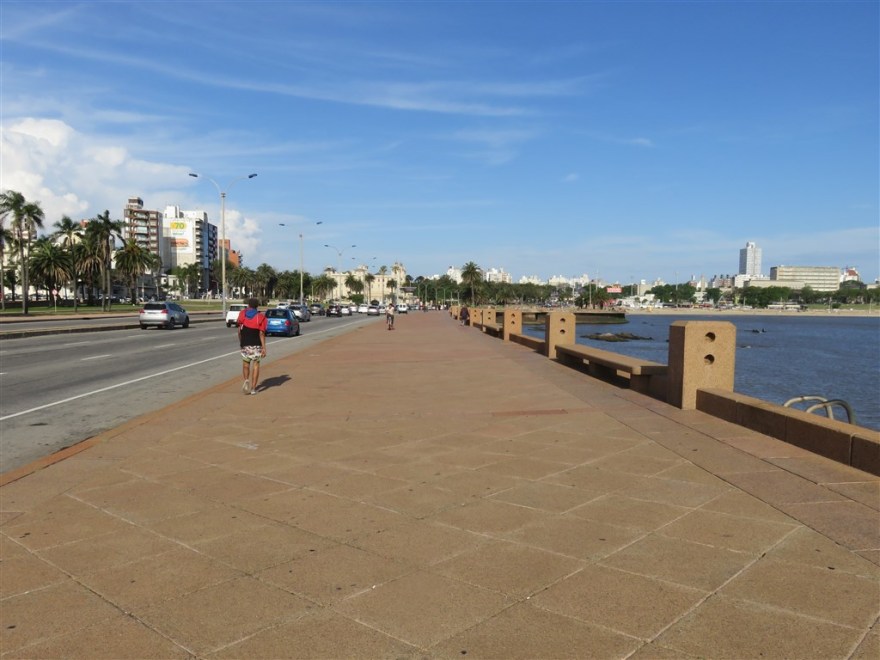
Along the Rambla there are also some lovely beaches.

Throughout Montevideo, I came across a lot of street art – this appeared to be one of the less politically correct ones. I’m not sure what it is meant to mean.

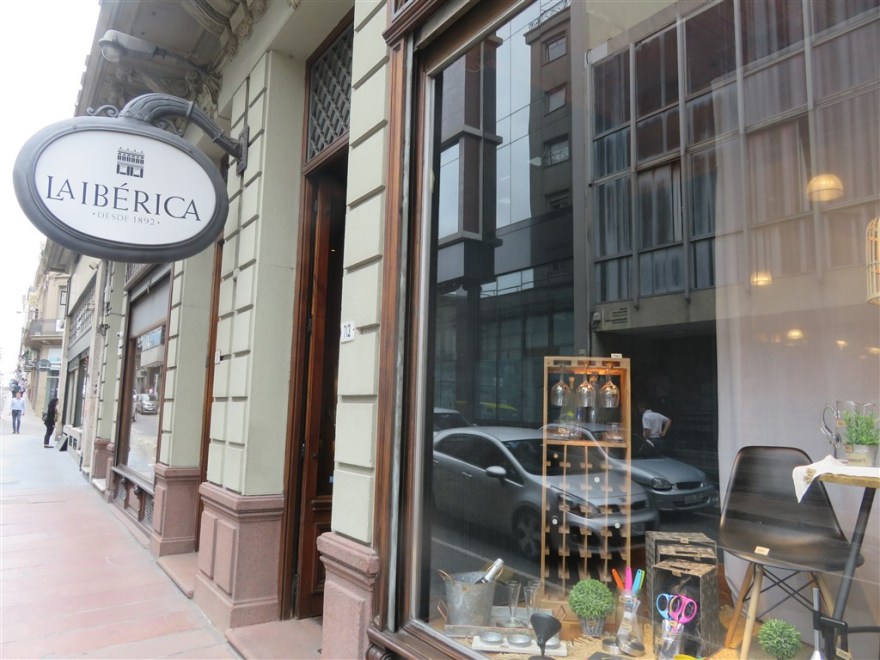
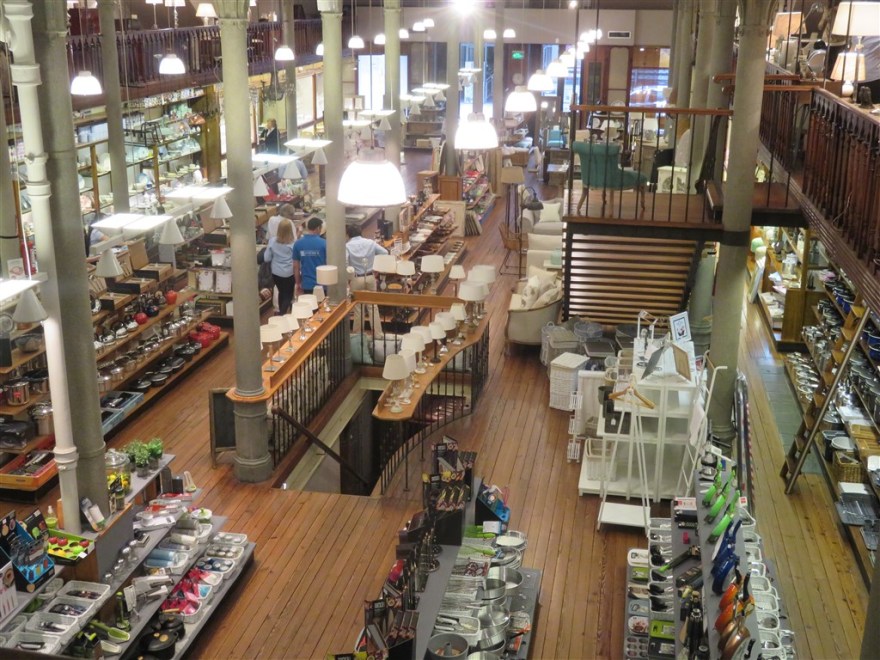
I also came across some lovely old shops such as this one – La Iberica (www.laiberica.com.uy)
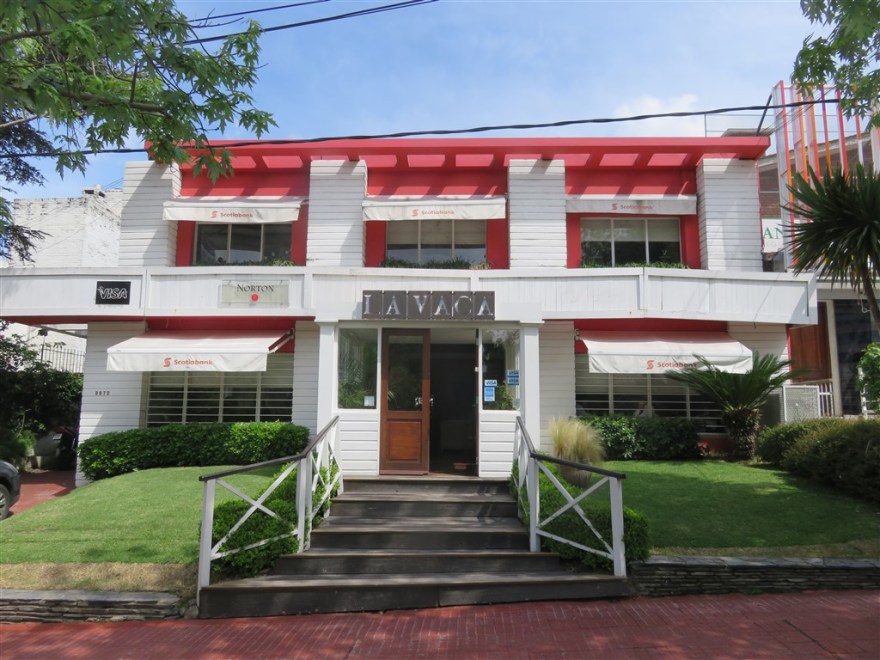
And plenty of good restaurants. I particularly enjoyed La Vaca (www.lavaca.com.uy), which was recommended to me by my brother.
It was great to find some good restaurants and delicatessens again. Elsewhere in Uruguay I had been a little disappointed by what was on offer. When travelling alone I often buy something to eat in my hotel/hostel. I often look to deli counters for something a bit more interesting. Unfortunately, the majority that I came across looked like this:

All processed cheese and pork products!
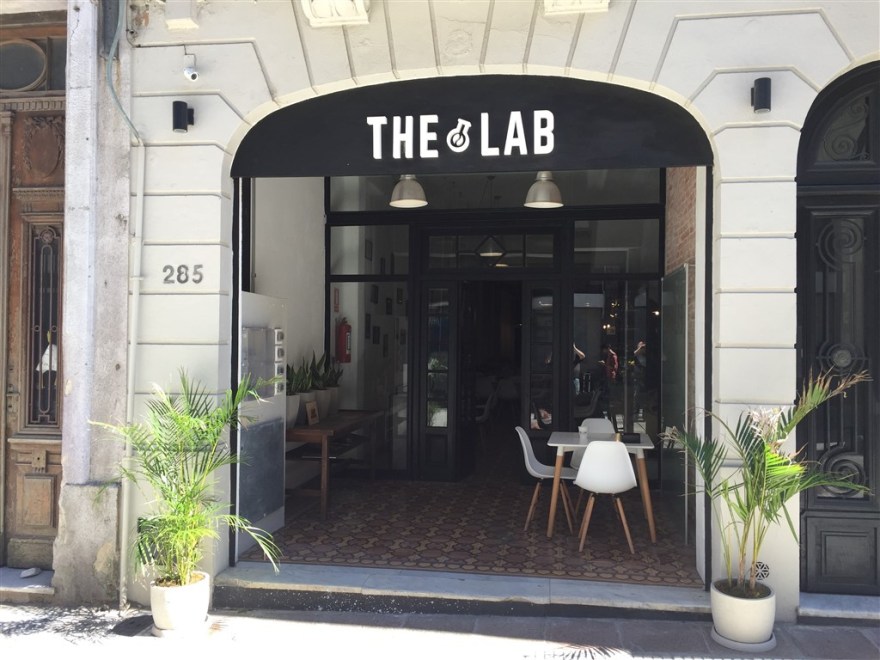
Another necessity for me is a good coffee shop. I came across this one near my hotel in the old city (www.thelab.com.uy). It has two other branches as well.
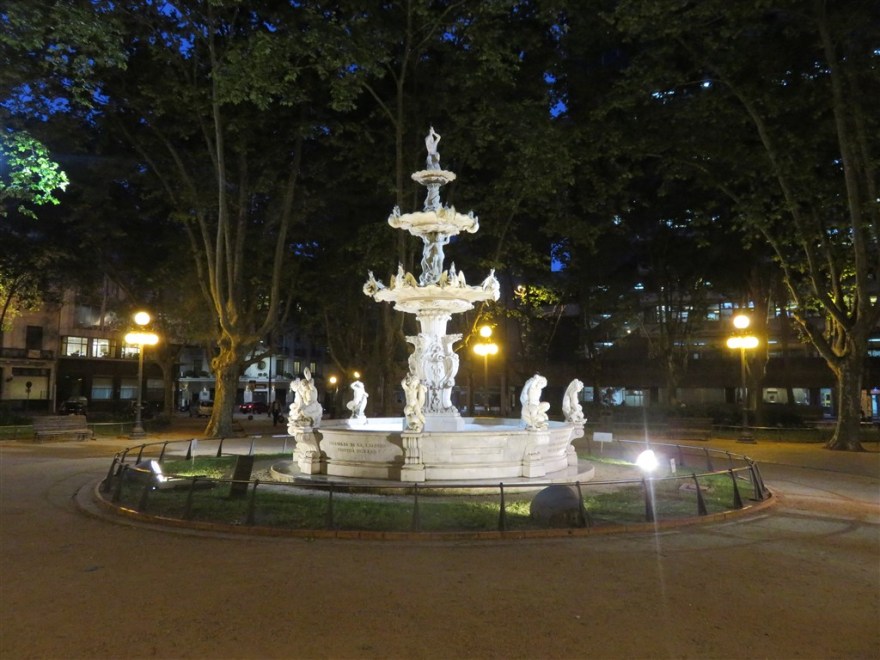
Finally a pretty picture of Plaza Constitucion at night!
Montevideo was my last stop in Uruguay and I caught the ferry back to Buenos Aires before heading west to Santiago and Easter Island.
 Escape from Ealing
Love your photos of MV and interesting reading of your experience. Be interested to rad bout your visit to the Easter Island – we had the most fab time there – unforgettable.
LikeLike